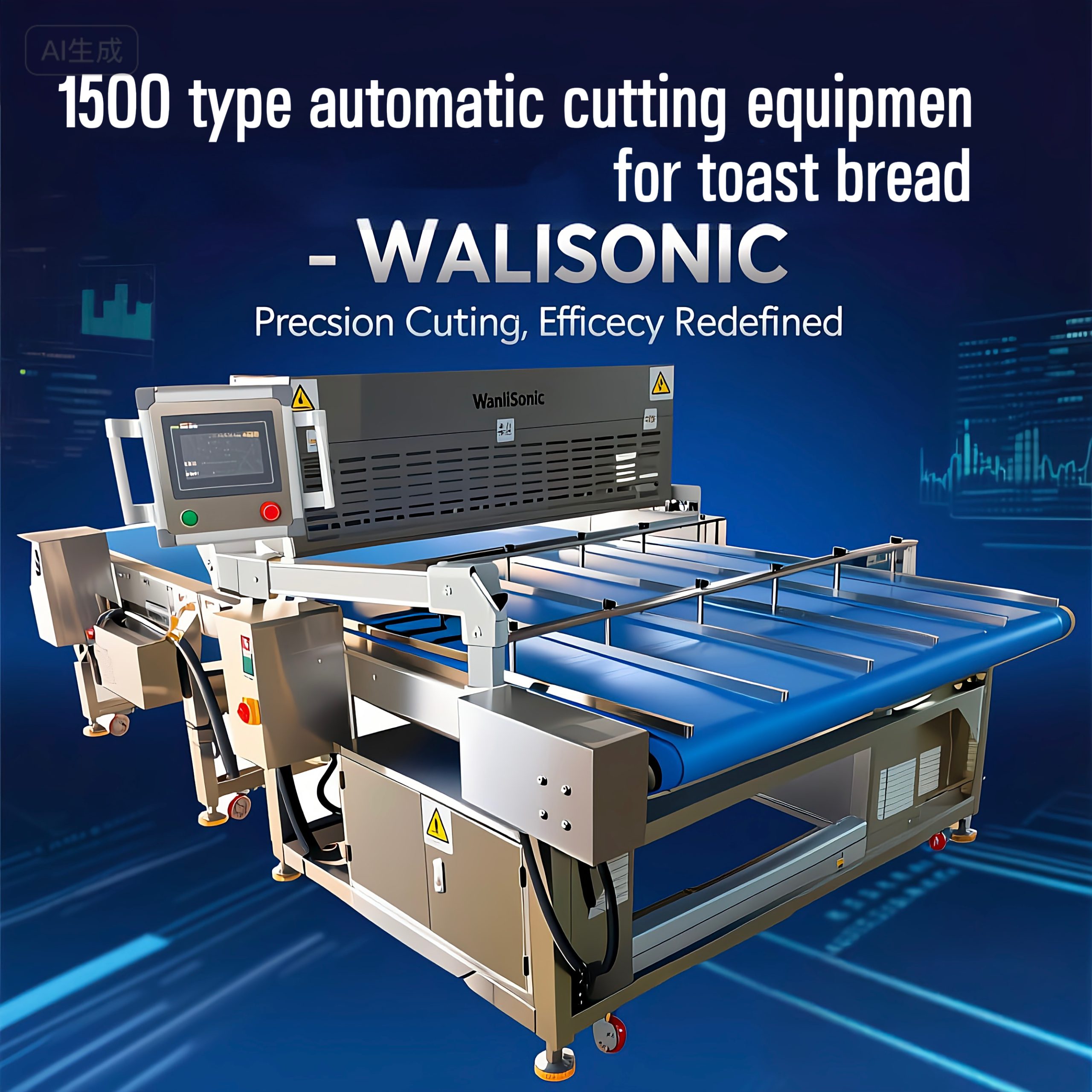
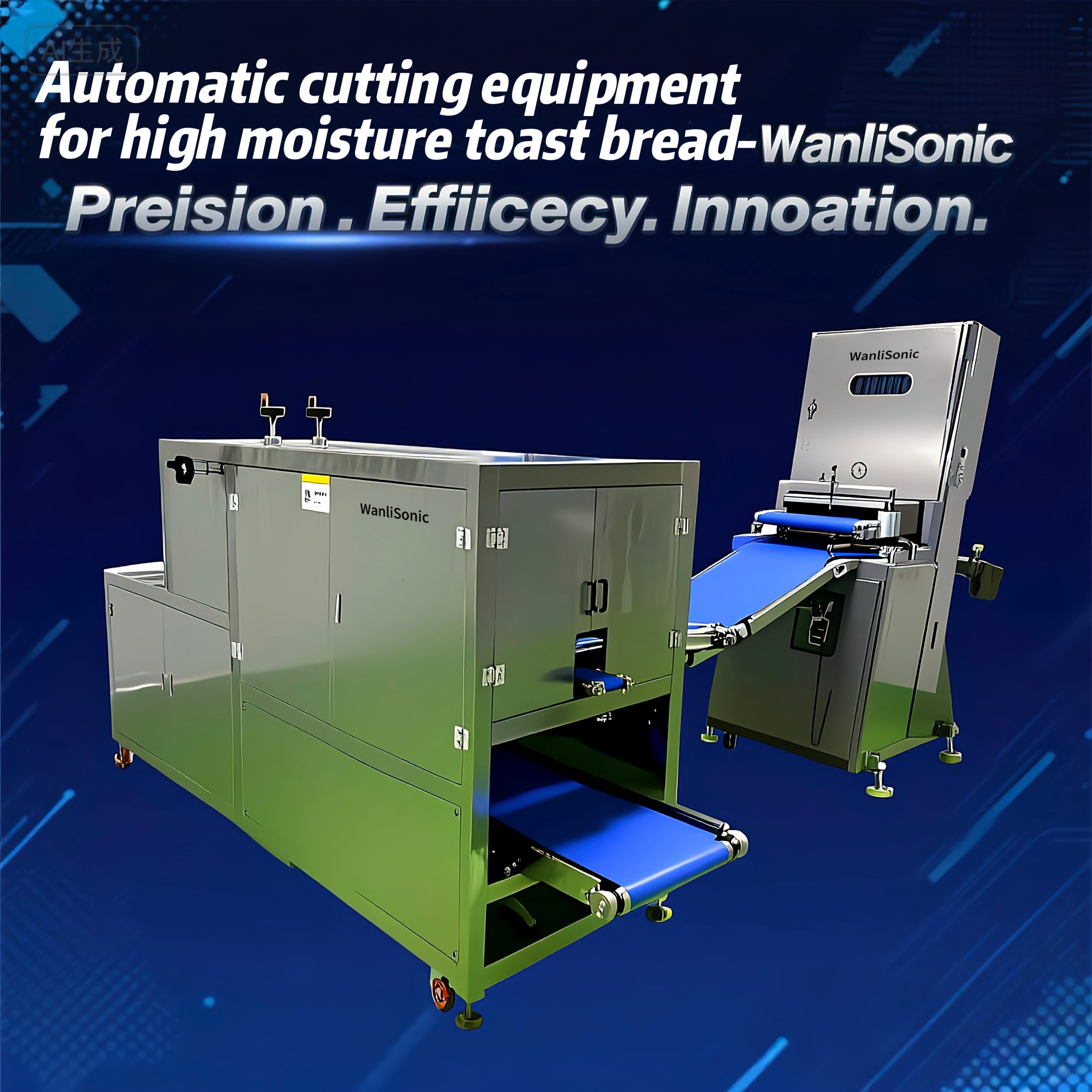
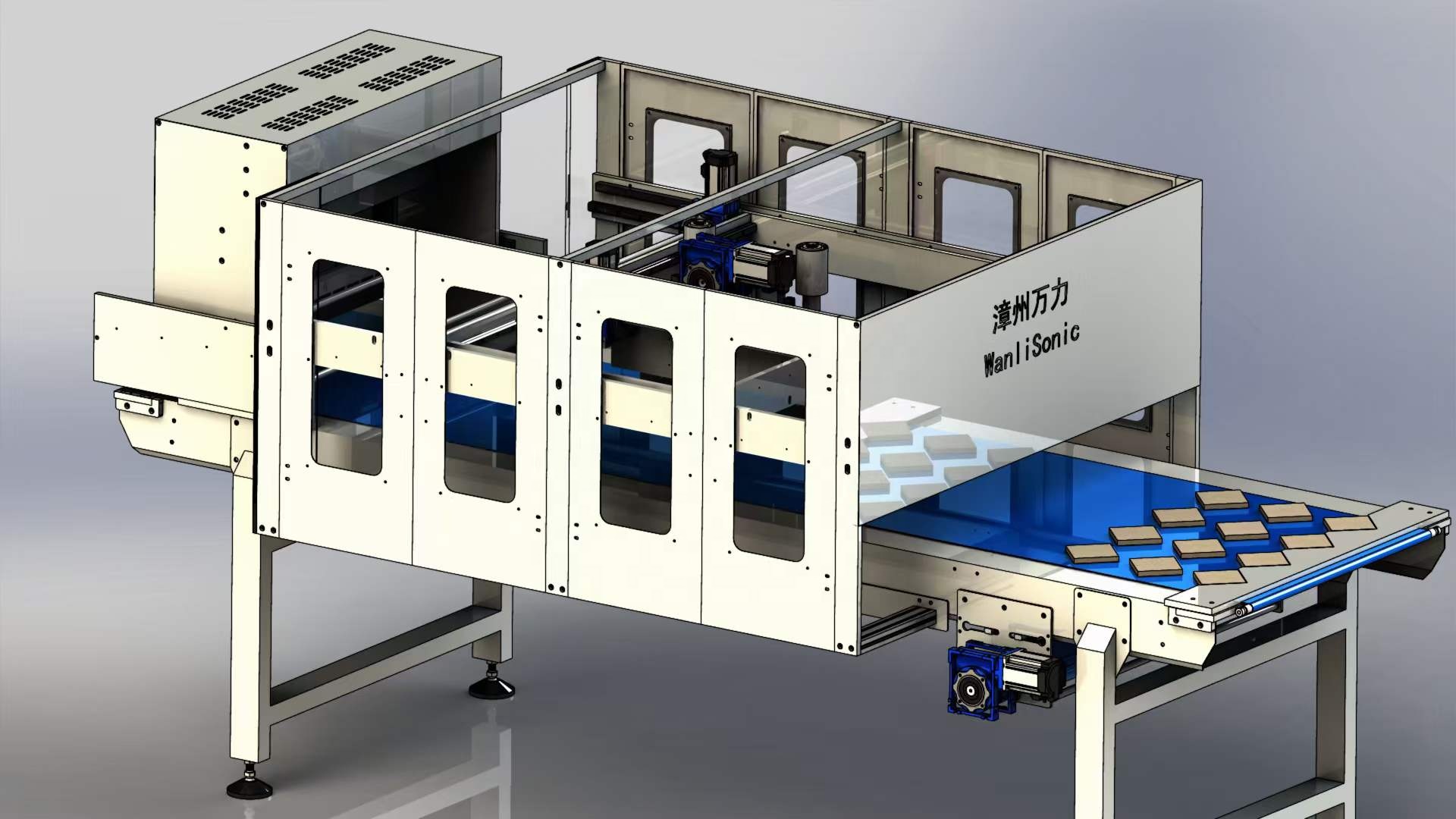
In the modern confectionery industry, manufacturers face increasing pressure to improve production efficiency while maintaining consistent product quality. From soft candies and gummy sweets to nougat, caramel, toffee, and other sticky confectionery products, achieving clean, uniform cuts can be a significant challenge. Traditional cutting methods may cause product deformation, material adhesion, uneven portions, and excessive residue on cutting blades.
How can confectionery manufacturers overcome these challenges while maintaining efficient and reliable production?
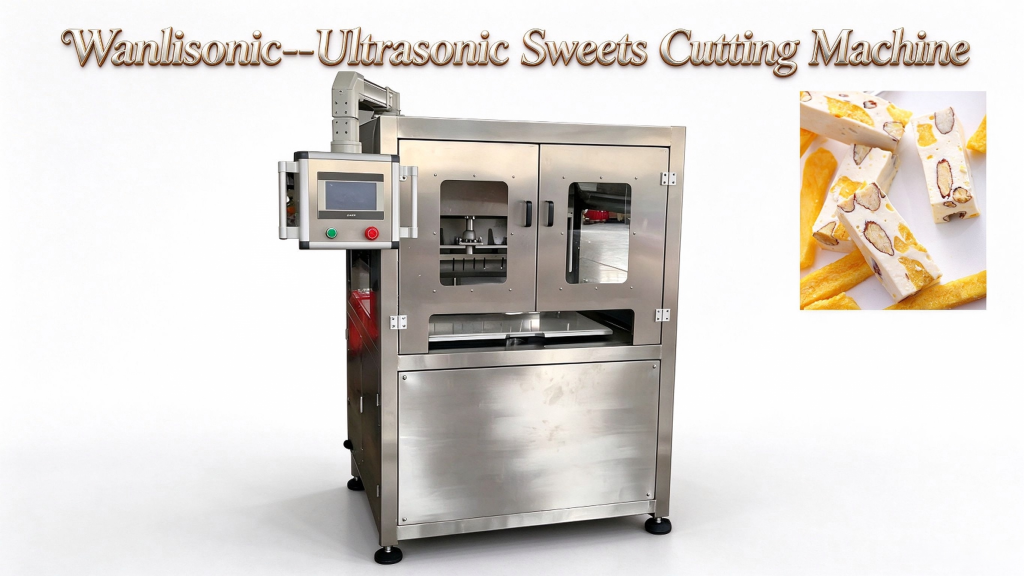
The Wanlisonic Ultrasonic Sweets Cutting Machine offers an advanced solution by combining high-frequency ultrasonic vibration with precision cutting technology. Designed for the demanding requirements of modern food processing, ultrasonic cutting helps manufacturers improve cutting quality, reduce product sticking, and achieve more consistent results.
1. Why Is Cutting Sticky Sweets So Challenging?
Many confectionery products have soft, elastic, or adhesive textures. Although these characteristics contribute to their appealing taste and mouthfeel, they can make industrial cutting difficult.
When conventional mechanical blades cut soft sweets, several problems may occur:
- Blade sticking: Sticky ingredients can adhere to the blade, requiring frequent cleaning and interrupting production.
- Product deformation: Excessive cutting pressure may compress soft candies and change their original shape.
- Uneven cutting edges: Material pulling and stretching can result in irregular surfaces and inconsistent portions.
- Material waste: Deformed products and accumulated residue may increase waste during processing.
- Additional labor: Frequent blade cleaning and manual adjustments can reduce overall production efficiency.
These challenges become more significant when manufacturers process large quantities of confectionery products with strict requirements for appearance, weight, and dimensions.
For confectionery factories seeking to improve productivity, selecting the right cutting technology is essential. This is where the Wanlisonic Ultrasonic Sweets Cutting Machine provides a practical alternative to conventional cutting methods.
2. How Does Ultrasonic Cutting Technology Work?
The core technology of the Wanlisonic Ultrasonic Sweets Cutting Machine is high-frequency mechanical vibration.
An ultrasonic cutting system generally consists of an ultrasonic generator, transducer, booster, and cutting blade. These components work together to generate and transmit high-frequency vibrations to the blade.
During operation, the vibrating blade passes through the confectionery material with reduced cutting resistance. Compared with conventional mechanical cutting, this technology can reduce friction and help the blade move through soft or sticky products more smoothly.
This cutting principle offers several important benefits for confectionery processing.
First, reduced cutting resistance helps minimize compression and deformation. This is particularly valuable for products that need to maintain their original shape after cutting.
Second, ultrasonic vibration can reduce the amount of sticky material accumulating on the blade. Although cleaning requirements still depend on the product formulation and operating conditions, less residue can help improve production continuity.
Third, ultrasonic cutting supports cleaner cutting surfaces, making finished sweets more attractive and consistent.
With the appropriate machine configuration and cutting parameters, Wanlisonic helps confectionery manufacturers optimize the balance between cutting quality and production efficiency.
3. What Types of Sweets Can Wanlisonic Equipment Cut?
Different confectionery products have different textures, ingredients, temperatures, and cutting requirements. A suitable cutting solution should therefore be selected according to the specific product.
The Wanlisonic Ultrasonic Sweets Cutting Machine can be considered for a variety of soft and sticky confectionery applications, subject to product testing and machine configuration.
Soft Candy and Gummy Sweets
Soft candies and gummy products are often elastic and may deform when subjected to excessive pressure. Ultrasonic cutting helps reduce resistance during the cutting process, supporting cleaner edges and more consistent portions.
This is particularly useful for manufacturers producing candies in rectangular, square, or other customized shapes.
Nougat and Nut-Based Confectionery
Nougat and nut-based sweets may contain nuts, dried fruits, or other inclusions. Depending on their formulation, these ingredients can make cutting more difficult and affect the appearance of the finished product.
Ultrasonic cutting may help reduce pulling and deformation when processing suitable formulations. However, product hardness, inclusion size, and temperature must be evaluated before selecting the cutting system.
Caramel and Toffee
Caramel and toffee can become sticky during processing, especially when their temperature and moisture content are not properly controlled.
Ultrasonic vibration can help reduce material adhesion to the blade, improving cutting performance under suitable operating conditions. The correct product temperature and blade configuration remain important factors in achieving stable results.
Jelly and Fruit-Based Confectionery
Jelly candies and fruit-based sweets may have soft, elastic structures that require careful handling. Ultrasonic cutting can help maintain product shape while producing smoother cutting surfaces.
Actual performance depends on the product’s elasticity, moisture content, formulation, and temperature.
Before purchasing equipment, manufacturers should provide representative samples and detailed product information so that the appropriate cutting method can be evaluated.
4. How Can Ultrasonic Cutting Improve Product Quality?
Product appearance plays an important role in confectionery manufacturing. Uniform shapes and clean edges help products meet packaging requirements and maintain a consistent presentation.
The Wanlisonic Ultrasonic Sweets Cutting Machine offers several potential quality advantages.
More consistent portions
Automated cutting can help manufacturers produce repeatable dimensions according to predefined cutting parameters. Consistent portions are particularly important for products sold individually or arranged in retail packaging.
Reduced deformation
By reducing cutting resistance, ultrasonic vibration can help preserve the structure of soft confectionery products. This is beneficial when the product must retain a defined shape after cutting.
Cleaner cutting surfaces
Reduced friction and adhesion can help limit tearing, stretching, and residue formation, depending on the product characteristics and machine settings.
Improved product presentation
Clean and uniform cuts contribute to a more professional finished appearance, helping manufacturers maintain consistent product standards across production batches.
It is important to note that cutting results are influenced by more than the machine itself. Product temperature, recipe, moisture content, hardness, cutting dimensions, and operating speed must also be considered.
5. Can Ultrasonic Sweets Cutting Machines Increase Production Efficiency?
For confectionery factories, production efficiency is determined by the entire processing operation, not just the cutting speed.
The Wanlisonic Ultrasonic Sweets Cutting Machine can help improve efficiency by addressing several common sources of production interruption.
First, automated cutting reduces the need for repeated manual portioning. Operators can focus on feeding, monitoring, quality control, and other production tasks.
Second, reduced blade adhesion may decrease the frequency of cleaning interruptions for suitable products. This can support more continuous operation and simplify production management.
Third, programmable cutting parameters can help maintain consistent cutting patterns and reduce repetitive manual adjustments.
Finally, a properly configured cutting system can be incorporated into a broader production process, depending on the factory’s feeding, conveying, and downstream packaging requirements.
For manufacturers planning to upgrade their facilities, it is important to evaluate actual output per hour, labor requirements, cleaning time, and product yield rather than comparing cutting speed alone.
Wanlisonic can assess these requirements to help customers identify a suitable machine configuration for their production objectives.
6. What Should Manufacturers Consider Before Choosing a Machine?
Not every confectionery product requires the same cutting solution. Before selecting an ultrasonic sweets cutting machine, manufacturers should evaluate several essential factors.
Product characteristics: Provide details about the sweet’s texture, ingredients, hardness, stickiness, and operating temperature.
Product dimensions: Specify the length, width, height, and desired finished portion size.
Cutting pattern: Clarify whether the product requires longitudinal cutting, cross-cutting, grid cutting, or customized shapes.
Production capacity: Explain the required output per minute or per hour, as well as the expected operating schedule.
Automation requirements: Determine whether manual feeding is acceptable or whether automatic feeding, conveying, and integration with upstream or downstream equipment are required.
Cleaning and hygiene: Consider the materials in contact with food, cleaning procedures, and the requirements of the factory’s food safety management system.
Sample testing: Whenever possible, provide representative samples for cutting trials. Testing helps verify whether ultrasonic cutting is appropriate and allows the manufacturer to assess cutting quality, dimensional accuracy, and operational stability.
By evaluating these factors in advance, manufacturers can make better-informed equipment decisions and reduce the risk of selecting an unsuitable solution.
7. Why Consider Wanlisonic for Confectionery Cutting?
Wanlisonic specializes in ultrasonic food-cutting equipment and provides solutions for food manufacturers seeking improved cutting precision and production efficiency.
With more than 20 years of experience in ultrasonic food machinery manufacturing, Wanlisonic understands that different products require different cutting approaches.
Rather than relying on a single configuration for every application, the equipment selection process should consider product characteristics, cutting requirements, production targets, and available factory space.
Wanlisonic can work with customers to evaluate these factors and discuss suitable equipment configurations. Depending on the application, this may include cutting blade selection, conveyor arrangements, operating parameters, and integration requirements.
For manufacturers processing soft or sticky sweets, the goal is not simply to cut faster. It is to achieve a practical balance between product quality, operational efficiency, cleaning requirements, and long-term production stability.
If you are planning to automate confectionery cutting or improve the consistency of your existing production process, the Wanlisonic team can help evaluate your requirements and recommend an appropriate solution.
Conclusion
Producing soft and sticky sweets with consistent dimensions and clean edges remains a challenge for many confectionery manufacturers. Conventional cutting methods can lead to blade adhesion, product deformation, uneven portions, and unnecessary production interruptions.
The Wanlisonic Ultrasonic Sweets Cutting Machine uses high-frequency vibration to reduce cutting resistance and help improve the cutting performance of suitable confectionery products.
By supporting cleaner cuts, reducing material adhesion, and enabling automated portioning, ultrasonic cutting technology offers manufacturers an opportunity to improve product presentation and production efficiency.
However, the best results depend on choosing the right equipment configuration and optimizing operating conditions for each product.
For confectionery producers looking to improve cutting quality and modernize their processing operations, Wanlisonic offers professional ultrasonic cutting expertise and application-oriented equipment solutions.
FAQ—Ultrasonic Sweets Cutting Machine
Q1: What types of sweets can the Wanlisonic Ultrasonic Sweets Cutting Machine process?
The machine can be evaluated for soft candy, gummy sweets, nougat, caramel, toffee, jelly, and other suitable confectionery products. Final suitability depends on product formulation, texture, dimensions, and machine configuration.
Q2: How does ultrasonic cutting differ from traditional mechanical cutting?
Ultrasonic cutting uses high-frequency blade vibration to reduce cutting resistance and friction. This can help minimize deformation, improve cutting surfaces, and reduce material adhesion compared with conventional mechanical cutting.
Q3: Can ultrasonic cutting prevent sticky sweets from adhering to the blade?
Ultrasonic vibration can reduce material adhesion and residue accumulation. However, it cannot guarantee completely residue-free cutting under every condition. Product temperature, formulation, and operating parameters also affect performance.
Q4: Can the machine produce sweets in different sizes and shapes?
Cutting dimensions and patterns depend on the machine configuration and cutting program. Customers should provide their desired product dimensions and cutting patterns for technical evaluation.
Q5: Is the machine suitable for fully automatic confectionery production lines?
Automation options depend on the selected model and production requirements. Feeding, conveying, cutting, and downstream equipment integration should be assessed during project planning.
Q6: How can I confirm whether ultrasonic cutting is suitable for my sweets?
Provide product samples, photographs, dimensions, ingredients or texture information, target cutting sizes, and required production capacity. Sample testing and technical consultation can help determine the most suitable solution.
Contact Information:
Mia Wu (Senior Customer Consultant)
📧 Email: sales1@wanlisonic.com
📞 Tel / WhatsApp / WeChat: +86 15759607601