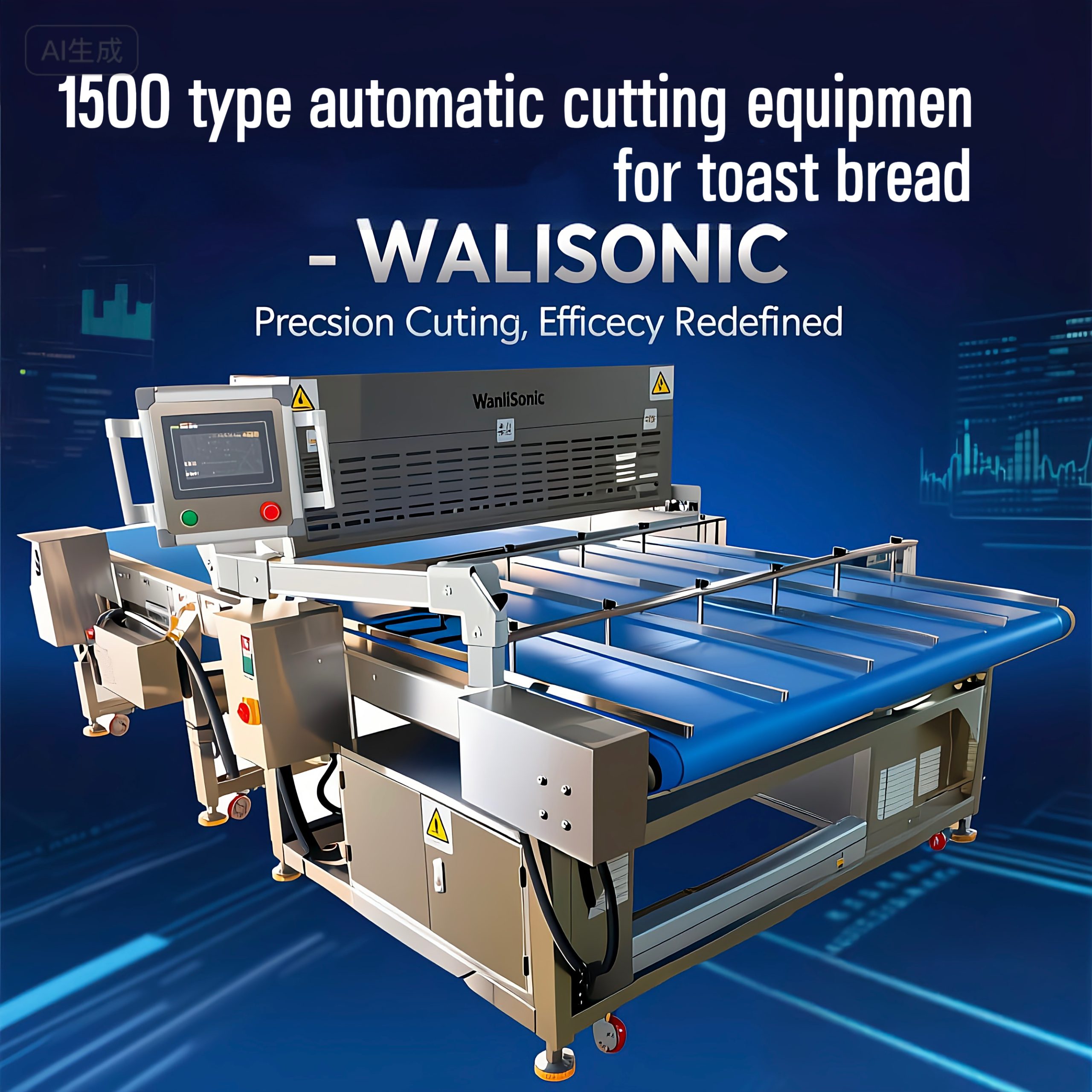
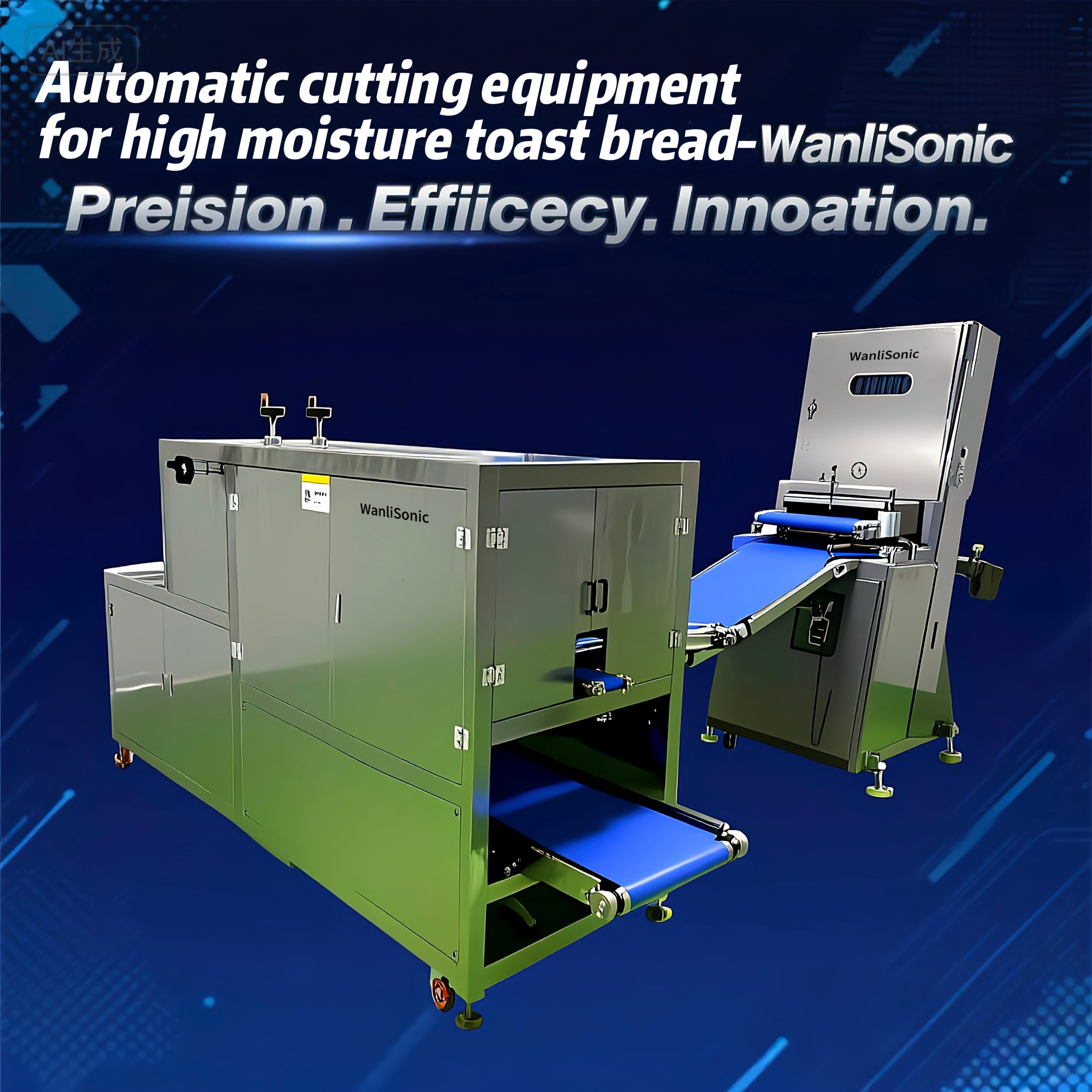
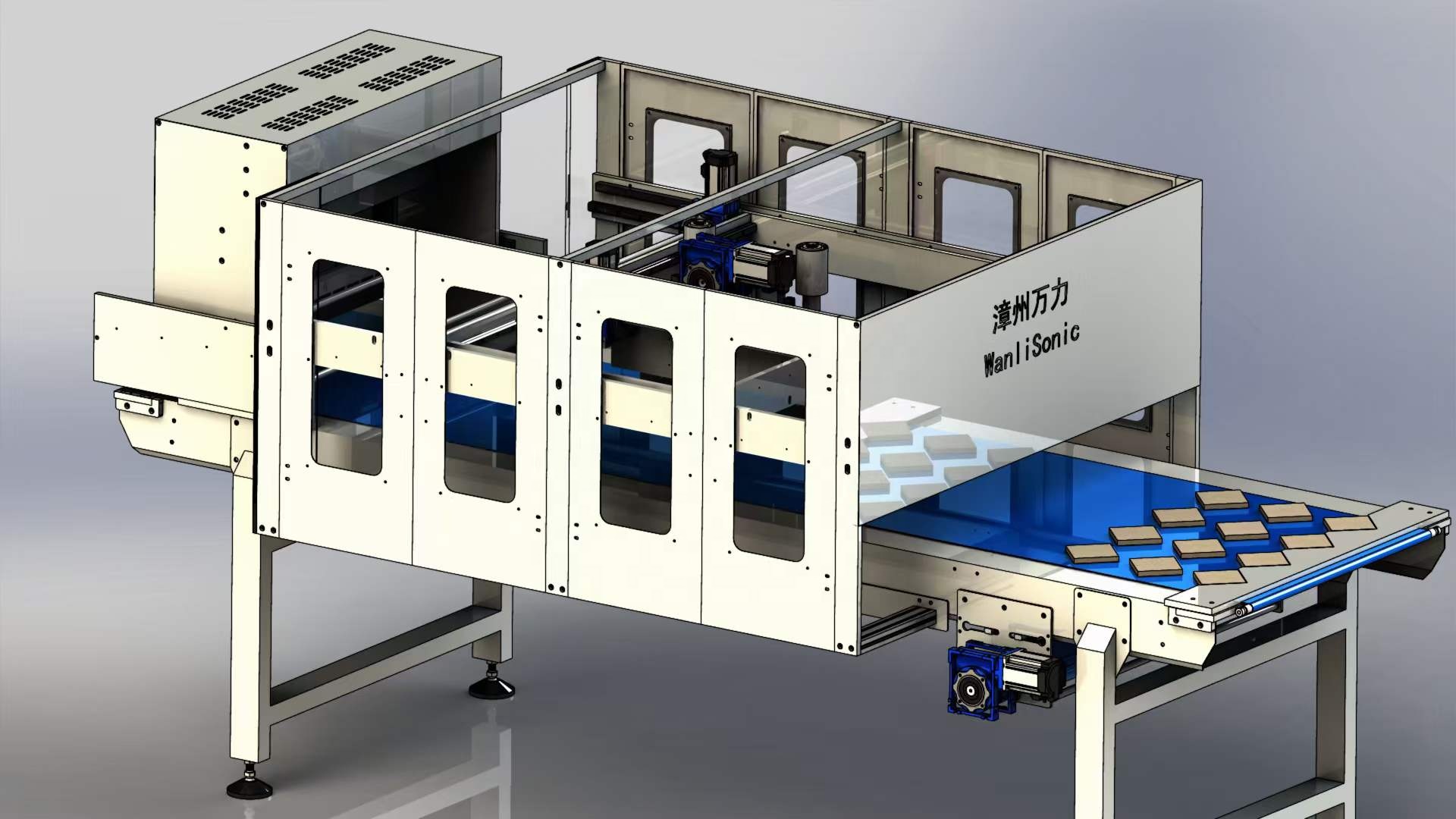
Cookie ranges have moved well beyond the plain round biscuit. Stars, flowers and custom moulded shapes, multi-colour dough, cookies loaded with nuts, raisins and chocolate morsels, and frozen dough for bake-off programmes are now standard products for manufacturers competing on shelf. Each of these formats exposes the weaknesses of conventional cutting: soft dough adheres to the blade, delicate shapes deform, inclusions are dragged out of position, colours bleed into one another, and frozen dough cracks. The Wanlisonic Ultrasonic Cookie Cutting Machine is engineered for exactly these products — cutting shaped, sticky and frozen dough cleanly in one pass, without pre-chilling the product or realigning it afterwards.
Why Modern Cookie Dough Defeats Conventional Blades
Traditional cookie cutting depends on mechanical pressure, and mechanical pressure is what damages delicate dough and the ingredients inside it. On today’s product ranges, the recurring problems are consistent:
- Soft, high-fat or sticky dough adheres to the blade surface
- Delicate moulded shapes such as stars and flowers lose definition and deform
- Nuts, raisins, dried fruit and chocolate morsels are displaced or plowed out of position
- Multi-colour dough smears between colours, blurring the design
- Frozen dough cracks and breaks instead of separating cleanly
- Conventional lines may require chilling the product before cutting, adding a process step
- Cut products often need realigning before packaging
- Blade build-up forces frequent cleaning stops
Every one of these issues reduces yield, slows the line and compromises the appearance the product is sold on.
Cutting Directly From the Extruder
One of the most practical advantages of the Wanlisonic design is how it handles extruded dough. The horizontal movement of the ultrasonic blade allows it to cut dough coming from the encrusting machine directly — without first laying the dough onto a conveyor.
That single design decision changes the process. Instead of extruding, transferring, positioning and then cutting, the blade divides the extruded ribbon at the point of production. Shapes formed by the extrusion moulds — stars, flowers and fully customised profiles — are separated in line, leaving a clean and neat surface. Fewer handling steps means less chance of deformation and a shorter path from dough to baking tray.
Clean Cuts Through Nuts, Raisins and Chocolate
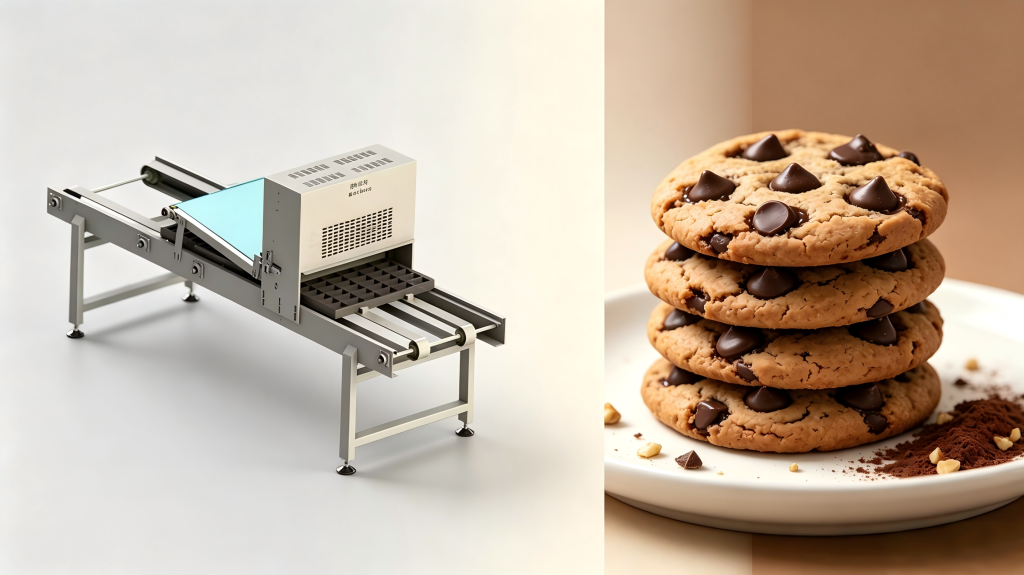
Inclusions are where mechanical blades are most obviously outclassed. A vibrating ultrasonic blade presents a nearly friction-free cutting surface, so hard ingredients are cut where they sit rather than being pushed through the dough. Nuts, raisins, dried fruit and chocolate morsels are separated cleanly without displacement or the plowing effect that ruins portion appearance and weight consistency. For products where surface decoration is the selling point, that difference is visible on every piece.
Protected Shapes and Defined Colours
Because ultrasonic vibration reduces the coefficient of friction to a minimum, the blade passes through dough without compressing it. Delicate moulded shapes keep their outline, and multi-colour extruded dough can be sliced without colours bleeding into one another. The result is a cut surface that stays smooth and defined — an important requirement for seasonal and premium designs where the pattern itself is the product.
Frozen Dough Portioning Without Pre-Chilling
Frozen cookies are a growing category, and they are particularly well suited to ultrasonic portioning. Conventional cutting systems often demand that product be chilled or tempered to a workable state before cutting, and the product frequently needs realigning afterwards. Ultrasonic cutting removes both steps: frozen dough can be portioned directly, and the cut product does not require repositioning before it enters packaging.
The upstream process can be automated with an auto-load conveyor and the downstream process with an exit conveyor, so the cutting station slots into a continuous flow rather than acting as a manual bottleneck.
Output and Accuracy Across the Range
Cookie production volumes vary enormously, so Wanlisonic supplies different configurations within the same ultrasonic platform:
- A compact conveyor slicer for high-speed continuous cutting, with cutting speed up to 180 cuts per minute, also suitable for cake, bread, nougat, candy, cheese and protein bars
- A high-capacity cookie and biscuit cutter running at 110 knives per minute with 1.5 mm cutting accuracy, with cut sizes entered into the control system in advance
- Cookie cutting configurations operating up to 60 cuts per minute with a flat cutting surface and consistent piece size, suited to small and medium-sized biscuit factories
- Tray-extrusion cookie machines using two titanium alloy blades with adjustable cutting speeds and a minimum cutting thickness of 5 mm, CE certified
Vibrating groups can be supplied in different frequencies from 20 to 60 kHz according to the application, keeping operation safe and quiet on the production floor.
Automation and Line Integration
Ultrasonic cutting is most valuable when it is part of a continuous process rather than an isolated machine. Wanlisonic cookie solutions combine extrusion, ultrasonic cutting and automatic conveying or tray arrangement, so cut pieces move directly into the next stage without manual intervention. Connecting the cutter to upstream forming equipment and downstream baking, cooling and packaging systems reduces handling, protects product shape and creates a steadier production rhythm.
Hygiene and Maintenance
A blade that does not accumulate sticky dough is a blade that needs less cleaning. Because product does not adhere to the ultrasonic blade, build-up is minimised and the production time normally lost to cleaning the cutting machinery is reduced. Stainless-steel construction supports routine sanitation, and the design is intended for food-grade production environments operating continuous shifts.
Customization and Product Testing
Cookie formulations behave differently — fat content, dough temperature, inclusion type and moisture all affect cutting performance. Before confirming a configuration, Wanlisonic reviews product dimensions, dough characteristics, required shape or thickness, production capacity and line layout, and cutting tests are recommended for products with unusual formulations. Solutions can be customised for specific product sizes, cutting requirements and capacity targets.
More Than 20 Years in Ultrasonic Food Cutting
Wanlisonic has focused on ultrasonic food machinery for more than 20 years, developing cutting equipment for bakery and food-processing applications across cake, bread, toast, cookie, sandwich, cheese, confectionery and frozen food products. Machines are supplied to more than 1,000 clients and exported to Europe, the United States, the Middle East, Southeast Asia, Oceania and other markets, with in-house R&D and global after-sales support.
Conclusion
As cookie manufacturers compete on design, inclusions and convenience formats, cutting has become a defining production step rather than a finishing detail. The Wanlisonic Ultrasonic Cookie Cutting Machine handles shaped moulded dough, multi-colour products, inclusion-rich recipes and frozen portioning without pre-chilling — delivering clean surfaces, protected shapes and more stable output. For manufacturers planning a new shaped-cookie line or upgrading a manual cutting station, the new demonstration video shows how the technology performs in practice.
FAQ
1. What is an ultrasonic cookie cutting machine?
It is a cutting system in which the blade vibrates at high frequency, creating a nearly friction-free cutting surface that separates dough cleanly without sticking, deformation or displacement of inclusions. See the Wanlisonic ultrasonic cookie cutting machine range for available configurations.
2. Can the machine cut moulded shapes such as stars and flowers?
Yes. Shapes formed by extrusion moulds — including stars, flowers and customised profiles — can be cut with clean, defined edges. The horizontal blade movement can also cut extruded dough directly from the encrusting machine without laying it on a conveyor first.
3. Will nuts, raisins or chocolate morsels be pulled out of the dough during cutting?
No. The vibrating blade cuts hard inclusions in place rather than plowing through them, so nuts, raisins, dried fruit and chocolate morsels are separated without displacement.
4. Can multi-colour cookie dough be cut without colours smearing together?
Yes. Because ultrasonic cutting does not compress the dough, colours stay defined and do not bleed into one another across the cut face.
5. Can frozen cookie dough be cut without pre-chilling?
Yes. Frozen cookies are particularly well suited to ultrasonic portioning, and the process removes the pre-chilling and post-cut realignment steps often required with conventional cutting systems.
6. What cutting speeds and accuracy are available?
Configurations in the Wanlisonic range include conveyor slicers up to 180 cuts per minute, a high-capacity cutter at 110 knives per minute with 1.5 mm accuracy, and tray-extrusion cookie machines with adjustable speed and a minimum cutting thickness of 5 mm. Titanium alloy blades are used, and vibrating groups are available from 20 to 60 kHz.
7. Can Wanlisonic customize a machine for our cookie products?
Yes. Configurations are developed around product dimensions, dough characteristics, required shape and thickness, production capacity and line layout, and Wanlisonic recommends cutting tests before the final specification is confirmed.
Contact Information:
Annie (Senior Customer Consultant)
Email: sales3@wanlisonic.com
Tel / WhatsApp / WeChat: 0086-1588-0521-772