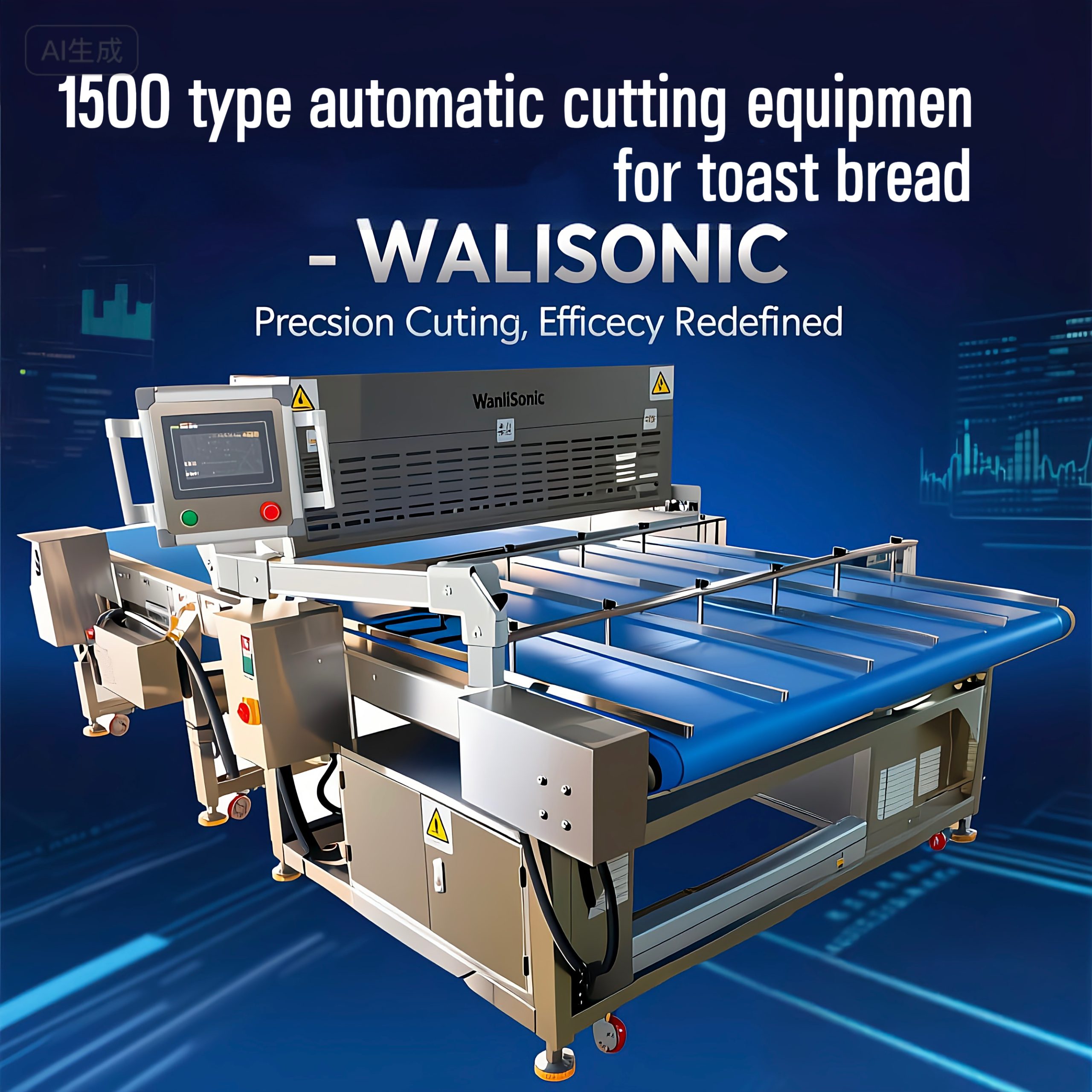
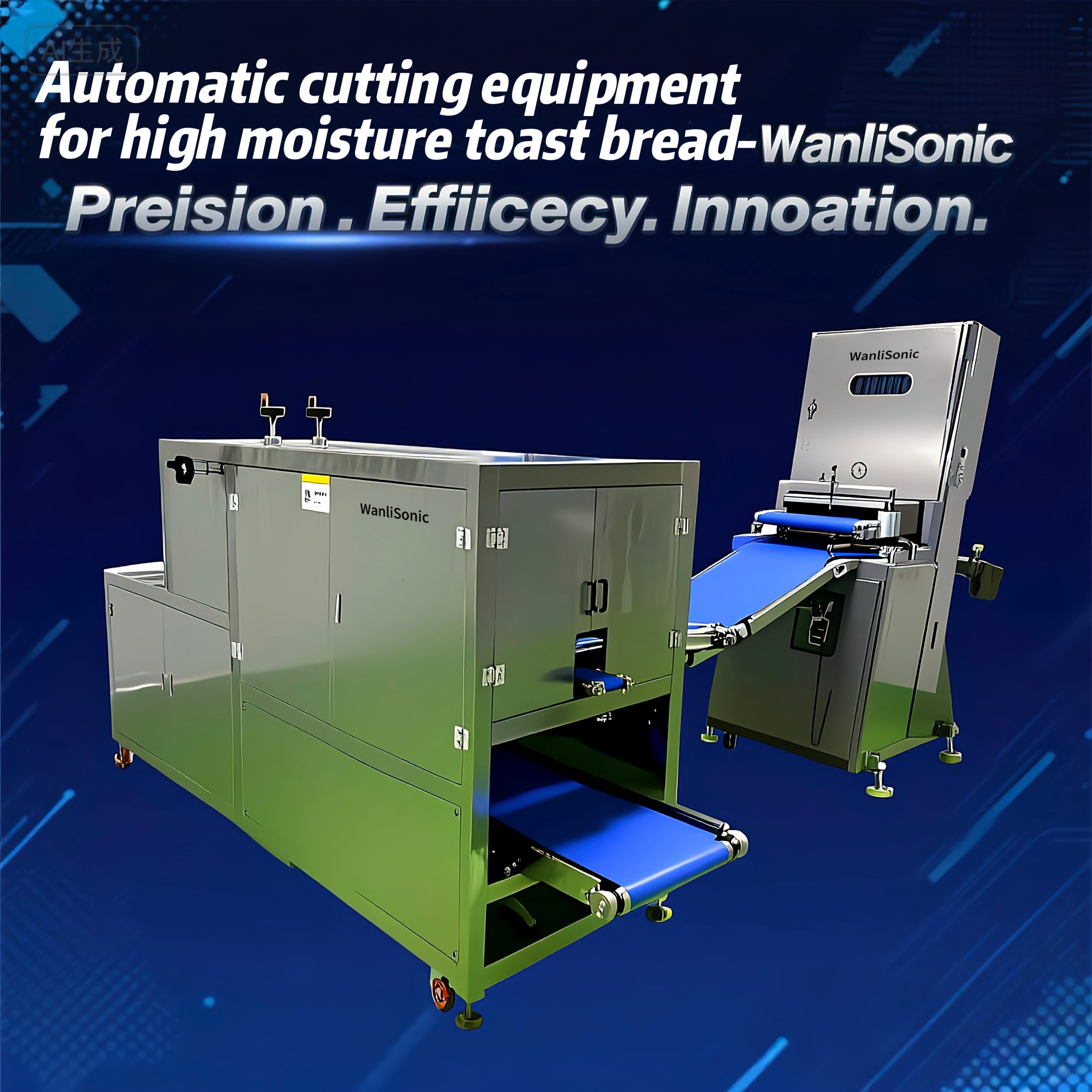
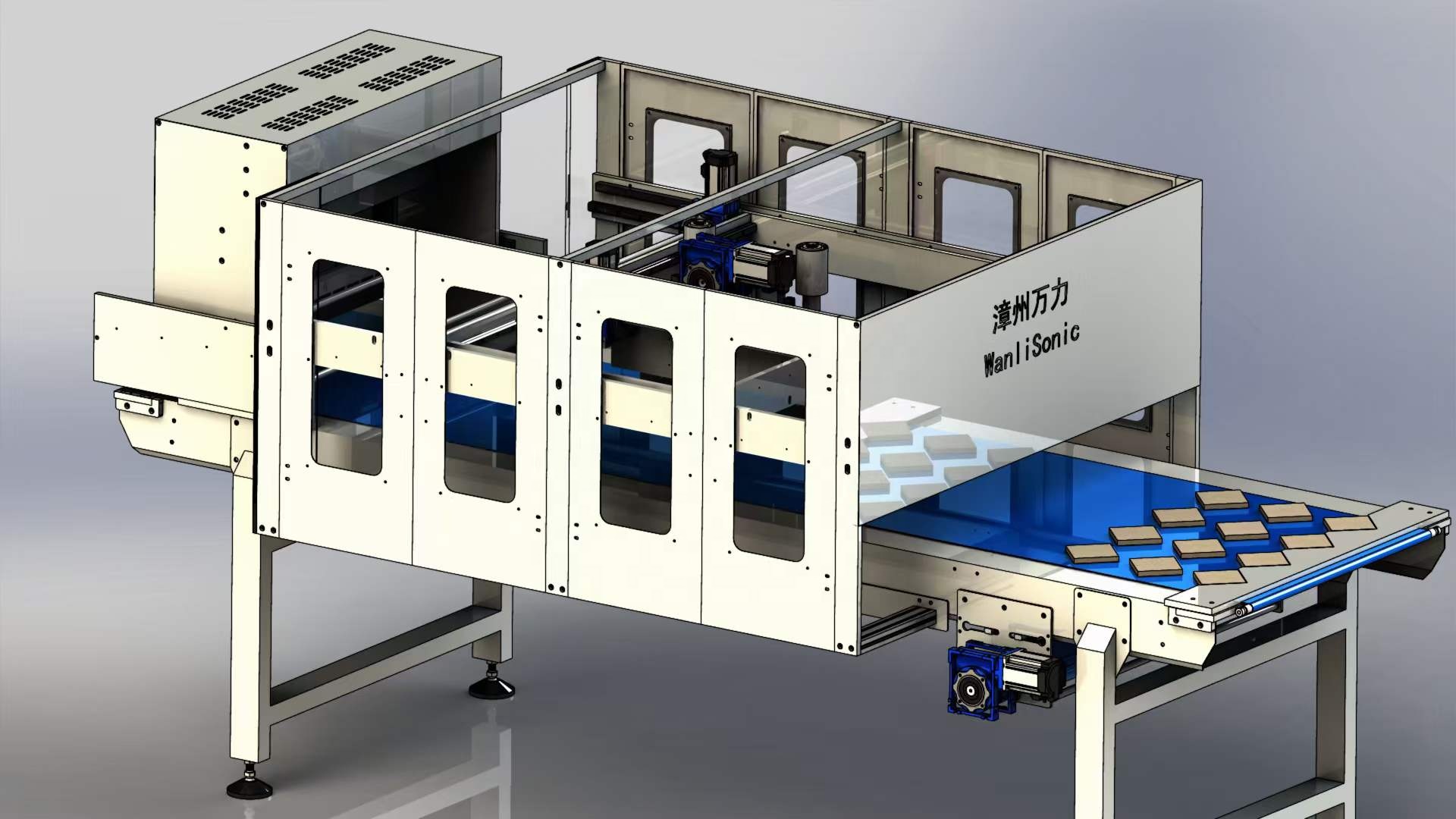
The global ready-to-eat food market is rapidly evolving, and sandwiches have become an increasingly important product for supermarkets, convenience stores, cafés, catering companies, and foodservice operators. As demand grows, manufacturers are looking for automated solutions that can increase output while maintaining consistent product quality, accurate filling, and hygienic production.
A recent YouTube demonstration of a Sandwich Production Line highlights how integrated automation can transform traditional sandwich manufacturing. The production process brings together bread feeding, filling, conveying, sandwich assembly, cutting, and product handling to create a streamlined workflow.
The Wanlisonic Sandwich Production Line represents this development in bakery automation, providing manufacturers with an efficient solution for producing consistent sandwiches at commercial and industrial scale.
Automation Transforms Traditional Sandwich Production
Traditional sandwich preparation requires considerable manual labor. Workers must position bread slices, add fillings, assemble sandwiches, and transfer finished products for packaging.
While manual production can work for small businesses, it becomes difficult to maintain consistent quality when production volumes increase.
An automated sandwich production line addresses these challenges by coordinating multiple processing stages in one continuous system.
A typical production process can include:
Bread Feeding → Filling → Sandwich Assembly → Cutting → Conveying → Packaging
By automating repetitive operations, manufacturers can improve production efficiency while reducing dependence on manual labor.
The Wanlisonic solution is designed around this concept, helping food manufacturers establish a more stable and standardized sandwich production process.
Precise Bread Feeding Creates a Stable Production Flow
The first stage of an automated sandwich line is reliable bread feeding.
Bread slices must enter the production system at the correct position and interval. If bread feeding is inconsistent, downstream filling and cutting operations can become unstable.
Automated bread feeding equipment helps maintain a continuous supply of slices while reducing manual handling.
This provides several benefits:
- Stable production speed
- Accurate bread positioning
- Reduced labor requirements
- Improved production continuity
- Lower risk of human error
For large sandwich factories, stable bread feeding is essential because every subsequent process depends on accurate product positioning.

Automatic Filling Improves Sandwich Consistency
Filling is one of the most important stages in sandwich manufacturing.
Whether the product contains mayonnaise, butter, cheese, meat, jam, cream, egg, tuna, or another filling, the quantity must remain consistent.
Manual filling can lead to variations between products. Some sandwiches may receive too much filling, while others may not receive enough.
An automated filling system solves this problem through controlled dispensing.
The filling quantity can be adjusted according to the product recipe, allowing manufacturers to achieve consistent distribution and portion control.
For commercial sandwich producers, this can improve both product quality and raw-material utilization.
Multiple Filling Options Increase Product Flexibility
Today’s consumers expect variety. Manufacturers may need to produce different sandwich recipes on the same production line.
Depending on the configuration, an automated sandwich line can be adapted for different fillings and recipes.
Potential products include:
- Ham and cheese sandwiches
- Chicken sandwiches
- Egg sandwiches
- Tuna sandwiches
- Vegetable sandwiches
- Cheese sandwiches
- Cream-filled sandwiches
- Jam sandwiches
- Club sandwiches
The ability to change recipes and production parameters allows manufacturers to respond more quickly to market demand.
This flexibility is particularly valuable for companies supplying supermarkets and foodservice customers with multiple sandwich varieties.
Automated Assembly Improves Product Presentation
After filling, bread slices must be accurately aligned and assembled.
Poor alignment can result in filling leakage, uneven edges, or unattractive finished products.
An automated sandwich assembly system ensures that bread and filling are correctly positioned before the final product moves to the next stage.
Consistent assembly provides:
- Uniform sandwich dimensions
- Better filling distribution
- Improved appearance
- Easier packaging
- Reduced product rejection
For retail sandwiches, presentation is an important factor because the finished product must look fresh and professionally prepared.
Ultrasonic Cutting Adds Precision to Sandwich Production
One of the most important technologies associated with modern automated sandwich processing is ultrasonic cutting.
Conventional knives can compress soft bread during cutting and may cause fillings to move or squeeze out.
Ultrasonic cutting technology uses high-frequency vibration to reduce friction and cutting resistance. This allows the blade to pass through bread and fillings more smoothly.
The Wanlisonic ultrasonic cutting system can help manufacturers achieve:
- Clean sandwich edges
- Reduced bread deformation
- Less filling displacement
- Lower crumb generation
- Consistent portion sizes
This is particularly valuable when sandwiches need to be divided into halves, triangles, strips, or other standardized shapes.
Triangle Sandwiches for Retail and Foodservice
Triangle sandwiches are among the most recognizable formats in the convenience food market.
However, producing large quantities of accurately shaped triangle sandwiches manually can be time-consuming.
An automated sandwich production line can combine precise positioning with controlled cutting to produce consistent triangular portions.
Uniform triangle sandwiches are easier to package and display, while consistent dimensions also help manufacturers control product weight and packaging requirements.
This makes automated cutting particularly useful for supermarkets, convenience stores, airlines, hotels, catering companies, and institutional foodservice operations.
Increased Production Capacity
Labor availability has become an important issue for food manufacturers around the world.
Sandwich production involves many repetitive tasks, including bread handling, filling, assembly, cutting, and transfer.
Automation can significantly reduce the amount of manual intervention required.
The Wanlisonic Sandwich Production Line allows multiple operations to be integrated into a continuous production process, helping manufacturers increase throughput without simply adding more workers.
Higher automation can provide:
- Greater production capacity
- Lower labor costs
- More stable output
- Reduced production interruptions
- Improved production planning
This makes automated sandwich production particularly attractive to medium-sized and large food manufacturers.
Improved Food Hygiene
Food hygiene is a critical consideration for ready-to-eat sandwich production.
Because sandwiches are often consumed without additional cooking, manufacturers must maintain strict hygiene throughout the production process.
Automation reduces unnecessary human contact with food products.
The use of stainless-steel food-processing equipment also makes production systems easier to clean and maintain.
By minimizing manual handling and creating a controlled production environment, automated sandwich lines can support better hygiene management and more consistent food safety practices.
Reducing Food Waste and Production Costs
Automation can also help manufacturers control production waste.
Manual sandwich preparation may result in inconsistent filling quantities, damaged bread, incorrect portions, and rejected products.
Precision equipment can reduce these variations.
Consistent filling and cutting help manufacturers use ingredients more efficiently, while accurate portioning reduces unnecessary product loss.
For high-volume production, even small reductions in waste can have a significant effect on overall operating costs.
The result is a production system that not only improves product quality but can also contribute to better profitability.
A Flexible Solution for Modern Food Factories
One of the biggest advantages of a complete sandwich production line is flexibility.
Manufacturers can configure equipment according to their specific product requirements, production capacity, sandwich dimensions, filling types, and packaging processes.
A line can also be expanded as production demand increases.
This makes automated sandwich production suitable for businesses at different stages of development—from growing food manufacturers to large industrial sandwich factories.
Wanlisonic Supports the Future of Sandwich Automation
The latest YouTube demonstration of a Sandwich Production Line reflects the broader transformation taking place in the food manufacturing industry.
Modern sandwich production is moving away from labor-intensive manual processes toward integrated systems that combine feeding, filling, assembly, cutting, conveying, and packaging.
With its focus on food automation and ultrasonic cutting technology, Wanlisonic provides manufacturers with equipment designed to improve precision, efficiency, consistency, and production hygiene.
As demand for convenient ready-to-eat foods continues to increase, automated sandwich production lines will become increasingly important for manufacturers seeking higher output and better control over production quality.
The future of sandwich manufacturing is not simply about making more products. It is about making consistent, hygienic, attractive, and cost-effective products at scale. Wanlisonic’s automated sandwich production solutions provide an important step toward that future.
FAQ
1. What is a Sandwich Production Line?
A Sandwich Production Line is an automated system that integrates multiple processes such as bread feeding, filling, sandwich assembly, cutting, conveying, and packaging into one continuous production workflow.
2. What types of sandwiches can an automated production line make?
Depending on the configuration, the line can produce ham and cheese sandwiches, chicken sandwiches, egg sandwiches, tuna sandwiches, vegetable sandwiches, triangle sandwiches, cream sandwiches, and many other products.
3. Can Wanlisonic equipment produce triangle sandwiches?
Yes. An automated sandwich line can be configured with precision cutting equipment to produce uniform triangular sandwich portions for retail, catering, and foodservice applications.
4. What are the advantages of an automated sandwich production line?
The major advantages include higher production efficiency, reduced labor requirements, consistent filling, uniform sandwich dimensions, improved hygiene, reduced waste, and more stable product quality.
5. Can ultrasonic cutting be used for sandwich production?
Yes. Ultrasonic cutting technology can cut bread and sandwiches with reduced mechanical pressure, helping minimize deformation, crumbs, and filling displacement.
6. Can the production line be customized?
Yes. Production lines can be configured according to sandwich size, bread type, filling, production capacity, cutting style, and packaging requirements.
7. Is the Wanlisonic sandwich production line suitable for industrial production?
Yes. The automated design is intended to support commercial and industrial food production, particularly where manufacturers require continuous processing and consistent output.
Contact Information: Annie (Senior Customer Consultant)
📧 Email: sales3@wanlisonic.com
📞 Tel / WhatsApp / WeChat: 008615880521772