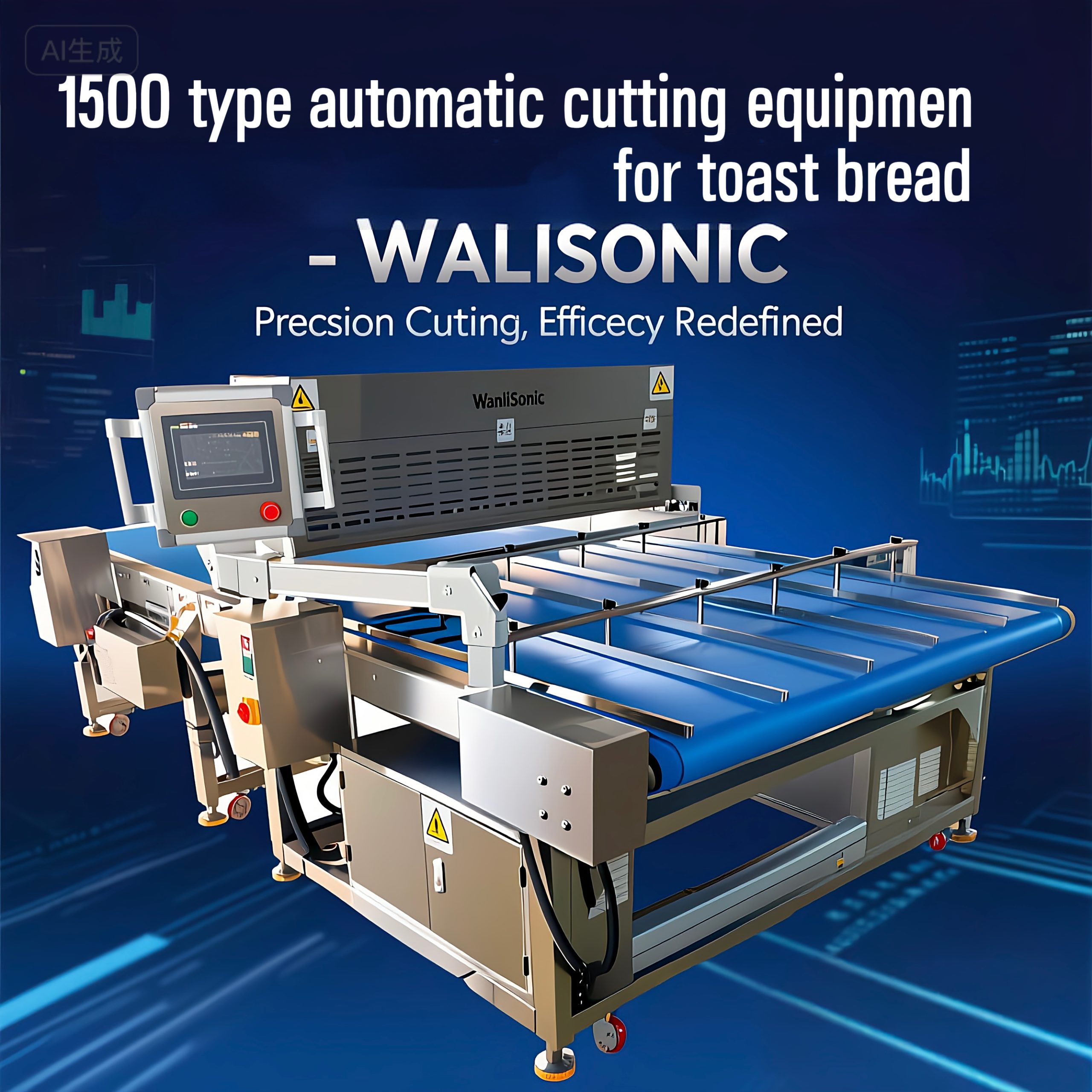
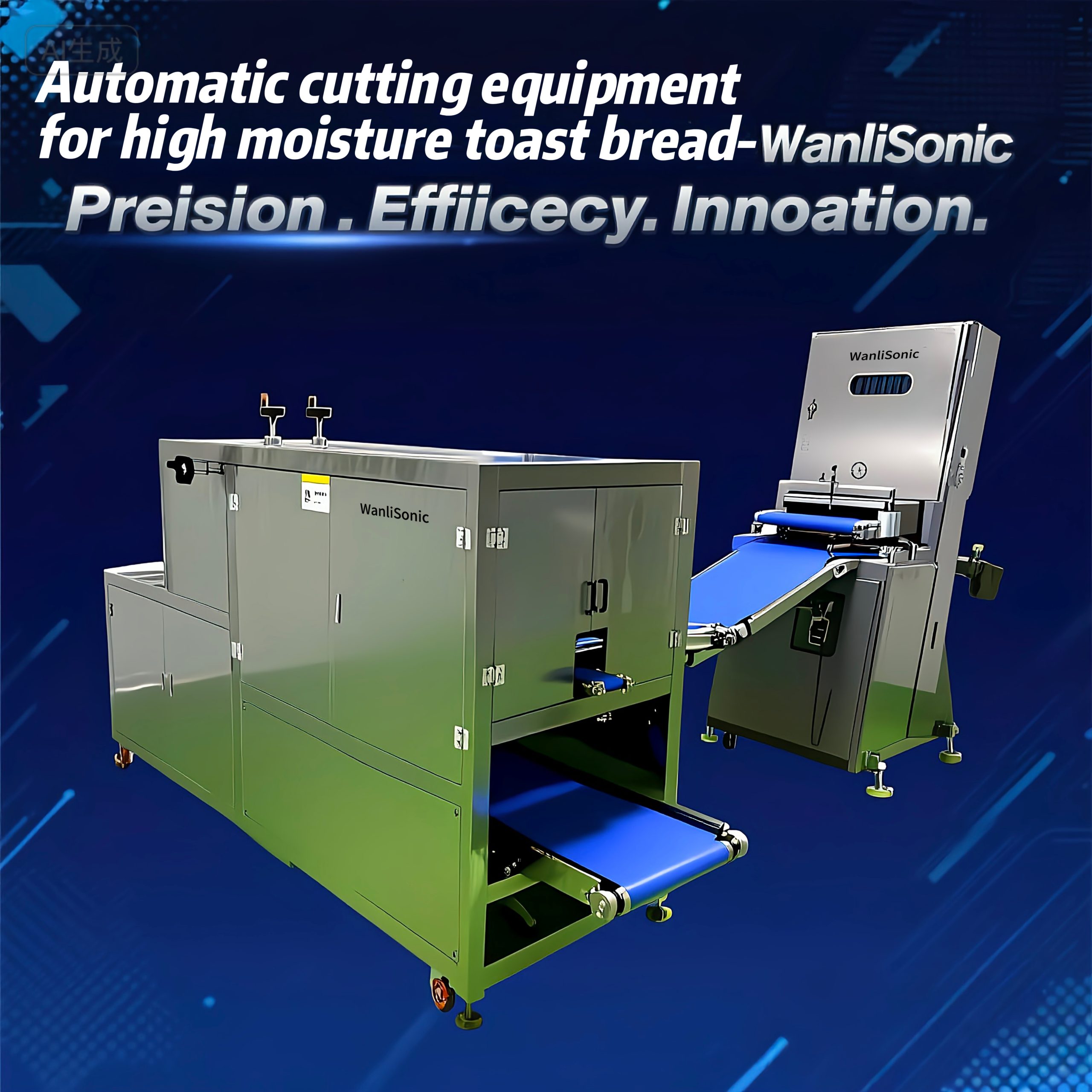
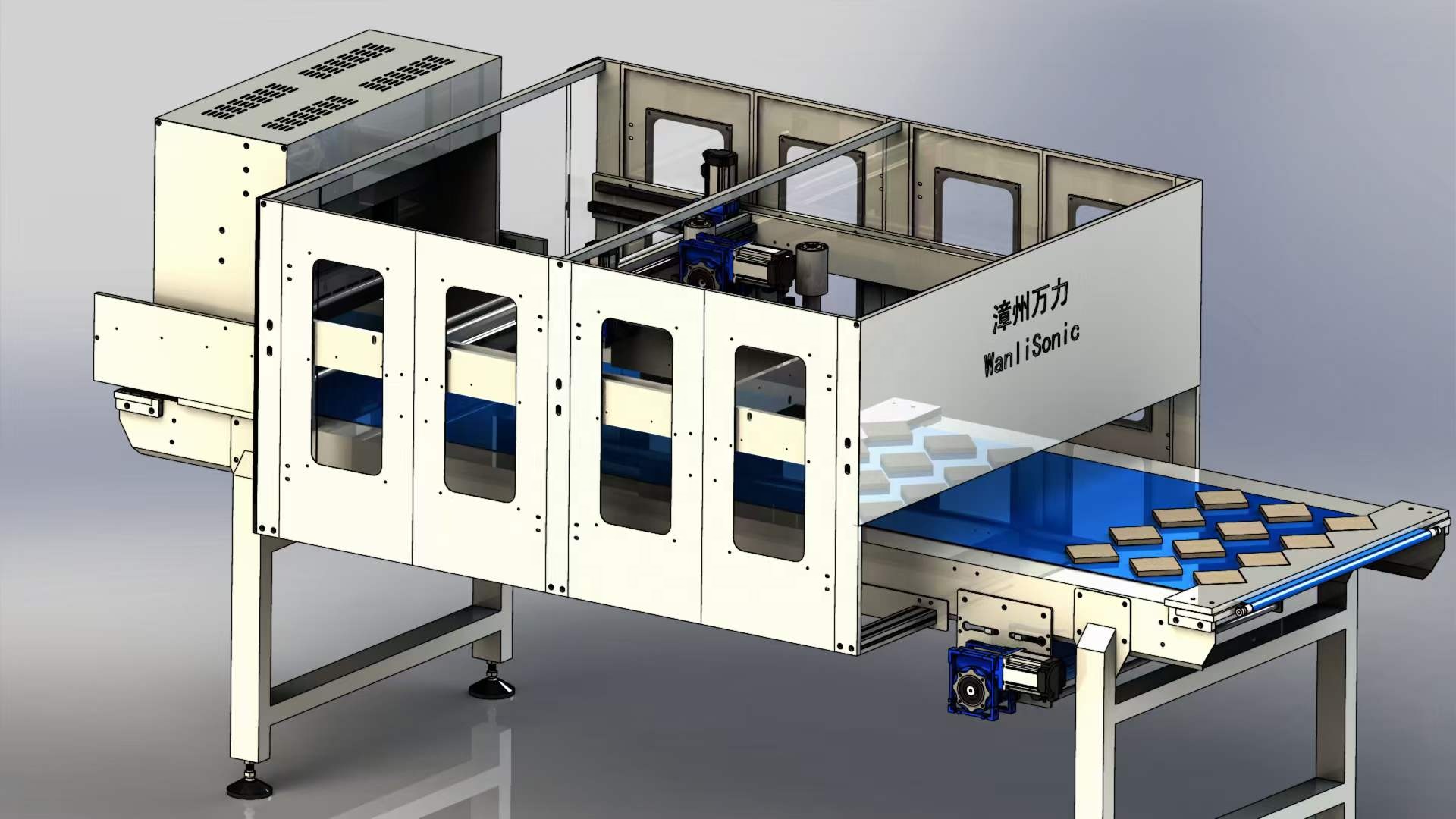
Commercial bakeries rarely produce only one Swiss roll. A single line may handle whipped cream, jam, chocolate or chilled dessert rolls in several diameters and portion sizes. Each recipe changes how the sponge and filling respond to pressure, temperature and blade contact. The Wanlisonic Ultrasonic Swiss Roll Cutter helps manufacturers build a more controlled cutting process around these variations, supporting cleaner portions and more repeatable results after product changeovers.
A 42-second Wanlisonic ultrasonic Swiss roll cutting demonstration was published on YouTube on November 24, 2026. The video is titled “Ultrasonic Swiss Roll Cutter.” Its public information does not identify a machine model or disclose speed, accuracy, frequency or capacity, so those values are not assigned to the demonstrated equipment in this article.
Why Does One Cutting Program Not Suit Every Swiss Roll?
Swiss rolls share a cylindrical form, but their cutting behaviour can vary substantially. A light sponge with whipped cream may compress easily, while a denser chocolate roll may require different support. Jam can adhere to the blade differently from cream, and an external coating can respond differently from the product beneath it.
A fixed setup may therefore produce:
- Filling smear after a recipe change
- Sponge compression on softer products
- Cracking in firmer coatings
- Uneven slice geometry between roll diameters
- Residue carried from one recipe to the next
- Extra trial cuts before stable production begins
The challenge is not simply making a clean cut once. The production objective is to reproduce an acceptable cut when the bakery changes recipes, product dimensions or operating temperature.
How Does Ultrasonic Cutting Create a Wider Process Window?
An ultrasonic cutter applies high-frequency mechanical vibration to the blade. This action reduces friction between the blade and the food, allowing it to separate sponge and suitable fillings with less mechanical pressure than a stationary knife.
Reduced resistance can support:
- Less sponge compression
- Lower filling adhesion at the blade
- Cleaner visible spirals
- Fewer crumbs and torn edges
- Better retention of the cylindrical profile
- More stable portions for handling
Ultrasonic technology does not make every recipe behave identically. It gives manufacturers a more controllable cutting method, while recipe condition, machine settings and product handling still determine the final result.
Product Temperature Defines the Cutting Window
Temperature affects sponge softness, filling viscosity, coating firmness and blade adhesion. A cream-filled roll may become less stable as it warms. A chilled chocolate coating may crack if the product condition and cutting movement are not balanced. Even products made from the same recipe can cut differently if cooling time varies.
Before saving a production setup, manufacturers should define:
- Roll temperature at the cutting point
- Time between cooling and cutting
- Sponge moisture and resilience
- Filling type, thickness and viscosity
- External coating or decoration
- Roll diameter and target slice thickness
These factors create the operating window for a recipe. Recording them with the cutting setup helps separate genuine machine variation from changes introduced upstream.
Recipe Management Supports Faster Changeovers
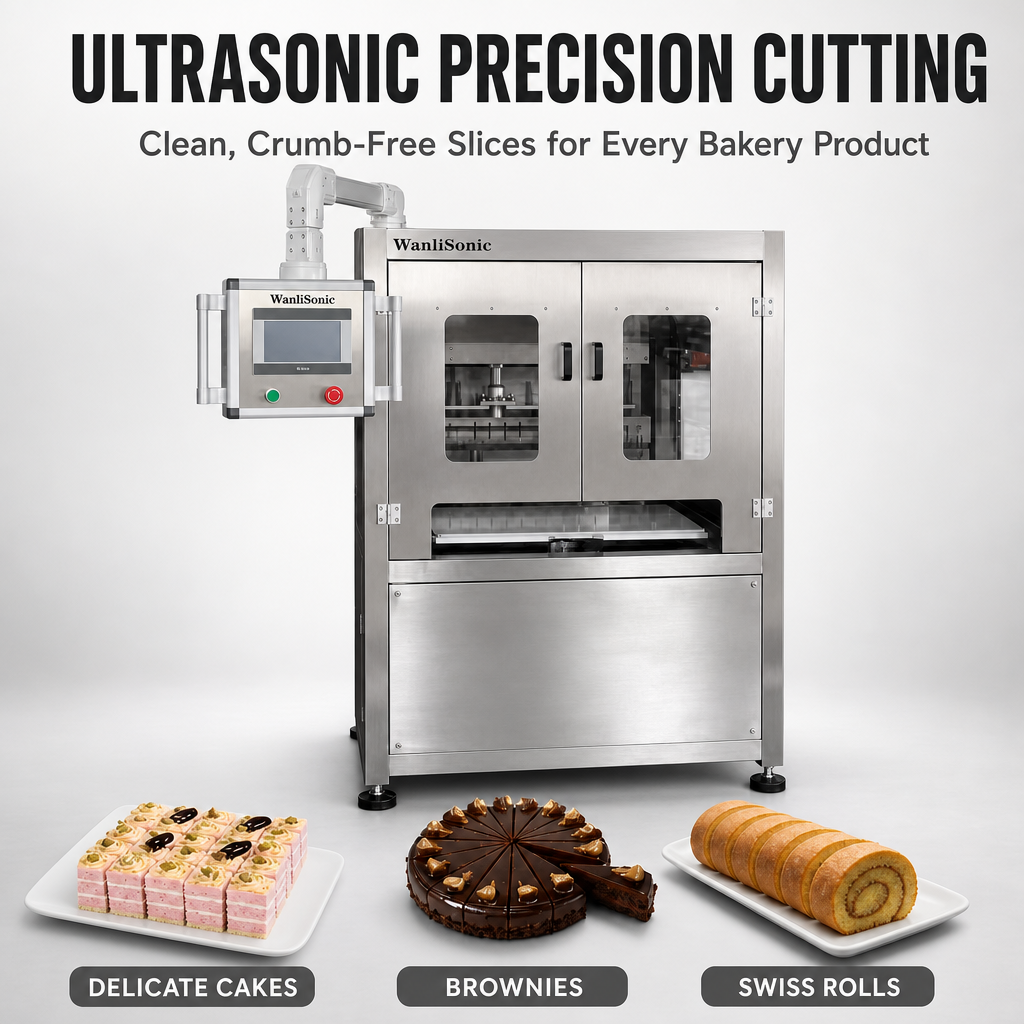
The Wanlisonic Automatic Ultrasonic Swiss Roll Cake Cutter Machine product page describes adjustable cutting settings and touchscreen control. These published features can help a bakery organize settings for different products, although the final functions must be confirmed for the selected machine configuration.
A structured changeover can follow five stages:
- Clear the previous product: Remove remaining rolls and visible residue.
- Inspect product-contact areas: Check the blade, conveyor and supports.
- Select or enter the recipe: Apply the approved settings for the next roll.
- Run first-piece checks: Evaluate shape, spiral, filling and dimensions.
- Release production: Continue only after the result meets the factory standard.
This procedure reduces dependence on operator memory. It also makes adjustments traceable when a recipe, ingredient supplier or product temperature changes.
First-Piece Approval Protects the Complete Batch
The first acceptable slice is more than a visual sample. It confirms that the product condition and machine setup are working together before a full batch enters production.
A practical first-piece inspection can review:
- Whether the roll remains round
- Whether the spiral stays clearly visible
- Whether filling is dragged across the face
- Whether the sponge tears or creates excess crumbs
- Whether slice dimensions suit the package
- Whether residue begins accumulating on the blade
If a defect appears, the bakery can investigate product temperature, filling behaviour, supports or settings before creating a larger quantity of nonconforming portions. This makes start-up control an important part of material-yield protection.
Managing Blade Residue Between Recipes
Cream, jam and chocolate can leave different residues. Carryover may affect the appearance of the next product and can create allergen or flavour-separation concerns when formulations change.
Ultrasonic vibration helps reduce product adhesion during cutting, but it does not replace sanitation. Changeover procedures must still follow the bakery’s validated cleaning and food-safety program. Operators should have clear criteria for stopping, cleaning, inspecting and releasing the machine for the next recipe.
This distinction matters: reduced sticking can support longer stable runs, while hygienic release depends on verified cleaning—not on the cutting technology alone.
Consistency Must Continue into Packaging
A successful setup should create slices that remain stable after cutting. Product deformation, filling smear or irregular thickness can disturb tray loading, individual wrapping and multipack presentation.
For each recipe, manufacturers should connect the cutting standard with downstream requirements:
- Target slice dimensions
- Permitted visual defects
- Required orientation
- Spacing before wrapping
- Tray or wrapper size
- Inspection and rejection criteria
This approach makes the cutter part of a controlled product specification rather than an isolated machine. Repeatable portions support both visual brand consistency and a steadier packaging process.
Evaluating Return on Investment Through Changeover Performance
Nominal cutting speed does not show the full business value of a Swiss roll cutter. A bakery should also measure start-up scrap, time to reach an approved first piece, cleaning interruptions, manual corrections and rejected portions after each changeover.
The Wanlisonic Ultrasonic Swiss Roll Cutter can create value by reducing cutting resistance and giving manufacturers a programmable basis for repeatable production. The strongest application combines the equipment with controlled cooling, documented recipes, first-piece approval and disciplined sanitation.
Before recommending a solution, Wanlisonic should review every intended roll—not only the easiest product. Representative samples, product dimensions, cutting temperatures, fillings, coatings, portion formats, production demand and factory layout provide the technical basis for configuration.
Contact Wanlisonic
- Email: sales3@wanlisonic.com
- Tel / WhatsApp / WeChat: +86 15880521772
Send your Swiss roll recipes, dimensions, cutting temperatures, target portions, changeover requirements and factory layout to Wanlisonic for an application-based recommendation.
FAQ
1. What is an ultrasonic Swiss roll cutter?
It uses a high-frequency vibrating blade to portion Swiss rolls with less friction and mechanical pressure than a stationary knife.
2. Can one machine process different Swiss roll recipes?
Wanlisonic can evaluate cream-, jam-, chocolate- and other suitable Swiss roll applications. Each recipe may require different settings, supports and operating temperatures.
3. Why is first-piece approval important?
It verifies that product condition and machine setup can produce the required shape, spiral, cut face and dimensions before the full batch is processed.
4. Can settings be adjusted for different products?
Wanlisonic’s published product page describes adjustable settings and touchscreen control. Available recipe and control functions should be confirmed for the selected configuration.
5. Does ultrasonic cutting eliminate cleaning during changeovers?
No. Vibration can reduce adhesion, but validated cleaning, inspection, allergen control and hygienic release procedures remain necessary.
6. What information should be supplied for machine evaluation?
Provide every intended recipe, roll dimensions, filling and coating types, cutting temperatures, portion sizes, required output, packaging method and factory layout. Product samples are recommended.