Introduction: Why Is Cake Cutting Still a Challenge for Bakeries?
In the modern bakery industry, product quality depends not only on recipes and ingredients but also on the precision of every processing step. Cake cutting is particularly important because it directly affects product appearance, portion consistency, packaging efficiency, and customer satisfaction.
However, traditional cake-cutting methods can create several challenges. Soft sponge cakes may become compressed, cream fillings can smear across the cutting surface, and sticky ingredients may accumulate on conventional blades. These problems become more noticeable when manufacturers process layered cakes, cheesecakes, mousse cakes, and other delicate desserts in large quantities.
How can bakeries overcome these challenges while maintaining consistent quality and improving productivity?
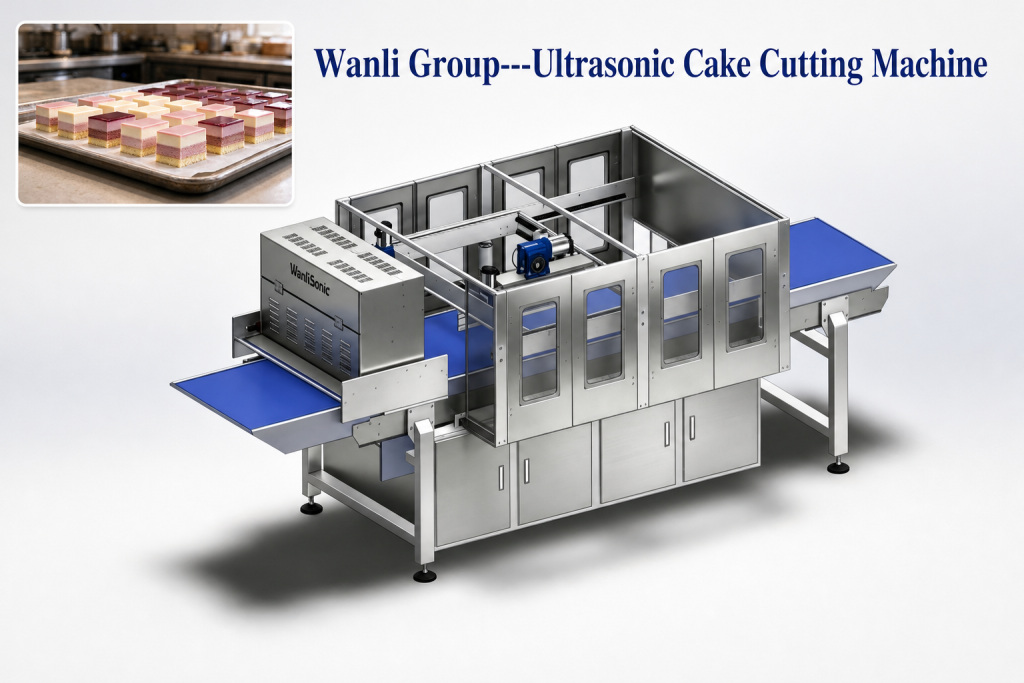
Wanli Group, through its Wanlisonic brand, provides ultrasonic cake cutting solutions designed to deliver clean cuts, consistent portions, and efficient food processing. By combining high-frequency ultrasonic vibration with automated cutting technology, Wanlisonic helps food manufacturers improve their cutting operations and meet the demands of modern bakery production.
1. What Makes Ultrasonic Cake Cutting Different from Traditional Cutting?
Conventional cake-cutting equipment relies mainly on mechanical force to separate products. Although this method can work well for certain applications, it may cause deformation or uneven cutting when handling soft, sticky, or multilayer cakes.
Ultrasonic cutting technology offers an alternative approach.
An ultrasonic generator converts electrical energy into high-frequency energy. A transducer then converts this energy into mechanical vibration, which is transmitted to the specially designed cutting blade.
The blade vibrates at high frequency, reducing friction and resistance during cutting. This allows it to pass through many soft or sticky food products more smoothly than a conventional blade.
For bakeries, the main benefits include:
- Cleaner cutting surfaces: Helps produce neat edges and improve the visual appearance of cake portions.
- Reduced product deformation: Minimizes the pressure required to cut delicate cakes.
- Less ingredient buildup: Reduces the tendency of cream, chocolate, and other sticky ingredients to adhere to the blade.
- More consistent portions: Supports repeatable cutting patterns and standardized product sizes.
- Improved processing efficiency: Helps reduce interruptions associated with manual cutting and frequent blade cleaning.
The actual cutting performance depends on the product’s ingredients, temperature, dimensions, and texture, as well as the selected machine configuration.
2. How Does Wanlisonic Help Maintain Cake Appearance?
For commercial bakeries, appearance is a critical part of product value. A cake may have excellent flavor and texture, but rough edges or squeezed fillings can reduce its appeal on retail shelves.
This is especially important for cakes containing multiple layers of sponge, cream, fruit filling, chocolate, or mousse. Each layer contributes to the product’s appearance, and excessive cutting pressure can damage the structure.
The Wanlisonic ultrasonic cake cutting machine is designed to address these processing challenges by reducing friction during the cutting process.
When the machine is correctly configured for the product, ultrasonic cutting can help maintain the shape of delicate cakes and create smoother cutting surfaces. It can also reduce smearing between layers, making the finished portions more attractive.
For premium dessert manufacturers, these advantages can support:
- More professional product presentation.
- Better visibility of cake layers and fillings.
- More uniform retail portions.
- Reduced rejection caused by cutting defects.
- Improved consistency between production batches.
For manufacturers supplying supermarkets, hotels, restaurants, catering companies, or dessert brands, consistent presentation can help strengthen product quality and brand reputation.
3. Can Ultrasonic Cake Cutting Improve Production Efficiency?
Manual cake cutting requires considerable operator involvement. Workers must position products, measure portions, perform cuts, and maintain consistency throughout production.
As order volumes increase, manual operations can become difficult to scale. Differences in operator technique may also result in inconsistent portion sizes.
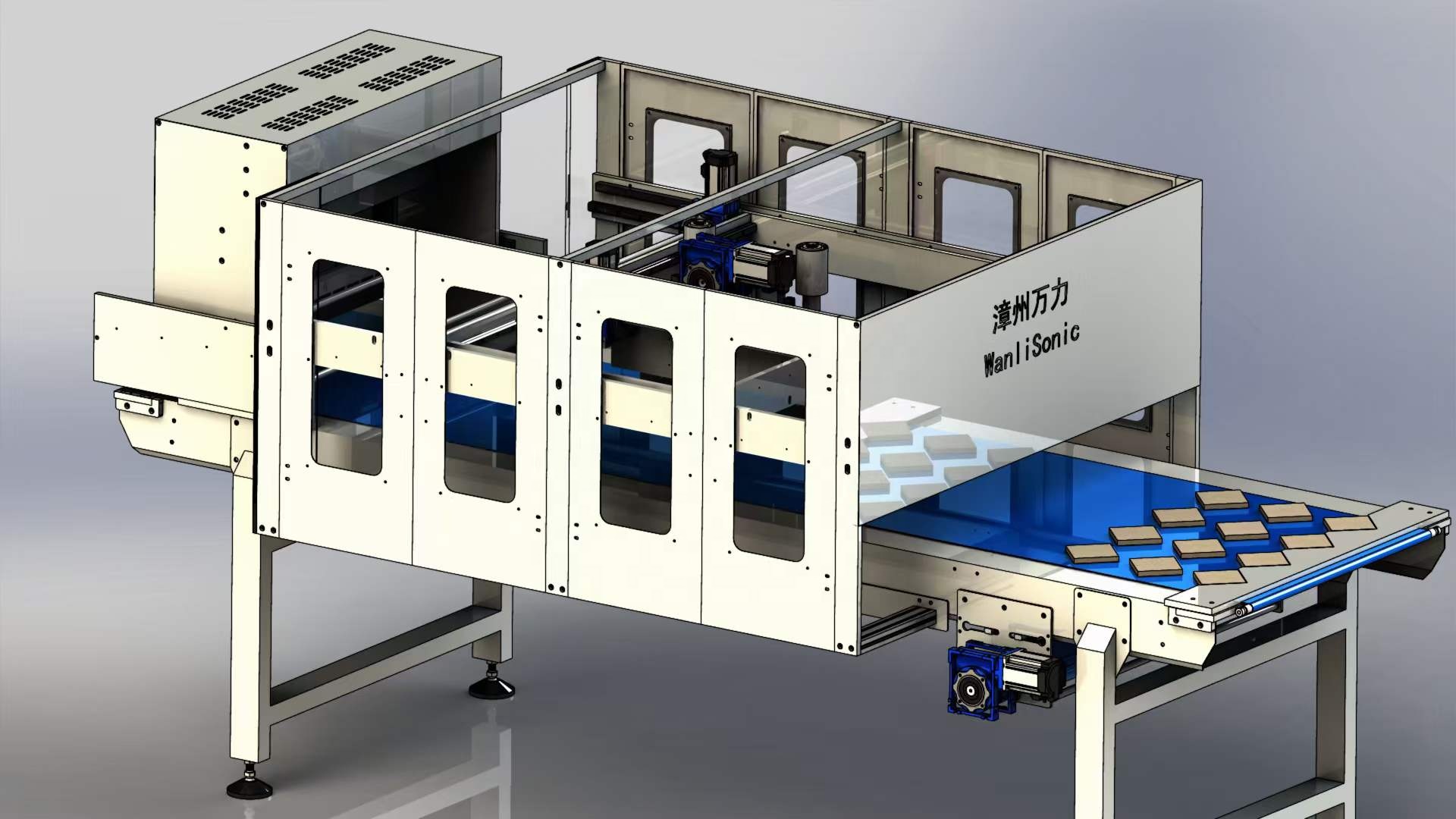
Wanli Group offers ultrasonic cake cutting equipment designed to support more standardized processing. Depending on the selected model, the machine can incorporate conveyor transportation, programmable cutting parameters, and automated cutting movements.
These functions help manufacturers establish a more repeatable production process.
Key operational benefits may include:
Reduced manual intervention
Automated product positioning and cutting can reduce repetitive manual work and help operators manage production more efficiently.
Repeatable cutting patterns
Programmable settings allow manufacturers to establish cutting parameters suited to specific products and portion dimensions.
More organized production flow
For suitable configurations, conveyor systems can help coordinate product transportation and cutting operations.
Improved production planning
More consistent cutting procedures make it easier to organize downstream weighing, packaging, and quality inspection.
It is important to select equipment according to the required output, product dimensions, cutting pattern, and factory layout. Actual production capacity varies by application and machine configuration.
4. Which Cake Products Can Wanlisonic Ultrasonic Machines Process?
Different cake products present different cutting challenges. A soft sponge cake behaves differently from a dense cheesecake, while a frozen mousse cake may require different processing conditions from a room-temperature dessert.
Wanlisonic ultrasonic cutting technology can be considered for a variety of bakery and dessert applications, including:
Layer cakes
Ultrasonic cutting can help reduce filling smearing and preserve the appearance of individual layers.
Cheesecakes
Cheesecakes can be soft, dense, or sticky depending on their formulation. Suitable ultrasonic cutting configurations can help produce cleaner portions.
Mousse cakes
Delicate mousse products require careful control of cutting conditions to avoid deformation and maintain smooth surfaces.
Brownies and bar cakes
Standardized cutting patterns can help manufacturers produce uniform rectangular or square portions.
Frozen cakes and desserts
Ultrasonic cutting may also be suitable for selected frozen products, subject to their temperature, hardness, and structural characteristics.
Swiss rolls and filled cakes
For suitable products, ultrasonic blades can help reduce the dragging of cream and preserve the appearance of the cut surface.
Not every machine can process every product or cutting pattern. Before selecting equipment, manufacturers should confirm product dimensions, maximum cutting height, temperature, portion size, and required output with the Wanlisonic technical team.
5. How Does Automation Support Consistent Portion Control?
Portion consistency is important for product pricing, packaging, inventory management, and customer satisfaction.
When cakes are cut manually, even small differences in slice dimensions can affect the weight and appearance of individual portions. In large-scale production, these differences can accumulate and increase material waste.
Wanlisonic ultrasonic cake cutting equipment can be configured with control systems that support repeatable cutting movements and predefined cutting patterns.
Depending on the model, operators may be able to set relevant parameters through a touchscreen interface. Servo-driven movements and programmable controls can help execute cutting operations accurately and consistently.
For example, a bakery producing rectangular cake portions may require a fixed number of rows and columns. Another manufacturer may need different portion dimensions for several product sizes.
The appropriate machine configuration can be selected according to these requirements.
By standardizing cutting operations, manufacturers can improve production repeatability and reduce dependence on manual measurement. Final portion accuracy still depends on the product’s original dimensions, positioning, formulation, and machine setup.
6. Why Are Hygiene and Blade Maintenance Important?
Food safety and equipment cleanliness are essential considerations in every commercial bakery.
Cream, chocolate, fruit fillings, and other ingredients can accumulate on cutting blades during production. Frequent residue buildup may require additional cleaning and interrupt the manufacturing process.
Because ultrasonic vibration reduces friction during cutting, it can help limit ingredient adhesion in suitable applications. This may reduce cleaning frequency and support more continuous operation, although it does not eliminate the need for sanitation.
Wanli Group designs food-processing machinery with practical production requirements in mind. Depending on the equipment configuration, food-contact components and machine structures can be selected to support hygienic operation and routine cleaning.
To maintain reliable performance, operators should follow the manufacturer’s instructions for:
- Cleaning and sanitizing food-contact components.
- Inspecting blades and other cutting components.
- Checking conveyor belts and transmission systems.
- Maintaining ultrasonic generators and transducers.
- Confirming machine settings before production.
- Following appropriate food-safety procedures.
Regular maintenance helps protect cutting quality, extend component service life, and reduce unexpected downtime.
7. How Can You Choose the Right Wanlisonic Cake Cutting Machine?
Selecting an ultrasonic cake cutter requires more than comparing machine prices or production speeds. The best solution depends on the actual product and manufacturing process.
Before requesting a quotation, manufacturers should prepare the following information:
Product type and ingredients: Identify whether the product is sponge cake, cheesecake, mousse cake, brownie, or another dessert.
Product dimensions: Provide the length, width, and height of the cake, including any variation between batches.
Product temperature: Specify whether the product is at room temperature, chilled, or frozen.
Cutting requirements: Describe the required portion dimensions, number of cuts, and preferred shape.
Production capacity: Indicate the target output per minute or hour.
Automation requirements: Confirm whether a standalone machine is sufficient or whether conveyor integration and connection to an existing production line are required.
Factory conditions: Provide available electrical power, installation space, and other relevant production requirements.
With this information, the Wanlisonic team can evaluate the application and recommend a suitable machine configuration.
Where necessary, product samples and cutting trials can help verify cutting quality before equipment specifications are finalized.
Conclusion: A Smarter Approach to Cake Cutting with Wanlisonic
As the bakery industry continues to develop, manufacturers need cutting solutions that balance product appearance, portion consistency, operational efficiency, and hygiene.
Wanli Group’s ultrasonic cake cutting technology offers an alternative to conventional mechanical cutting for many soft, sticky, and delicate food products. Through high-frequency blade vibration and application-specific automation, Wanlisonic helps manufacturers address common cutting challenges and establish more consistent production processes.
Whether you produce layered cakes, cheesecakes, brownies, mousse cakes, or other bakery products, selecting the right cutting solution starts with understanding your product and production requirements.
Looking for a suitable ultrasonic cake cutting machine for your bakery? Contact Wanlisonic to discuss your product dimensions, cutting specifications, and production goals. The team can help evaluate your application and identify an appropriate equipment solution.
FAQ—Wanlisonic Ultrasonic Cake Cutting Machine
1. What is an ultrasonic cake cutting machine?
An ultrasonic cake cutting machine uses high-frequency mechanical vibration to help a specially designed blade cut food products with reduced friction. It is suitable for many soft, sticky, and delicate bakery products.
2. What are the main advantages of ultrasonic cake cutting?
Its main advantages include smoother cutting surfaces, reduced product deformation, less ingredient buildup on the blade, more consistent portions, and improved processing efficiency in suitable applications.
3. Can Wanlisonic cut different types of cakes?
Yes. Depending on the machine model and product characteristics, ultrasonic cutting solutions can be used for products such as layer cakes, cheesecakes, mousse cakes, brownies, Swiss rolls, and selected frozen desserts.
4. Can the machine produce cakes in different shapes and sizes?
Suitable configurations can support different cutting patterns and portion dimensions. The available shapes, product sizes, and cutting height depend on the selected model and must be confirmed before ordering.
5. Is an ultrasonic cake cutting machine suitable for industrial production?
Yes. Wanlisonic offers equipment designed for commercial and industrial food-processing applications. The appropriate configuration depends on the required output, product specifications, and level of automation.
6. Does ultrasonic cutting eliminate the need for blade cleaning?
No. Ultrasonic vibration can reduce ingredient adhesion, but regular cleaning and sanitizing remain necessary to maintain food safety and reliable operation.
7. How can I choose the right machine for my cake products?
Provide the product dimensions, height, temperature, ingredients, required portion size, and target production capacity. Wanlisonic can use these details to evaluate the application and recommend a suitable configuration.
Contact Information
Mia Wu (Senior Customer Consultant)
📧 Email: sales1@wanlisonic.com
📞 Tel / WhatsApp / WeChat: +86 15759607601