Frozen cakes create a unique cutting challenge for industrial bakeries. Their outer layers may be firm at low temperature, while mousse, cream, sponge, fruit filling or chocolate inside can respond differently to blade pressure. A conventional knife may crack a hard coating, crush a softer layer or drag filling across the cut surface. The Wanlisonic Ultrasonic Frozen Cake Cutting Machine gives manufacturers a more controlled method for producing clean, repeatable portions while preserving the structure of temperature-sensitive desserts.
A demonstration of the Wanlisonic Ultrasonic Cake Cutting Machine was uploaded on October 14, 2026. The 44-second video presents ultrasonic cake cutting in operation. This article focuses on the frozen-cake application requested for the demonstration; the video itself does not state a model, product temperature or output specification.
Why Is Frozen Cake Cutting So Difficult?
Freezing can make a cake easier to handle, but it does not make every layer behave in the same way. A frozen sponge may become more brittle, a chocolate shell can crack, and cream or mousse may still adhere to the blade as the product temperature changes. Traditional cutting therefore creates several risks:
- Hard surfaces can fracture or chip under blade pressure.
- Soft internal layers may compress or shift.
- Cream and filling can smear across the visible cut face.
- Crumbs or fragments may reduce the value of each portion.
- Irregular slices can complicate tray loading and packaging.
- Residue build-up can force operators to interrupt production for cleaning.
These problems are especially costly for premium frozen desserts, where customers can see every layer through transparent packaging. Cutting quality directly affects presentation, portion yield and the number of products that reach saleable condition.

How Does Ultrasonic Technology Change the Cut?
Ultrasonic cutting applies high-frequency vibration to the blade. This vibration reduces friction between the cutting tool and the cake, allowing the blade to pass through the product with less mechanical force than a conventional stationary knife.
For frozen and chilled desserts, lower resistance supports:
- Cleaner edges with fewer cracks and crumbs
- Less compression of sponge, mousse and cream layers
- Reduced adhesion of filling to the blade
- Better preservation of coatings and decorations
- More repeatable portion dimensions
- A clearer cross-section for premium presentation
The technology does not remove the need to control product temperature. Instead, it gives manufacturers a more stable cutting method within the operating conditions established for their recipe.
Protecting Multi-Layer Cake Structure
A frozen cake often contains materials with different densities. A cheesecake base, mousse centre, sponge layer and chocolate topping will not react identically when a blade enters the product. Excessive force can push these layers out of alignment or create an uneven edge.
The Wanlisonic Ultrasonic Frozen Cake Cutting Machine is intended to separate the product rather than crush it. Reduced cutting resistance helps keep layers aligned and limits the smearing that can hide colour and texture differences. The result is a more professional cut face, which is important for individual portions, dessert assortments and retail multipacks.
Better layer protection also improves consistency between batches. When each slice follows the same shape and dimensions, manufacturers can present a uniform product even when production volumes increase.
Portion Control Supports Packaging and Cost Management
Inconsistent portions create costs beyond the cutting station. An oversized slice increases ingredient giveaway, while an undersized slice can fail weight or presentation requirements. Irregular pieces may not fit correctly in trays, cartons or flow-wrap systems.
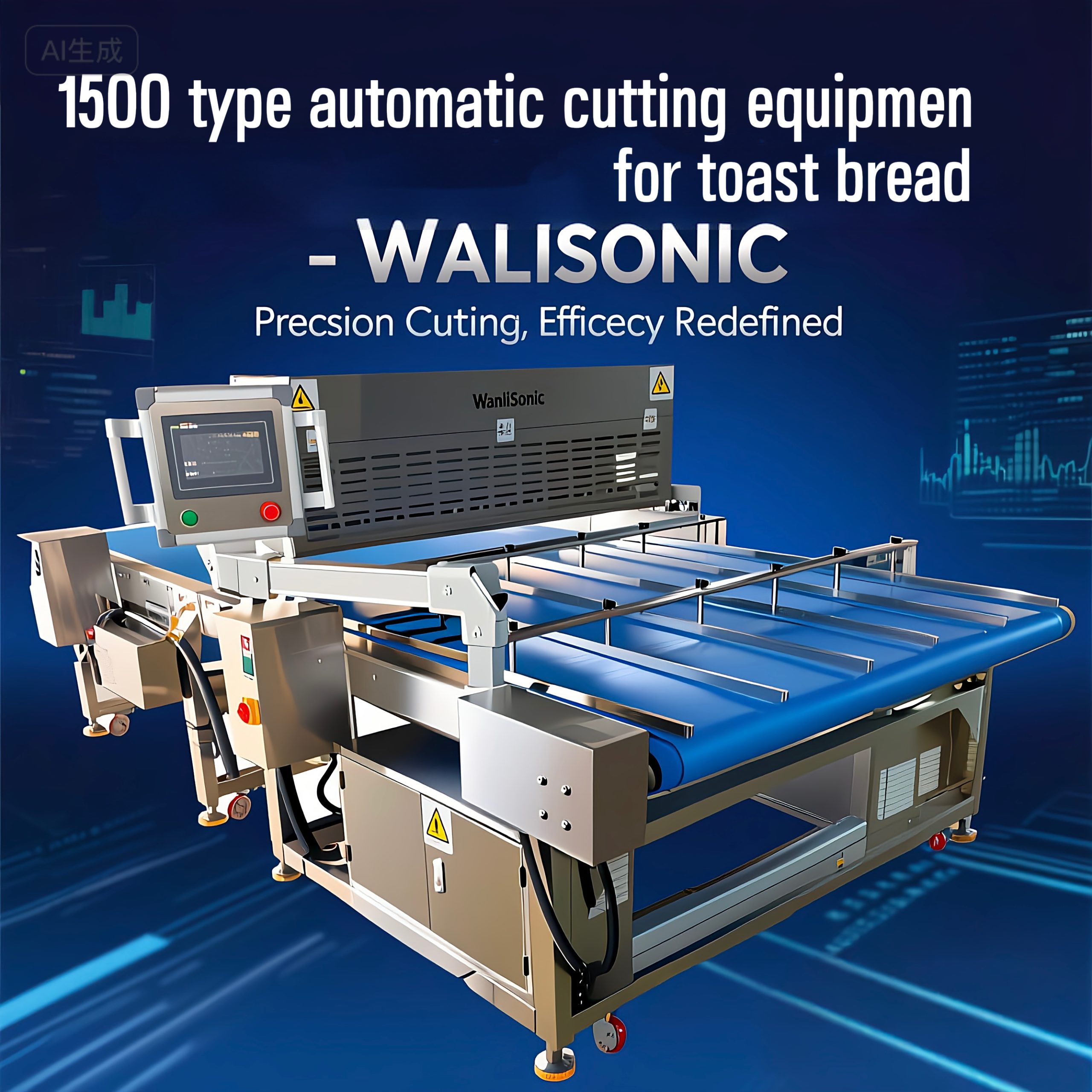
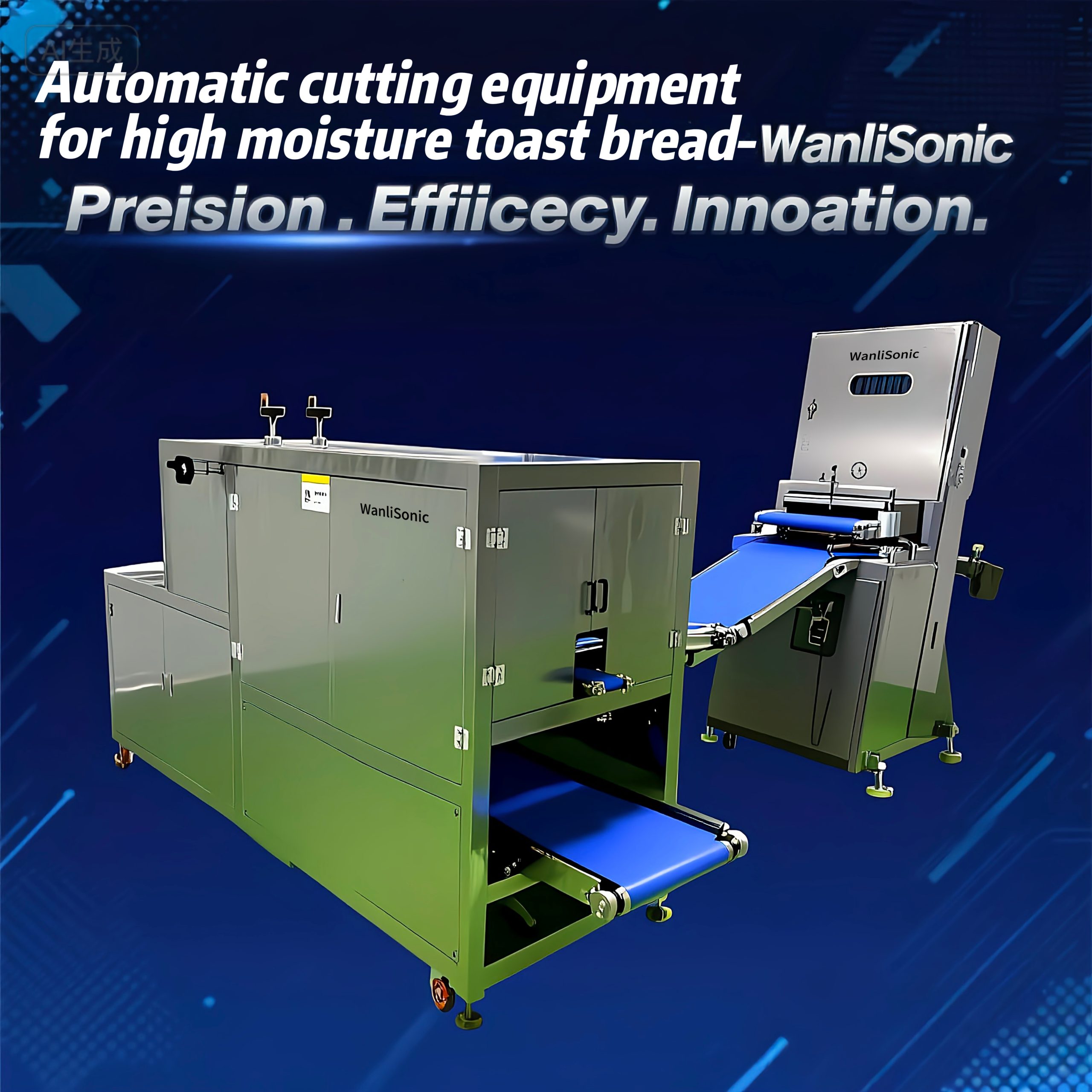
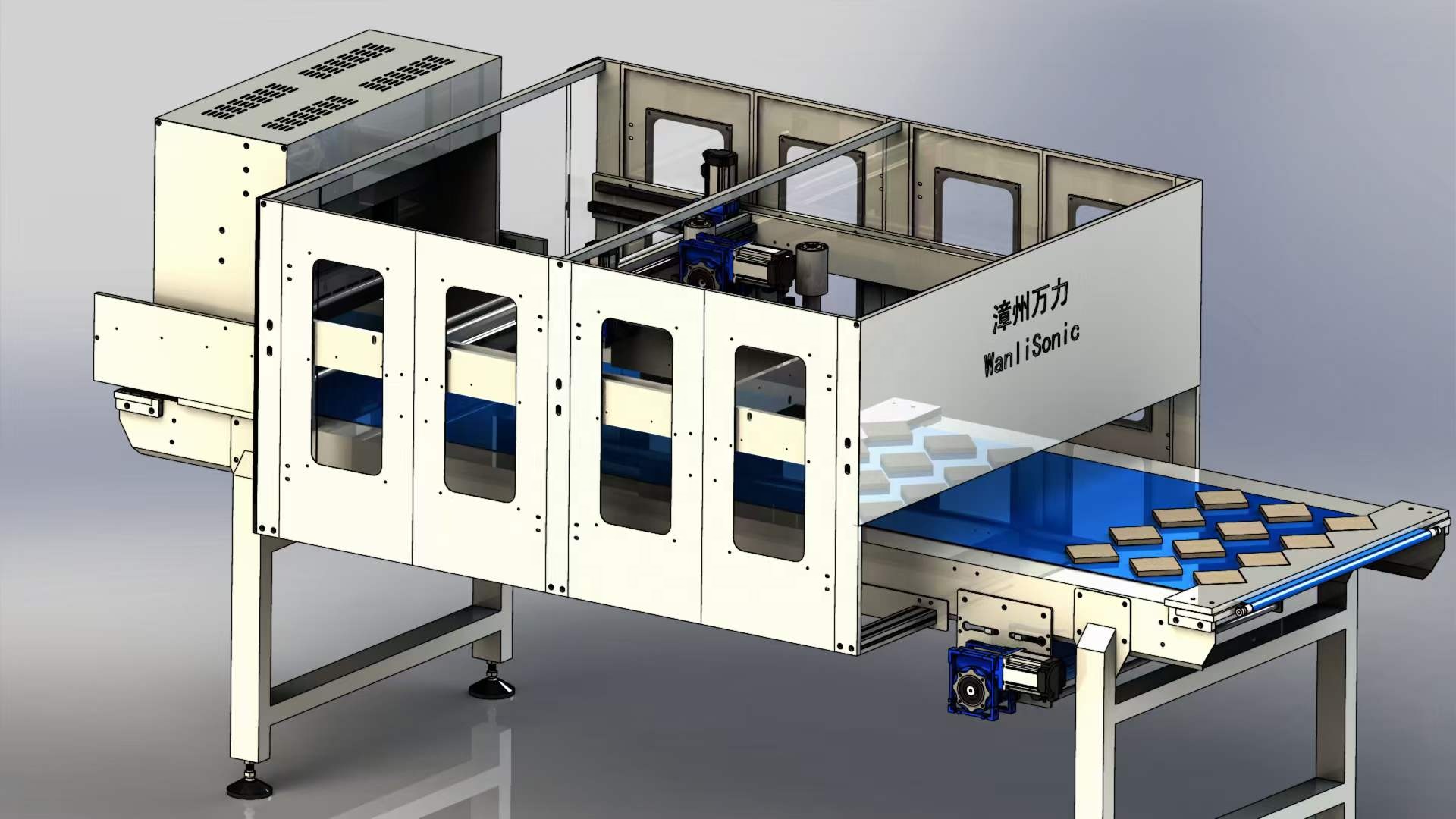
A programmable ultrasonic cutting process helps manufacturers define repeatable cutting patterns around the cake’s shape and the required portion format. Depending on the selected Wanlisonic solution, equipment can be configured for round, square or rectangular products and integrated with conveyor handling.
A typical automated workflow includes:
- Feeding the frozen or chilled cake into the cutting area
- Positioning the product for the selected pattern
- Completing the cut with the ultrasonic blade
- Transferring finished portions toward arranging or packaging
This structured process reduces dependence on manual judgement and makes the cutting stage easier to coordinate with upstream freezing and downstream packing.
Reducing Cleaning Interruptions and Product Waste
Residue on a conventional blade affects every cut that follows. Cream, mousse or filling can harden on the cutting surface, increasing friction and causing visible defects. Operators may then need to stop the line, clean the blade and restart production.
Ultrasonic vibration helps reduce product adhesion. A cleaner blade can support more stable cutting quality and fewer avoidable interruptions, although cleaning frequency must still follow the recipe, sanitation plan and operating environment.
Waste reduction is equally important. Cakes already carry the cost of ingredients, baking, assembly, decoration, freezing and cold storage before they reach the cutter. Preventing cracks, deformation and filling loss protects that accumulated value and increases the proportion of each batch available for sale.
Suitable Frozen and Chilled Dessert Applications
Wanlisonic identifies ultrasonic technology as suitable for frozen cakes, delicate cakes and multi-layered products. Depending on testing and machine configuration, potential applications include:
- Frozen mousse cakes
- Cheesecakes
- Layered sponge cakes
- Cream-filled desserts
- Chocolate-coated cakes
- Brownies and rectangular cake slabs
- Other chilled or temperature-sensitive bakery products
The correct setup depends on the cake’s dimensions, shape, temperature, hardness, filling, coating and desired cutting pattern. A machine should therefore be selected through product testing rather than by assuming that one program fits every frozen dessert.
Building a More Efficient Frozen Dessert Line
The business case for ultrasonic cutting extends beyond speed. Manufacturers should assess saleable yield, portion consistency, labour demand, cleaning downtime and packaging performance. If a better cut reduces rejected portions and stabilizes downstream handling, the cutting machine contributes value across the entire line.
Wanlisonic provides customized ultrasonic food-cutting solutions for standalone operation and production-line integration. The team can evaluate product samples and processing requirements before recommending blade, handling and automation configurations.
For dessert manufacturers dealing with cracking, sticking, layer displacement or inconsistent portions, the Wanlisonic Ultrasonic Frozen Cake Cutting Machine offers a practical route toward cleaner presentation and more predictable output. Its value lies in protecting both the physical structure of the cake and the investment already made in every finished product.
Contact Wanlisonic
- Email: sales3@wanlisonic.com
- Tel / WhatsApp / WeChat: +86 15880521772
Send your cake dimensions, shape, cutting temperature, layer structure, required portion format and production target to Wanlisonic for a recommended ultrasonic frozen cake cutting solution.
FAQ
1. What is an ultrasonic frozen cake cutting machine?
It is a food-processing system that uses a high-frequency vibrating blade to cut frozen or chilled cakes with reduced friction and mechanical pressure.
2. Why is ultrasonic cutting suitable for frozen cakes?
Lower cutting resistance helps reduce cracking, compression, crumbs and filling adhesion when processing temperature-sensitive or multi-layered desserts.
3. Can the machine cut different cake shapes?
Wanlisonic provides cutting solutions for round, square and rectangular bakery products. The correct configuration depends on the cake dimensions and required portion pattern.
4. Does every frozen cake use the same machine settings?
No. Recipe, temperature, hardness, coating, filling and target portion size affect the cutting result. Wanlisonic recommends evaluating the actual product before selecting the configuration.
5. Can the machine be integrated into an existing production line?
Yes. Depending on the selected solution, ultrasonic cutting can be combined with feeding, positioning, conveyor transfer and downstream packaging. Explore the Wanlisonic Ultrasonic Cake Cutting Machine category.
6. What information is needed for a quotation?
Provide the cake shape and dimensions, cutting temperature, layer and filling details, desired portion format, required capacity and automation requirements. Samples or production videos can support application testing.