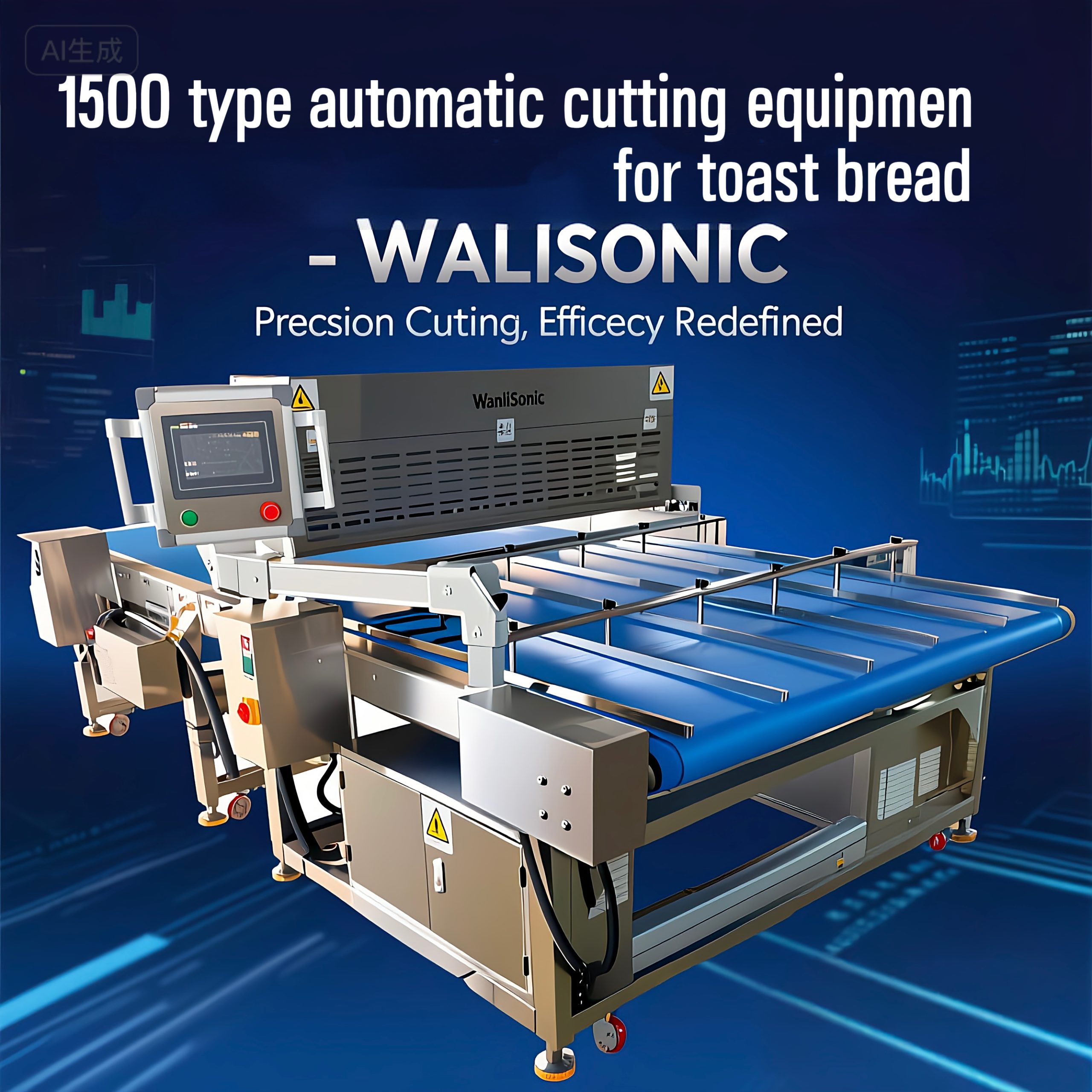
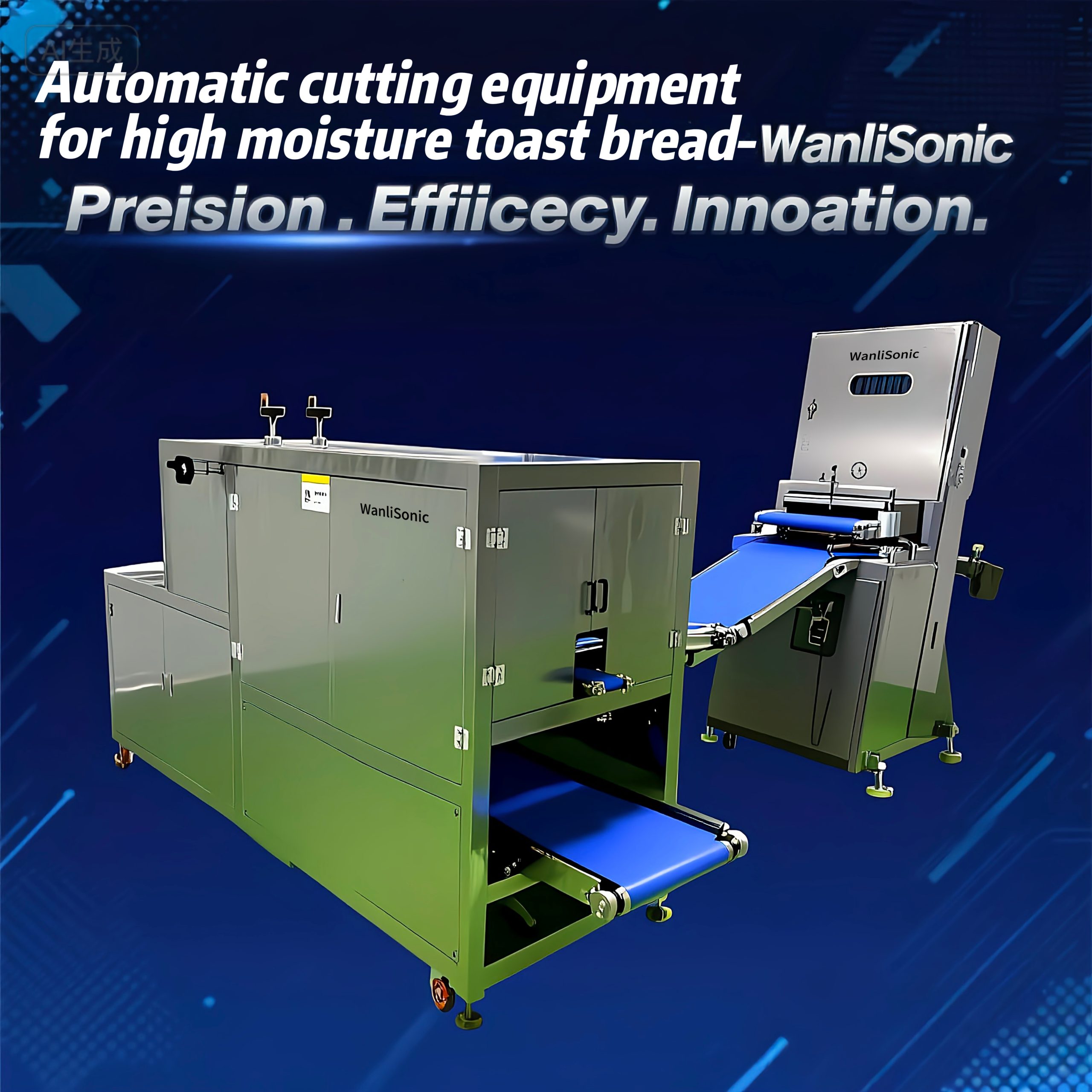
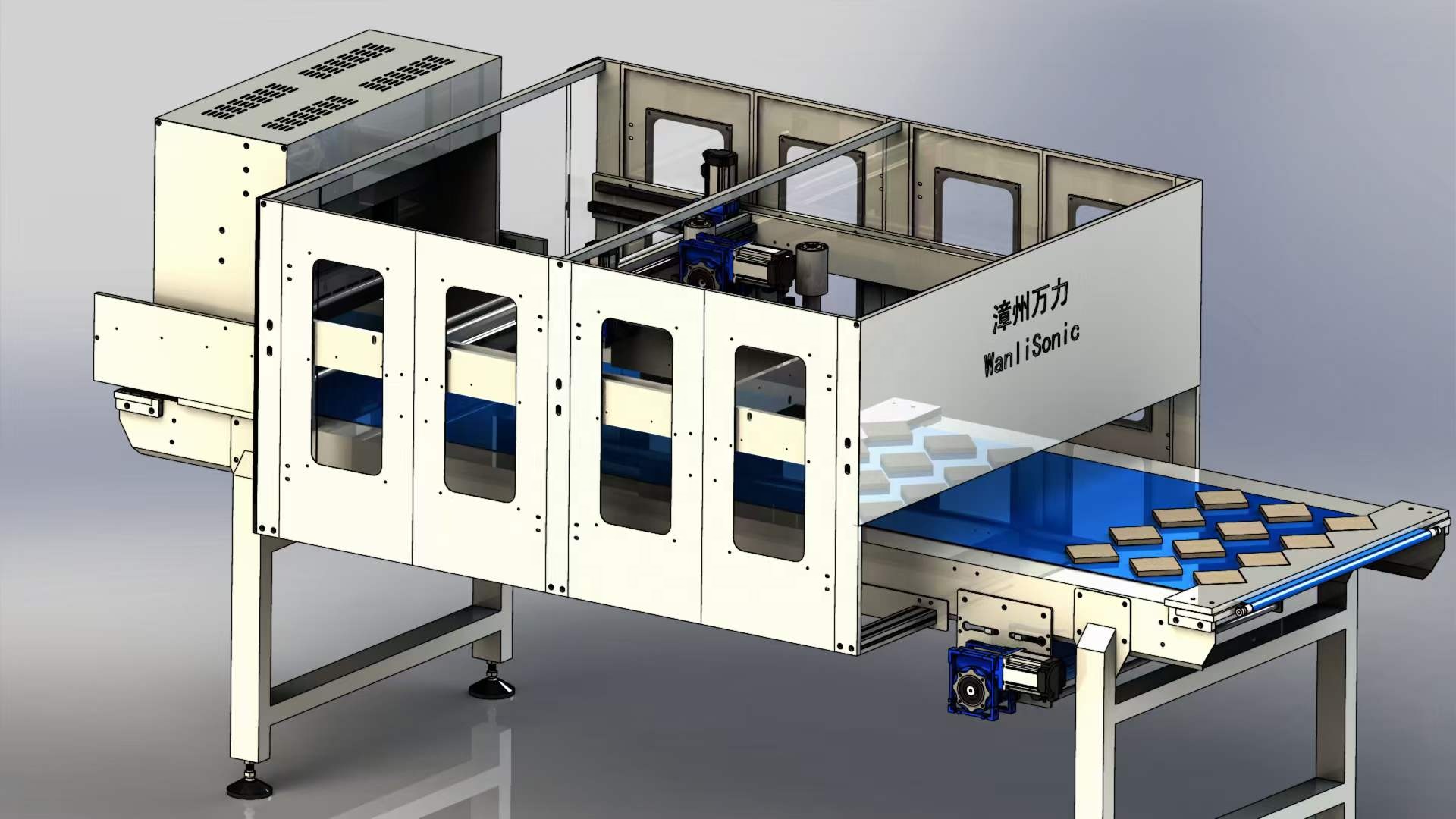
Premium cookies are often sold through the details that make them look handmade: defined edges, visible inclusions, attractive profiles and a consistent surface. Those same details become difficult to protect when production moves from small batches to an automated line. Soft dough may stick to a conventional blade, hard ingredients may shift, and small changes in temperature can alter the cut. The Wanlisonic Ultrasonic Cookie Cutter helps bakeries scale these products with reduced blade friction, cleaner separation and more consistent portion geometry.
A Wanlisonic ultrasonic cookie cutter demonstration is available on YouTube. YouTube’s public interface confirms the title “Ultrasonic cookie cutter” and the publishing account, but it does not expose a model, speed, accuracy or other machine specification. This article therefore does not assign those values to the demonstrated equipment.
Why Handmade-Style Cookie Dough Is Difficult to Automate
A premium cookie recipe is rarely a uniform material. It may combine a soft fat-rich base with chocolate, nuts, dried fruit, seeds or coloured dough. Each component responds differently when a blade enters the product. The base can compress or stick while harder inclusions resist movement and disturb the surrounding dough.
Conventional cutting can lead to:
- Dough buildup on the blade
- Torn or rounded edges instead of defined profiles
- Nuts or chocolate pieces being pushed out of position
- Distortion of delicate extruded shapes
- Variation in length and portion appearance
- Frequent cleaning interruptions
These defects affect more than presentation. Misshapen pieces complicate tray loading, create inconsistent baking behaviour and increase manual inspection. A cutter must therefore protect the dough while producing portions that can move reliably into the next process.
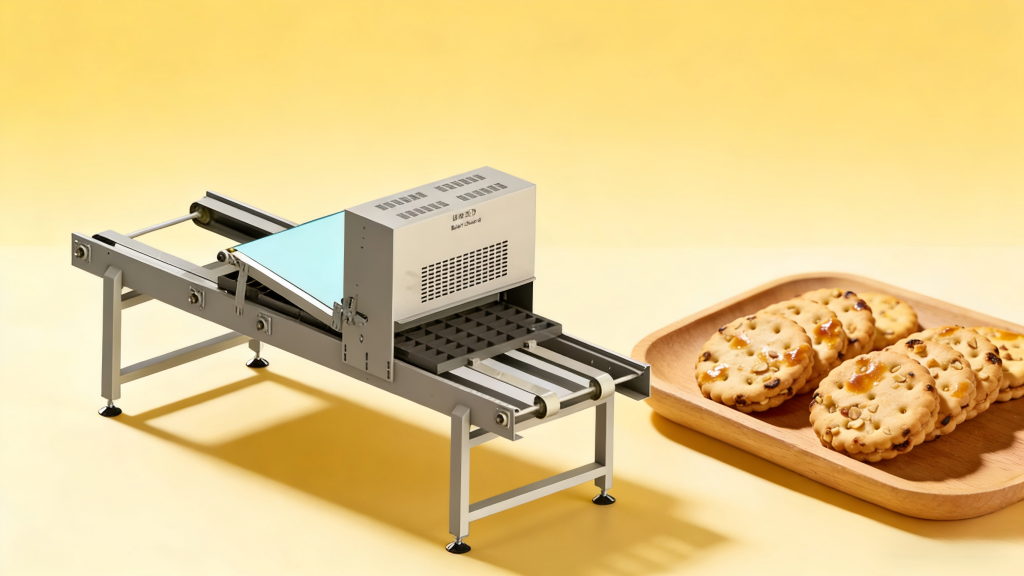
How Ultrasonic Vibration Changes the Cut
An ultrasonic cutter applies high-frequency mechanical vibration to the blade. This motion reduces friction between the cutting surface and the dough, allowing the blade to separate the product with less pressure than a stationary knife.
For cookie production, the practical benefits can include:
- Reduced sticking at the blade surface
- Less compression of soft dough
- Cleaner separation around hard inclusions
- Better retention of formed profiles
- Lower residue buildup during a run
- More repeatable portions for baking and packing
Ultrasonic technology does not remove the need to control the recipe. Dough temperature, moisture, fat content, inclusion size and extrusion stability still influence performance. The cutter works best when the upstream process delivers a repeatable product.
Preserving Profiles Created by the Extruder
The Wanlisonic Ultrasonic Cookies Cutting Machine category states that the horizontal blade movement can cut extruded dough from an encrusting machine and support profiles created by extrusion moulds, including stars, flowers and customized shapes.
This is important for bakeries that differentiate products through form. A mould creates the profile, but the cutting stage determines whether that profile survives. Excessive pressure can flatten points, blur decorative edges or spread multi-component dough. Reduced-friction separation helps retain the outline designed at the forming stage.
Actual integration depends on the extruder discharge, product support, cutting position and required transfer method. These details should be reviewed before equipment selection rather than assumed from the video title alone.
Creating a Stable Cutting Window
Cookie dough changes as it moves through production. A warmer recipe may become softer and more adhesive, while an over-chilled dough may respond differently around brittle inclusions. Variation in resting time can also change the shape delivered to the blade.
Manufacturers should define a practical cutting window based on:
- Dough temperature at the cutter
- Product width, height and profile
- Moisture and fat content
- Inclusion type and particle size
- Required portion length or weight
- Time between mixing, extrusion and cutting
Controlling these inputs gives the Wanlisonic Ultrasonic Cookie Cutter a more predictable product. This reduces the need for operators to compensate manually for changes created upstream.
Protecting Inclusions and Product Identity
Chocolate chips, nuts, raisins and dried fruit are part of a cookie’s visual identity. A conventional blade may drag these ingredients through the dough or leave cavities at the cut face. The Wanlisonic category page describes ultrasonic cutting as suitable for soft materials containing hard ingredients because the reduced-friction blade can separate inclusions with less displacement.
Cleaner cut faces help the product communicate its recipe. They also support more consistent ingredient distribution from piece to piece. However, inclusion size and hardness should be tested against the proposed blade, dough condition and portion format before a final configuration is approved.
From Cutting Consistency to Baking Consistency
Cutting quality affects the oven. Portions with inconsistent geometry may bake at different rates, while damaged edges can create uneven browning or excessive breakage during transfer. Repeatable length and shape support a more controlled baking stage and a more uniform retail pack.
A practical production sequence may include:
- Forming: Dough is extruded into the selected profile.
- Conditioning: Temperature and consistency are maintained within the working window.
- Cutting: The ultrasonic blade separates portions with reduced pressure.
- Transfer: Pieces move toward trays or the next conveyor.
- Inspection: Shape, weight and inclusion distribution are checked.
Tray arrangement and transfer functions depend on the chosen machine. They should not be treated as standard features unless confirmed in the quotation.
Managing Residue, Hygiene and Changeovers
Reduced sticking can limit dough accumulation on the blade and help maintain cut quality for longer periods. It may also reduce avoidable cleaning interruptions. However, a non-stick cutting action is not a substitute for sanitation.
Bakeries still need validated procedures for cleaning, inspection, allergen control and recipe changeovers. This is especially important when one line handles nuts, dairy ingredients, gluten-containing dough and specialty products. Blade access, conveyor cleaning and changeover requirements should be reviewed as part of the complete process.
Evaluating Return on Investment Beyond Speed
The value of an ultrasonic cookie cutter should not be measured by nominal cutting speed alone. A B2B investment review should examine:
- Saleable yield after cutting and baking
- Labour required for correction and tray handling
- Cleaning and recipe-changeover time
- Portion and package consistency
- Breakage during transfer
- Flexibility across cookie profiles and formulations
By reducing sticking, deformation and ingredient displacement, the Wanlisonic Ultrasonic Cookie Cutter can protect product value before baking. More stable portions can also reduce sorting and help downstream equipment receive a more predictable product.
Wanlisonic should evaluate representative dough samples, target dimensions, inclusion details, production flow and factory layout before recommending a machine. Testing the actual recipe is the most reliable way to define blade movement, supports and automation scope.
Contact Wanlisonic
- Contact Information: Annie (Senior Customer Consultant)
- 📧 Email: sales3@wanlisonic.com
- 📞 Tel / WhatsApp / WeChat: 008615880521772
Send your dough profile, recipe characteristics, inclusions, target portion size and production requirements to Wanlisonic for an application-based cookie cutting recommendation.
FAQ
1. What is an ultrasonic cookie cutter?
It is a food-cutting system that applies high-frequency vibration to a blade, reducing friction and pressure as the blade separates cookie dough.
2. Why is ultrasonic cutting useful for soft and sticky dough?
Reduced friction helps limit dough buildup, edge tearing and compression, supporting cleaner portions and fewer avoidable cleaning interruptions.
3. Can the machine process dough containing nuts or chocolate chips?
Wanlisonic identifies cookie dough with hard inclusions as a suitable application. Testing is still recommended because ingredient size, hardness and distribution affect the result.
4. Can it cut stars, flowers and customized profiles?
The Wanlisonic cookie-machine category states that extruded profiles such as stars, flowers and customized shapes can be processed. The mould, support and cutting configuration must match the intended design.
5. Does the supplied video confirm the machine’s speed or model?
No. The available YouTube data confirms the title and publishing account but does not disclose a model, speed or accuracy. These details must be confirmed separately.
6. What information should a bakery provide before requesting a solution?
Provide the dough profile, dimensions, temperature, recipe characteristics, inclusion type, target portion, required capacity, upstream equipment, tray format and factory layout.