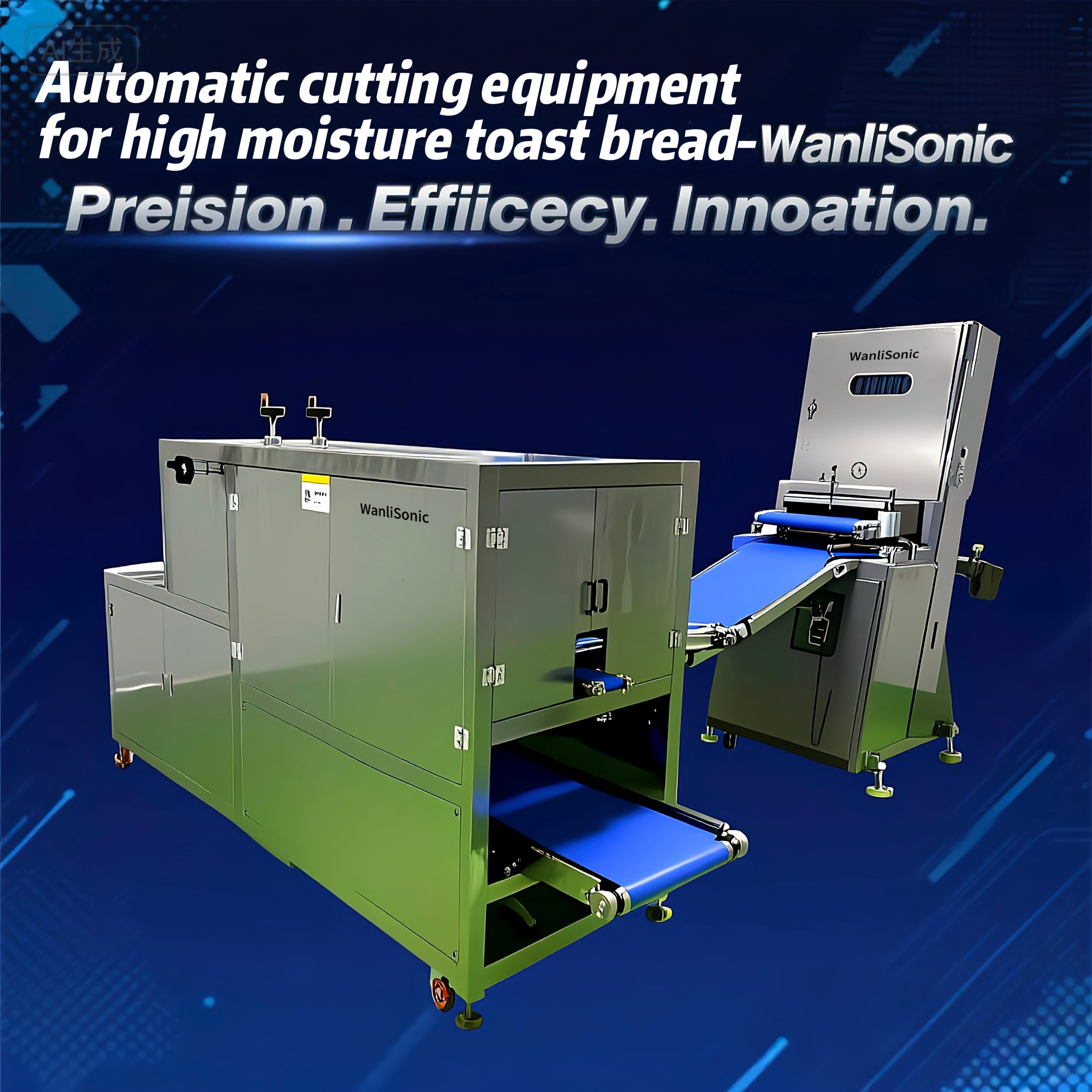
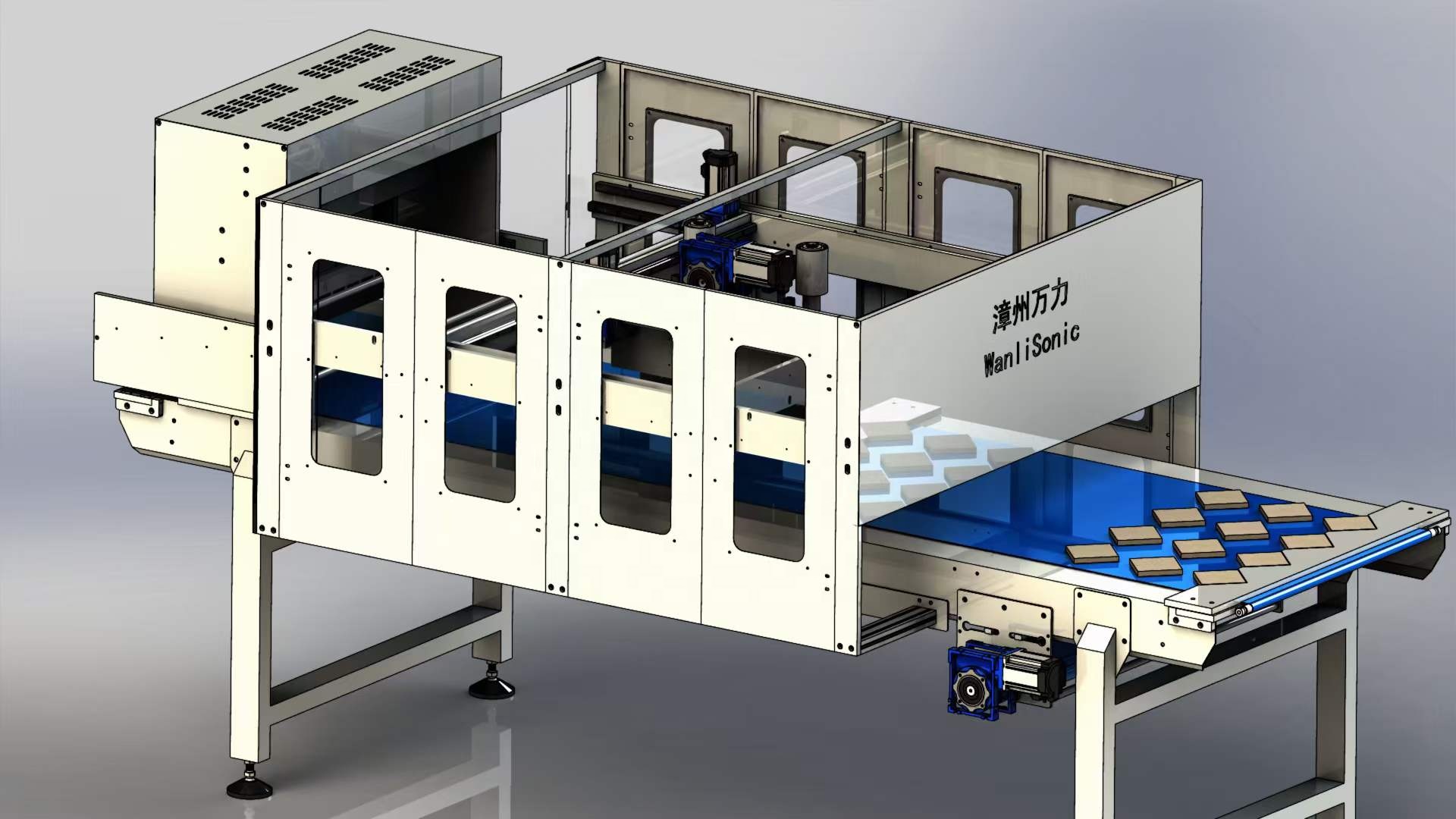
Fruit leather is a popular fruit-based snack known for its chewy texture, natural fruit flavor, and flexible shape. However, cutting fruit leather efficiently can be challenging. Its sticky and elastic texture may cause conventional blades to drag, deform the product, or leave uneven edges.
So, how can manufacturers achieve cleaner, faster, and more consistent fruit leather cutting? The latest Wanlisonic ultrasonic fruit leather cutting solution demonstrates how ultrasonic technology can provide an effective answer.
In the video, “Hobber + Ultrasonic Blade = Perfect,” the ultrasonic blade is shown working with an automated production setup to achieve smooth and precise cutting.
Why Is Fruit Leather Difficult to Cut?
Fruit leather is made by processing fruit puree or fruit-based ingredients into a thin, flexible sheet and drying it to the desired texture. Depending on the recipe and moisture content, the finished product can be soft, sticky, chewy, or slightly elastic.
These characteristics create several problems during conventional mechanical cutting.
Traditional blades may stick to the fruit leather surface during continuous operation. As the blade moves through the product, the material can stretch before being separated. This can result in:
- Uneven cutting edges
- Product deformation
- Material sticking to the blade
- Difficult release after cutting
- Reduced production efficiency
- More frequent blade cleaning
- Inconsistent product dimensions
For food manufacturers producing fruit snacks on a large scale, these problems can affect both production efficiency and final product appearance.
This is where ultrasonic cutting technology can make a difference.
How Does Wanlisonic Ultrasonic Fruit Leather Cutting Work?
Wanlisonic ultrasonic cutting technology combines a high-frequency ultrasonic vibration system with a specially designed cutting blade.
Instead of relying only on mechanical force to push through the product, the blade vibrates at ultrasonic frequency during cutting. This high-frequency vibration helps reduce resistance between the blade and the food material.
For sticky and flexible products such as fruit leather, this can create a smoother cutting process.
The video demonstrates the concept of combining an automated feeding or handling system with an ultrasonic blade. The result is a cleaner cutting process designed for food products that can be difficult to process with conventional blades.
What Makes Ultrasonic Cutting Suitable for Fruit Leather?
1. Cleaner Cutting
One of the most important advantages of ultrasonic cutting is its ability to produce clean and precise cuts.
Fruit leather can easily stretch or deform when excessive mechanical pressure is applied. Ultrasonic vibration helps the blade pass through the product more smoothly, helping maintain the intended shape of each piece.
This is particularly useful when manufacturers need uniform fruit leather strips, bars, squares, or other customized shapes.
2. Reduced Sticking
Sticky food products are among the most suitable applications for ultrasonic cutting.
With conventional cutting, fruit residue may accumulate on the blade surface during continuous production. This can increase cleaning requirements and eventually affect cutting quality.
The vibrating ultrasonic blade can reduce friction and material adhesion during cutting, helping maintain a more stable cutting process.
3. Better Product Appearance
For commercial fruit snacks, appearance matters.
Whether fruit leather is sold individually, packed into small snack portions, or used as an ingredient in other products, consistent dimensions can improve presentation and packaging efficiency.
Wanlisonic ultrasonic cutting technology is designed to help manufacturers achieve more consistent product sizes and cleaner cutting edges.
4. High Production Efficiency
Automation is another important part of modern food processing.
By integrating ultrasonic cutting with an automated feeding and conveying system, manufacturers can reduce manual cutting operations and create a more continuous production process.
This can be especially valuable for factories producing large quantities of fruit snacks every day.
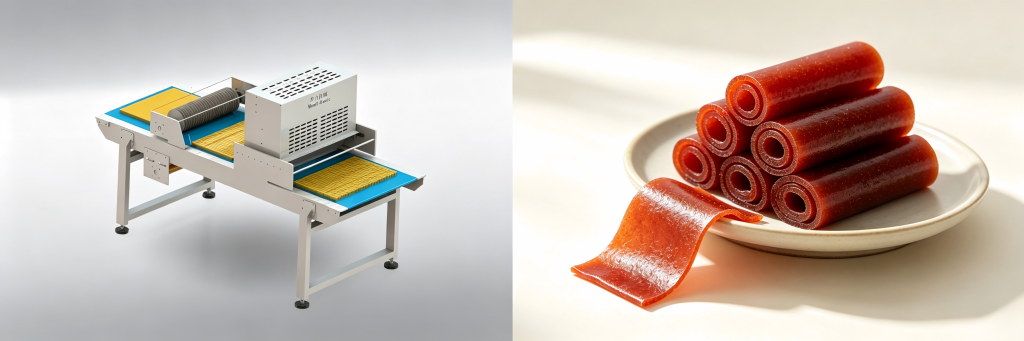
Wanlisonic Ultrasonic Technology for Different Fruit Leather Formats
Fruit leather manufacturers may have different product specifications and packaging requirements.
Some companies may need long strips for roll-up snacks, while others may require rectangular pieces, small portions, or customized shapes.
The cutting solution can therefore be configured according to production requirements, including:
- Product dimensions
- Cutting length
- Cutting width
- Number of cutting channels
- Production speed
- Conveyor configuration
- Product feeding method
Before selecting a machine, manufacturers should provide product samples or detailed specifications so that the appropriate ultrasonic cutting configuration can be evaluated.
Why Choose Wanlisonic for Food Cutting Applications?
Wanlisonic focuses on ultrasonic food cutting technology and provides equipment designed for different bakery and food-processing applications.
The key principle is simple:
Use ultrasonic vibration to make difficult-to-cut food products easier to process.
The same technology concept can be applied to many products with sticky, soft, delicate, layered, or elastic characteristics.
For fruit leather manufacturers, this means the machine can be considered not simply as a cutting device, but as part of a complete automated production solution.
The combination of an automated feeding system and ultrasonic blade technology demonstrated in the video provides an example of how production automation can be applied to challenging food materials.
Is Ultrasonic Fruit Leather Cutting Right for Your Factory?
Every fruit leather product is different. Formula, moisture level, thickness, temperature, size, and surface characteristics can all influence cutting performance.
For this reason, a cutting test is highly recommended before purchasing equipment.
Manufacturers can provide product samples or production parameters to Wanlisonic. The technical team can then evaluate the appropriate ultrasonic blade configuration and cutting method.
The goal is to achieve:
Cleaner cuts + less sticking + consistent portions + improved automation
For fruit snack manufacturers looking to upgrade from manual or conventional mechanical cutting, ultrasonic technology can provide a promising solution.
Conclusion
Fruit leather may look simple, but its sticky and elastic characteristics make it a challenging product to cut efficiently.
The Wanlisonic ultrasonic fruit leather cutting machine combines automated product handling with ultrasonic blade technology to address these challenges. By reducing cutting resistance and helping minimize sticking and deformation, ultrasonic cutting can support more consistent and efficient fruit snack production.
The video “Hobber + Ultrasonic Blade = Perfect” demonstrates the basic concept of using an ultrasonic blade together with an automated production setup.
As food manufacturers continue to demand higher productivity, better product consistency, and improved automation, ultrasonic cutting technology can become an important tool for processing fruit leather and other challenging food products.
If you are looking for an ultrasonic fruit leather cutting machine, Wanlisonic can evaluate your product specifications and recommend a suitable cutting solution based on your production requirements.
FAQ
1. What is an ultrasonic fruit leather cutting machine?
It is an automated food-cutting machine that uses a high-frequency vibrating ultrasonic blade to cut fruit leather into consistent portions or customized shapes.
2. Why use ultrasonic cutting for fruit leather?
Fruit leather can be sticky, soft, and elastic. Ultrasonic vibration can help reduce cutting resistance and sticking, making it easier to achieve clean and consistent cuts.
3. Can Wanlisonic cut different fruit leather sizes?
Yes. The cutting configuration can be designed according to product dimensions, required portion size, production capacity, and other application requirements.
4. Can the machine cut sticky food products?
Ultrasonic cutting is particularly suitable for many sticky, soft, delicate, and elastic food products. However, actual cutting performance depends on the product formulation and physical characteristics.
5. Can I test my fruit leather before purchasing?
Yes. Providing product samples or detailed product specifications is recommended. A cutting test can help determine the most suitable ultrasonic blade and machine configuration.
6. Can the fruit leather cutter be integrated into an automated production line?
Yes. Ultrasonic cutting equipment can be designed with automated feeding, conveying, and other production-line functions according to the customer’s requirements.
7. What information is needed for a machine quotation?
Manufacturers should provide fruit leather dimensions, thickness, required cutting size, production capacity, product characteristics, and preferred automation level. Product samples are also helpful for technical evaluation.
Contact Information:
Lucy Zheng (Senior Account Manager)
📧 Email: sales4@wanlisonic.com
📞 Phone/WhatsApp/WeChat: +86 15715037520