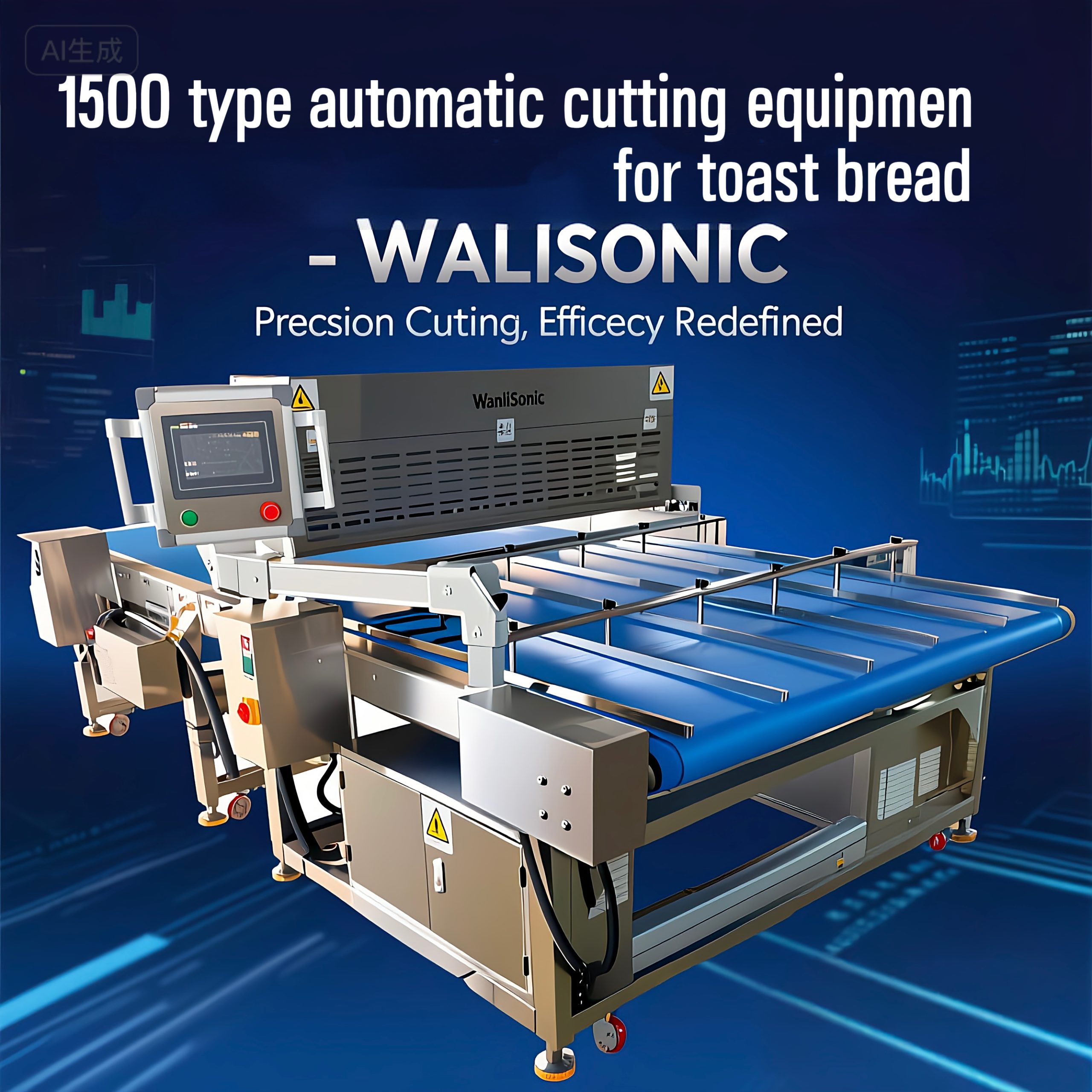
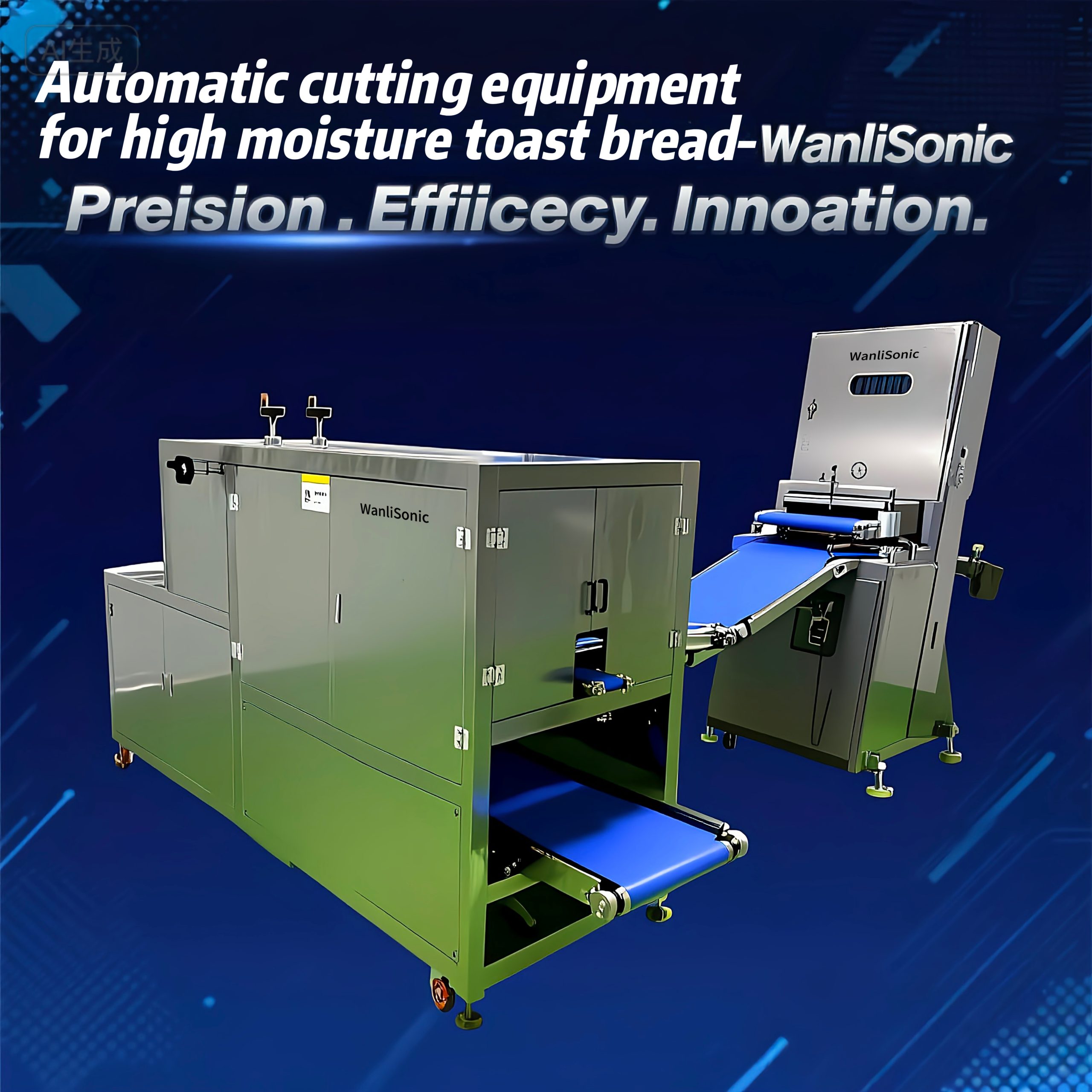
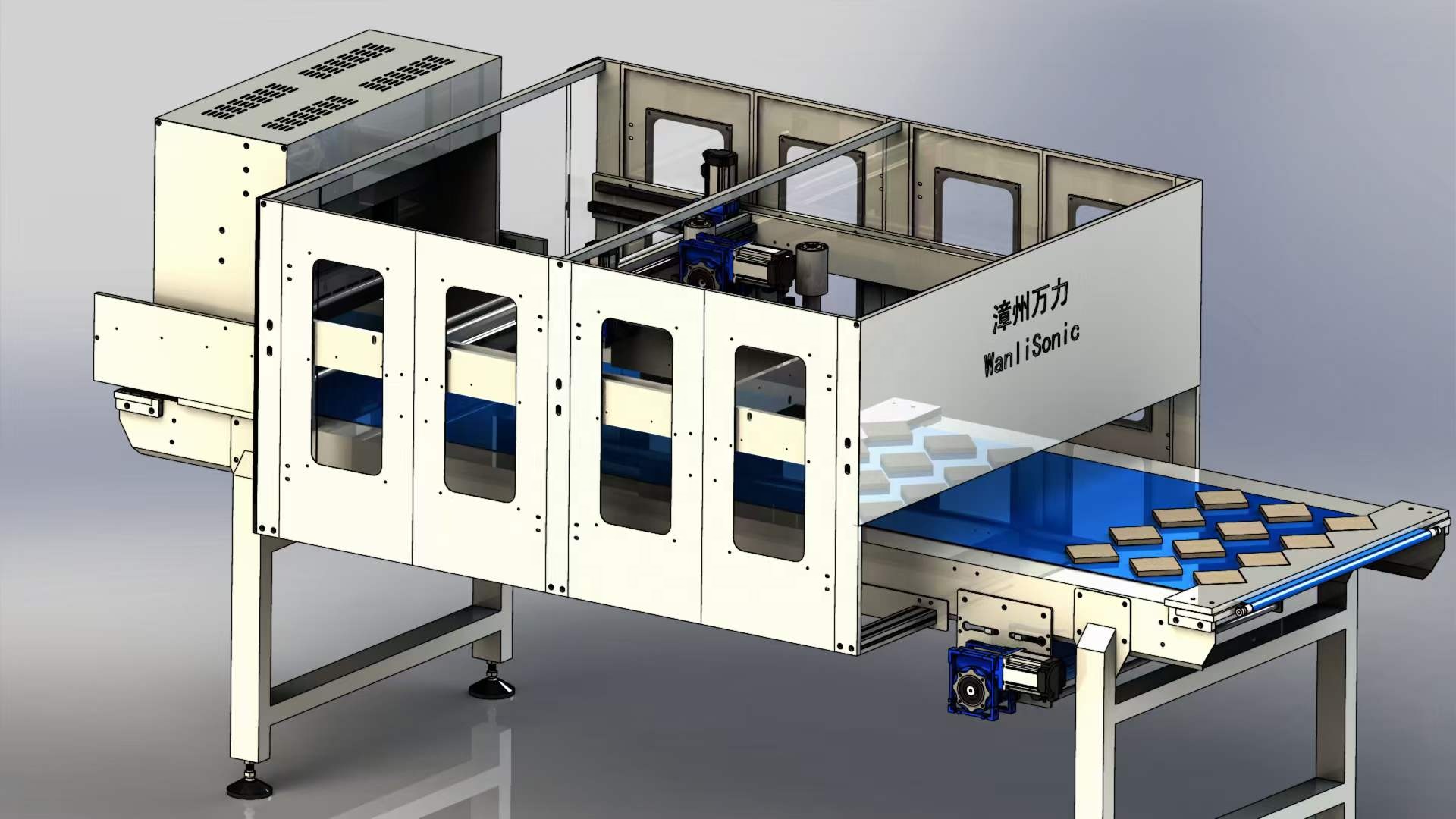
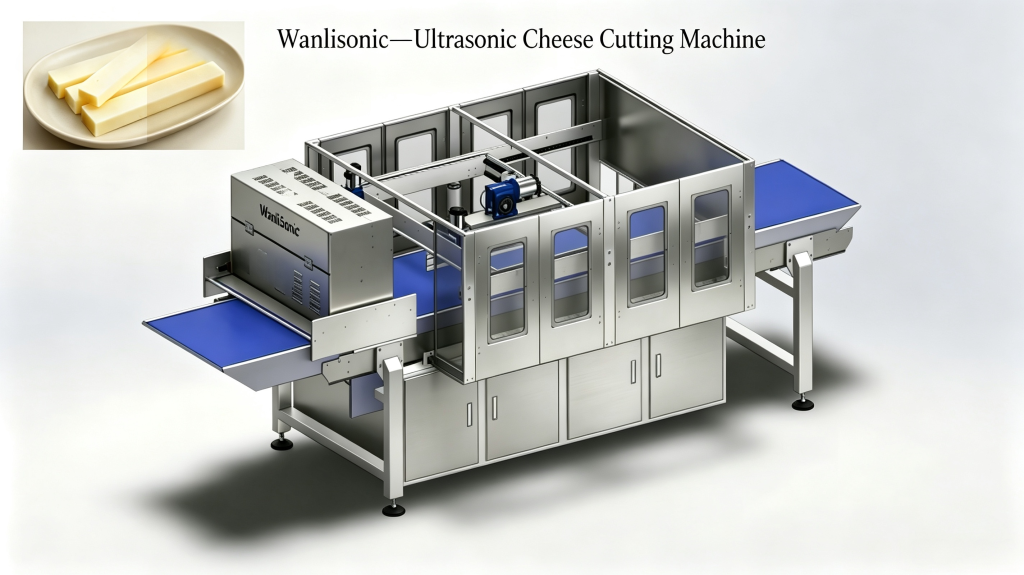
Cheese changes with moisture, fat, temperature, age and structure. A blade that performs well on a firm block may drag through soft, high-fat cheese or break a crumbly edge. The Wanlisonic Ultrasonic Cheese Cutting Machine reduces friction, protects product shape and prepares cleaner portions across varied textures.
A Wanlisonic ultrasonic cheese cutting demonstration is available on YouTube under the title “Wanli Ultrasonic Cheese Cutting Machine.” YouTube’s public interface confirms the title and publishing account but does not disclose a machine model, cutting speed, frequency, accuracy or capacity. This article therefore does not assign those values to the demonstrated equipment.
Why Does Cheese Require a Texture-Specific Cutting Strategy?
Cheese may be firm, elastic, sticky or brittle, and temperature changes that behaviour before it reaches the blade. Conventional cutting therefore creates different problems across a mixed portfolio.
Processors may encounter:
- Soft cheese adhering to the blade
- Elastic cheese stretching or deforming
- Crumbly cheese breaking at the edges
- High-fat residue building up during production
- Rinds separating from the body of the cheese
- Portion geometry changing between recipes
These problems affect yield, appearance, packaging and cleaning. The cutting station must therefore be configured around the actual cheese, not a generic material description.
How Does Ultrasonic Vibration Reduce Cutting Resistance?
An ultrasonic cutter applies high-frequency mechanical vibration to the cutting blade. This vibration reduces friction between the blade and the cheese, so the tool can separate the product with less mechanical pressure than a stationary knife.
For dairy processing, reduced friction can support:
- Cleaner faces on sticky or soft cheese
- Less compression and shape distortion
- Reduced product adhesion at the blade
- Better edge retention on fragile products
- Lower residue accumulation during a run
- More repeatable portions for downstream handling
Results still depend on composition, temperature, dimensions and cutting pattern. Stable inputs remain essential for repeatable production.
Temperature Is a Process Variable, Not a Background Detail
Temperature affects firmness, elasticity and adhesion. Soft cheese may become harder to handle as it warms, while over-cooled product may respond differently at the rind or edges.
A controlled cutting window should consider:
- Product temperature at the cutter
- Time outside refrigerated storage
- Moisture and fat content
- Rind type and surface condition
- Product height and cross-section
- Target portion format
This window separates machine performance from storage and tempering variation. Wanlisonic should test representative samples at the intended production temperature.
Different Textures Need Different Handling
The Wanlisonic Ultrasonic Cheese Cutting Machine category identifies a wide range of cheese challenges, from hard, grainy Parmigiano and Pecorino to crumbly Feta and soft Brie. It also states that the equipment can be configured for rounds, blocks, sticks and extruded cheese.
These formats should not be treated as identical applications:
- Hard cheese requires stable positioning and controlled separation without edge damage.
- Crumbly cheese needs support that limits breakage and loose fragments.
- Soft cheese benefits from reduced pressure and adhesion at the blade.
- High-fat cheese requires careful residue and temperature management.
- Cheese with nuts or fruit needs clean separation around inclusions.
- Extruded cheese must remain synchronized with upstream forming and downstream transfer.
A texture-based approach guides product supports, blade movement and cleaning rather than focusing only on throughput.
Clean Cut Faces Support Packaging Stability
Irregular edges, deformation or residue can interfere with weighing, tray loading and wrapping. A clean face is therefore both a quality feature and a downstream requirement.
A typical automated process can include:
- Feeding: Cheese enters the cutting area in a controlled orientation.
- Positioning: The product is aligned for the required format.
- Ultrasonic cutting: The vibrating blade separates the cheese with reduced resistance.
- Transfer: Portions move toward weighing or packaging.
- Inspection: Shape, dimensions and surface quality are checked.
The exact feeding, positioning, weighing and transfer functions depend on the selected configuration. They should be verified in the technical proposal rather than assumed from the video title.
Residue Control Matters During Long Production Runs
Blade buildup can change cut quality over time. Sticky or high-fat cheese may leave residue on conventional knives, forcing operators to stop the line and clean the cutting surface. Ultrasonic vibration helps reduce adhesion and can support a steadier process between scheduled cleaning events.
Reduced sticking does not eliminate sanitation requirements. Dairy processors still need validated procedures for cleaning, inspection and microbiological control. Blade access, conveyor design, product-contact surfaces and drainage should be reviewed against the plant’s food-safety program.
Manufacturers should evaluate residue across a production run and after a recipe changeover—not after only one cut.
Changeovers Across a Mixed Cheese Portfolio
A dairy facility may cut several varieties in one shift. Moving from a hard aged cheese to a soft high-fat product changes the mechanical and hygienic requirements of the line. Product dimensions, cutting format and packaging method may also change.
A practical changeover review should include:
- Recipe and allergen separation
- Removal of cheese residue
- Blade and conveyor inspection
- Selection of the next cutting program
- Product-support adjustment
- Verification of the first saleable portions
This protects consistency without weakening hygiene control. A complete product list helps Wanlisonic evaluate the required flexibility.
Measuring Business Value Beyond Cutting Speed
An ultrasonic cheese cutter should be evaluated through saleable yield, portion consistency, cleaning interruptions, labour demand, changeover time and packaging stability. Nominal speed alone does not show whether the system protects expensive dairy material or reduces downstream correction.
By limiting adhesion, deformation and edge damage, the Wanlisonic Ultrasonic Cheese Cutting Machine can help processors create more predictable input for weighing and packaging. The commercial value comes from controlling the complete transition from cheese block or formed product to saleable portion.
Wanlisonic should review dimensions, cheese type, temperature, rind, inclusions, format, demand and factory layout. Testing the real product remains the strongest basis for configuration.
Contact Wanlisonic
- Email: sales3@wanlisonic.com
- Tel / WhatsApp / WeChat: +86 15880521772
Send your cheese types, dimensions, cutting temperature, portion formats, production requirements and line layout to Wanlisonic for an application-based recommendation.
FAQ
1. What is an ultrasonic cheese cutting machine?
It is food-processing equipment that applies high-frequency vibration to a cutting blade, reducing friction and mechanical pressure as the blade separates cheese.
2. Which cheese textures can Wanlisonic evaluate?
Wanlisonic’s category page identifies hard and grainy, crumbly and soft cheeses, including Parmigiano, Pecorino, Feta and Brie, as well as products containing nuts or fruit.
3. Can the machine process different cheese formats?
The Wanlisonic category page states that its solutions can cater for rounds, blocks, sticks and extruded cheese. The appropriate configuration must be confirmed for the product and required portion.
4. Why is cheese temperature important during cutting?
Temperature changes firmness, elasticity and adhesion. A stable product temperature helps the machine receive a predictable material and produce more repeatable portions.
5. Does the supplied video confirm speed, model or accuracy?
No. Public YouTube data confirms the video title and account but does not disclose those specifications. They must be confirmed through the final technical proposal.
6. What information is needed before requesting a quotation?
Provide cheese type, dimensions, temperature, rind condition, inclusions, target format, required capacity, packaging method and factory layout. Representative samples are recommended.