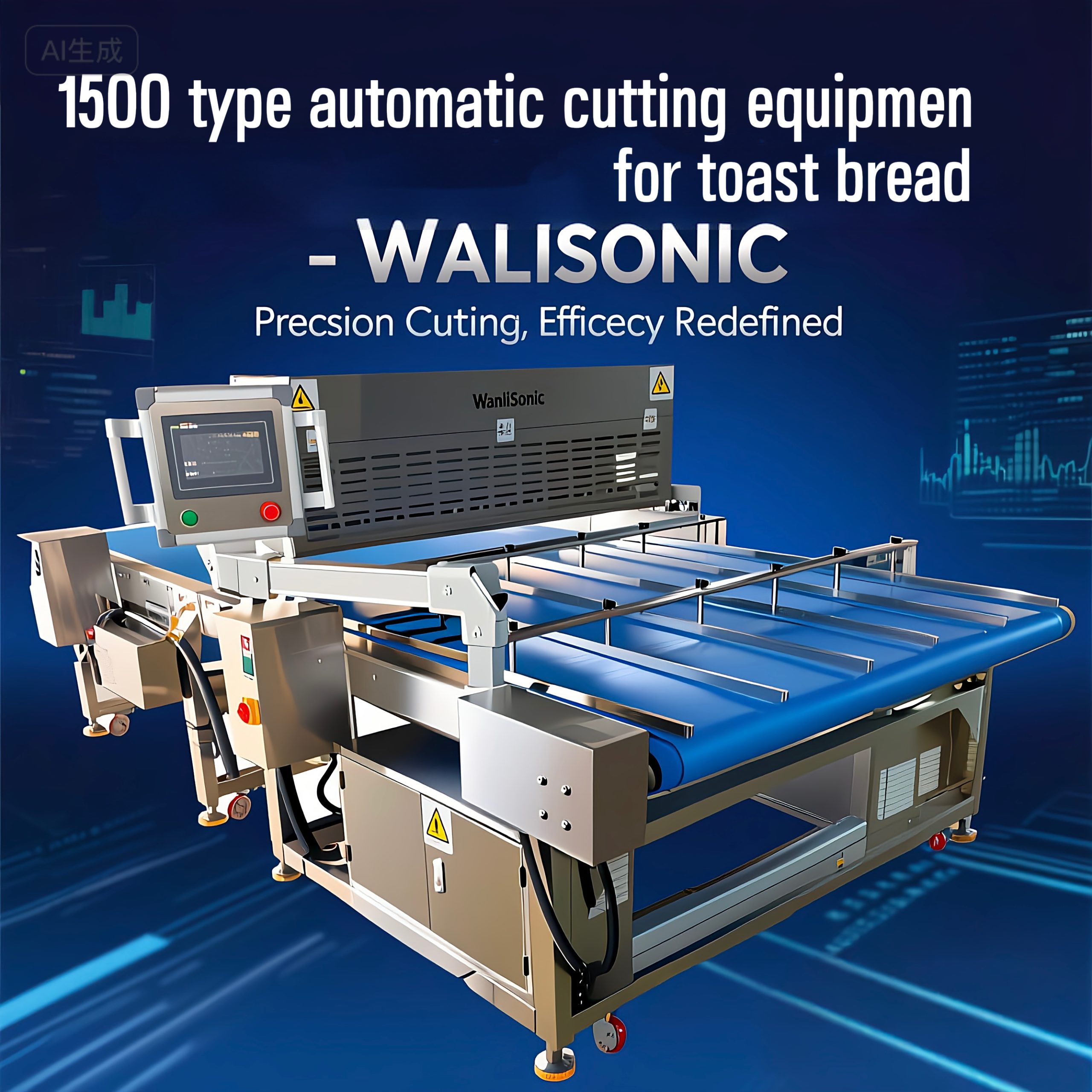
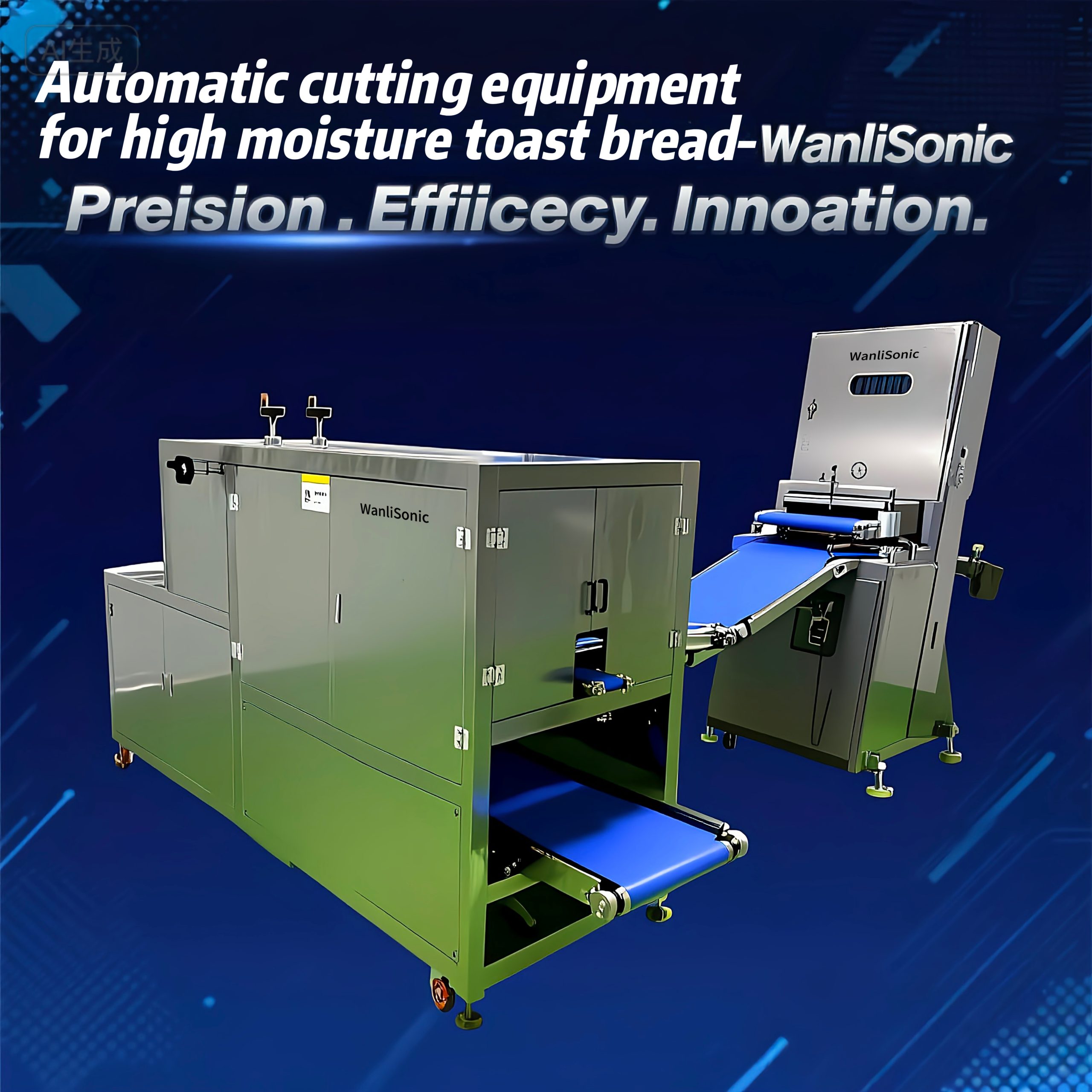
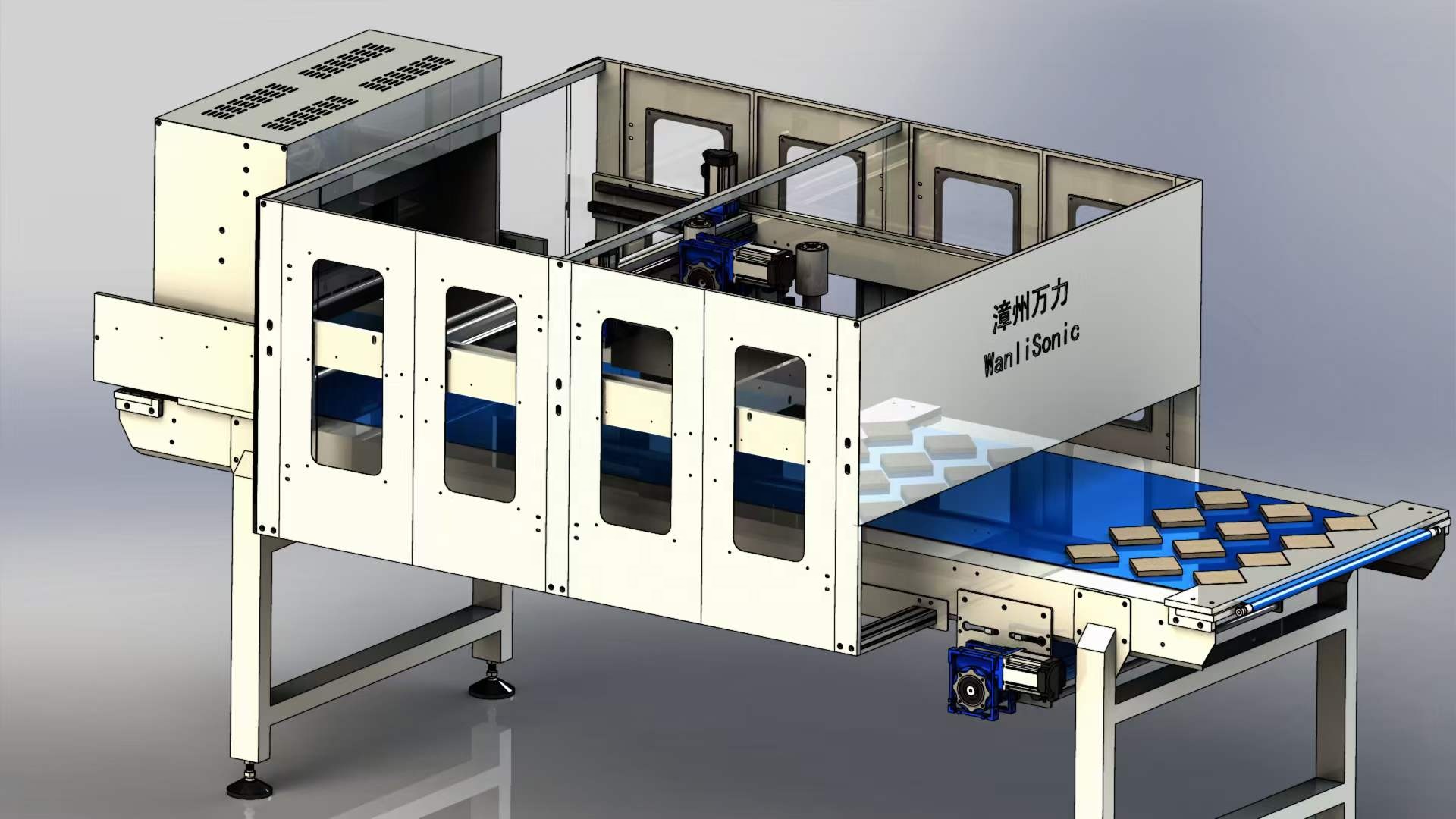
Apple bread combines two materials that behave very differently at the cutting station: a soft, compressible crumb and moist fruit pieces or fillings. A conventional blade may squash the loaf before entering it, drag apple through the crumb or leave sticky residue that affects later slices. The Wanlisonic Ultrasonic Apple Bread Cutting Machine gives industrial bakeries a controlled way to separate this mixed structure while protecting slice shape, visible fruit distribution and packaging consistency.
A Wanlisonic ultrasonic apple bread cutting demonstration is available on YouTube. The public video data confirms the application, publishing account and 2-minute-30-second duration, but does not identify a model, blade frequency, cutting speed or accuracy. This article therefore does not assign those specifications to the demonstrated machine.
Why Is Apple Bread Harder to Slice Than Plain Bread?
Plain bread already deforms when a blade applies too much pressure. Apple bread adds moist inclusions, fruit paste, cinnamon filling or other sticky components. These areas have different density and resistance from the surrounding crumb, so the blade does not move through the loaf uniformly.
Common problems include:
- Compression of the soft crumb before separation
- Apple pieces being dragged from their original position
- Wet filling smearing across the cut face
- Crumbs collecting around dense fruit pockets
- Slice thickness becoming less consistent as residue builds up
- Damaged edges affecting tray or bag presentation
A clean result therefore depends on more than a sharp knife. Product temperature, crumb firmness, fruit size, moisture distribution and blade movement must work together.
How Does Ultrasonic Cutting Handle Mixed Textures?
Ultrasonic cutting applies high-frequency mechanical vibration to the blade. The vibration reduces friction between the cutting surface and the food, allowing the blade to pass through the bread with less pressure than a stationary knife.
For apple bread, this reduced-friction action can support:
- Less compression of the airy crumb
- Cleaner separation around apple pieces
- Reduced dragging of sticky filling
- Lower product adhesion to the blade
- Fewer loose crumbs at the cut face
- More repeatable slice geometry
The technology does not make every formulation behave identically. Large fruit pieces, very wet fillings or unstable crumb still require application testing. The purpose of the Wanlisonic Ultrasonic Apple Bread Cutting Machine is to create a more controllable separation process, not to replace recipe and conditioning control.
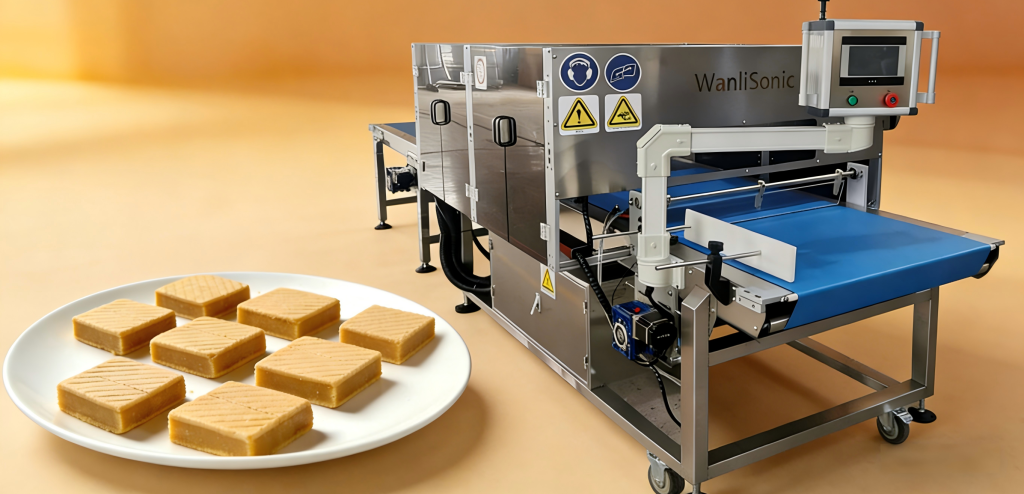
Protecting Fruit Distribution at the Cut Face
Visible apple pieces are part of the product’s value. They communicate flavour and ingredient quality, especially in transparent packs or premium bakery displays. If a conventional blade pulls fruit through the crumb, the slice may show cavities, smeared filling or uneven ingredient distribution.
Ultrasonic vibration helps the blade separate the fruit and bread matrix with reduced drag. This can preserve a clearer cross-section and keep inclusions closer to their original position. Cleaner faces also make it easier for quality-control teams to assess fruit distribution across a batch.
Fruit size and texture remain important. Soft cooked apple, firm diced fruit and fruit paste respond differently. Manufacturers should provide representative samples instead of assuming that one setting will suit every apple-bread recipe.
Establishing the Right Cutting Window
Apple bread changes after baking. The crumb sets as the product cools, while moisture from the fruit can migrate into the surrounding structure. Cutting too early may increase deformation; waiting too long may change the handling properties of the loaf or filling.
A stable cutting window should consider:
- Product temperature at the cutting station
- Time between baking, cooling and slicing
- Loaf dimensions and crust condition
- Crumb moisture and firmness
- Apple-piece size and distribution
- Filling viscosity and stickiness
Holding these variables within an agreed range gives the cutter a more predictable product. It also helps separate machine performance from variation created earlier in the process.
From Loaf Positioning to Packaging-Ready Slices
Industrial slicing is not complete when the blade exits the bread. The slices must remain aligned, move without collapsing and fit the selected tray, bag or retail pack. Inconsistent thickness or damaged edges can interrupt downstream handling and require manual correction.
A production workflow may include:
- Feeding: The apple bread enters the cutting station in a stable orientation.
- Positioning: The loaf is aligned for the required cutting pattern.
- Ultrasonic cutting: The vibrating blade separates portions with reduced pressure.
- Transfer: Slices move toward inspection or packaging.
- Quality control: Thickness, shape and fruit distribution are checked.
The exact feeding, positioning and transfer functions depend on the selected configuration and existing production line. They must be confirmed during technical evaluation rather than inferred from the video alone.
Consistent Portions Support Commercial Control
Uniform-looking slices improve shelf presentation, but they also support packaging and portion management. A stable slice format can help bakeries plan pack counts, tray layouts and product specifications for retail or food-service customers.
Cutting dimensions alone do not guarantee identical weight. Apple distribution, moisture and crumb density can vary within a loaf. Manufacturers should therefore coordinate the cutting program with weighing and quality-control procedures.
The commercial objective is not simply to make more cuts. It is to increase the proportion of saleable slices while reducing manual correction, damaged pieces and avoidable giveaway.
Managing Blade Residue and Food Hygiene
Sticky fruit filling can accumulate on a conventional blade and transfer material to later slices. Residue may also change cutting resistance over time. Ultrasonic vibration helps reduce adhesion at the cutting point, supporting steadier cut quality and fewer unnecessary cleaning interruptions.
Reduced adhesion is not a substitute for sanitation. Bakeries still need validated cleaning, inspection and allergen-control procedures. Blade access, conveyor cleaning and recipe changeovers should be reviewed as part of the complete equipment specification.
Applications Beyond One Apple Bread Format
The same cutting challenge appears in other soft bakery products containing inclusions or fillings, such as fruit bread, raisin bread, date bread, soft cakes and filled loaves. However, suitability depends on the machine configuration and the actual product.
The Wanlisonic Ultrasonic Bread Cutting Machine category provides additional context on bread-cutting applications. Manufacturers should still evaluate each recipe according to product height, texture, temperature, inclusions and required slice format.
Evaluating the Investment Through Saleable Output
A B2B equipment decision should consider more than nominal speed. Relevant measures include saleable yield, slice consistency, cleaning time, labour requirements, packaging stability and flexibility across recipes.
The Wanlisonic Ultrasonic Apple Bread Cutting Machine addresses the cutting stage by reducing pressure and friction around soft crumb and moist inclusions. For the strongest result, Wanlisonic should test the customer’s product and review the upstream cooling process, target slice specification and downstream packaging method before confirming a solution.
Contact Wanlisonic
- Email: sales3@wanlisonic.com
- Tel / WhatsApp / WeChat: +86 15880521772
Send your loaf dimensions, recipe characteristics, fruit-piece details, cutting temperature, target slice thickness and production requirements to Wanlisonic for an application-based recommendation.
FAQ
1. What is an ultrasonic apple bread cutting machine?
It is food-processing equipment that uses a high-frequency vibrating blade to slice apple bread with reduced friction and mechanical pressure.
2. Can ultrasonic cutting reduce compression of soft apple bread?
Reduced blade resistance can help the loaf retain its shape better than pressure-based cutting. The result still depends on crumb structure, temperature and machine settings.
3. Will apple pieces or filling be pulled through the bread?
Ultrasonic vibration reduces drag and can limit displacement or smearing. Actual performance should be tested because fruit size, firmness and moisture vary by recipe.
4. How should apple bread be prepared before cutting?
The bakery should control cooling time, product temperature, crumb firmness and filling condition so that each loaf reaches the cutter within a stable processing window.
5. Does the video confirm the machine’s speed, model or accuracy?
No. The public video information confirms the apple-bread application but does not disclose those specifications. They must be verified in the final technical proposal.
6. What information is needed for a quotation?
Provide loaf dimensions, photographs, recipe structure, apple-piece size, cutting temperature, target slice thickness, required capacity, line layout and packaging method. Representative samples are recommended.