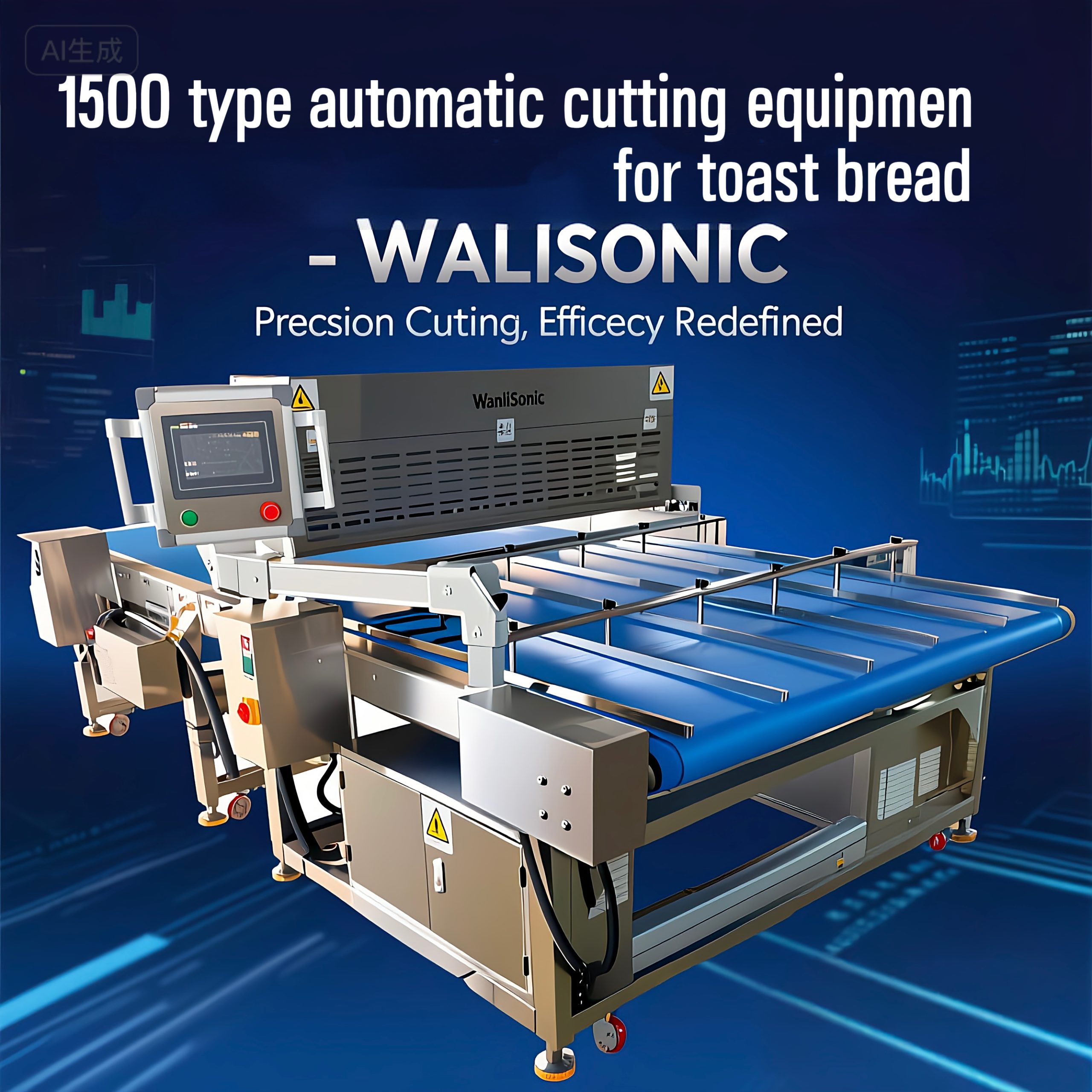
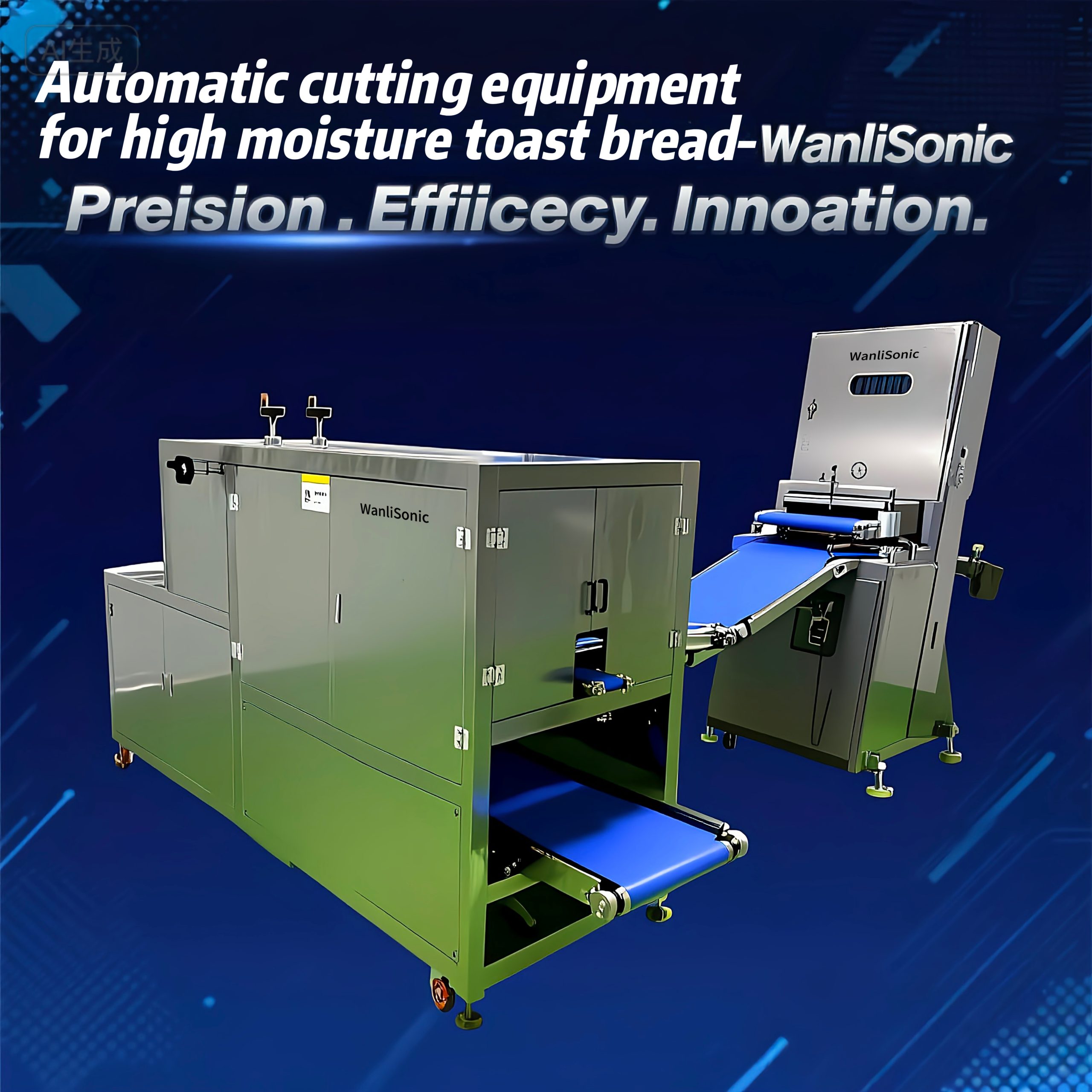
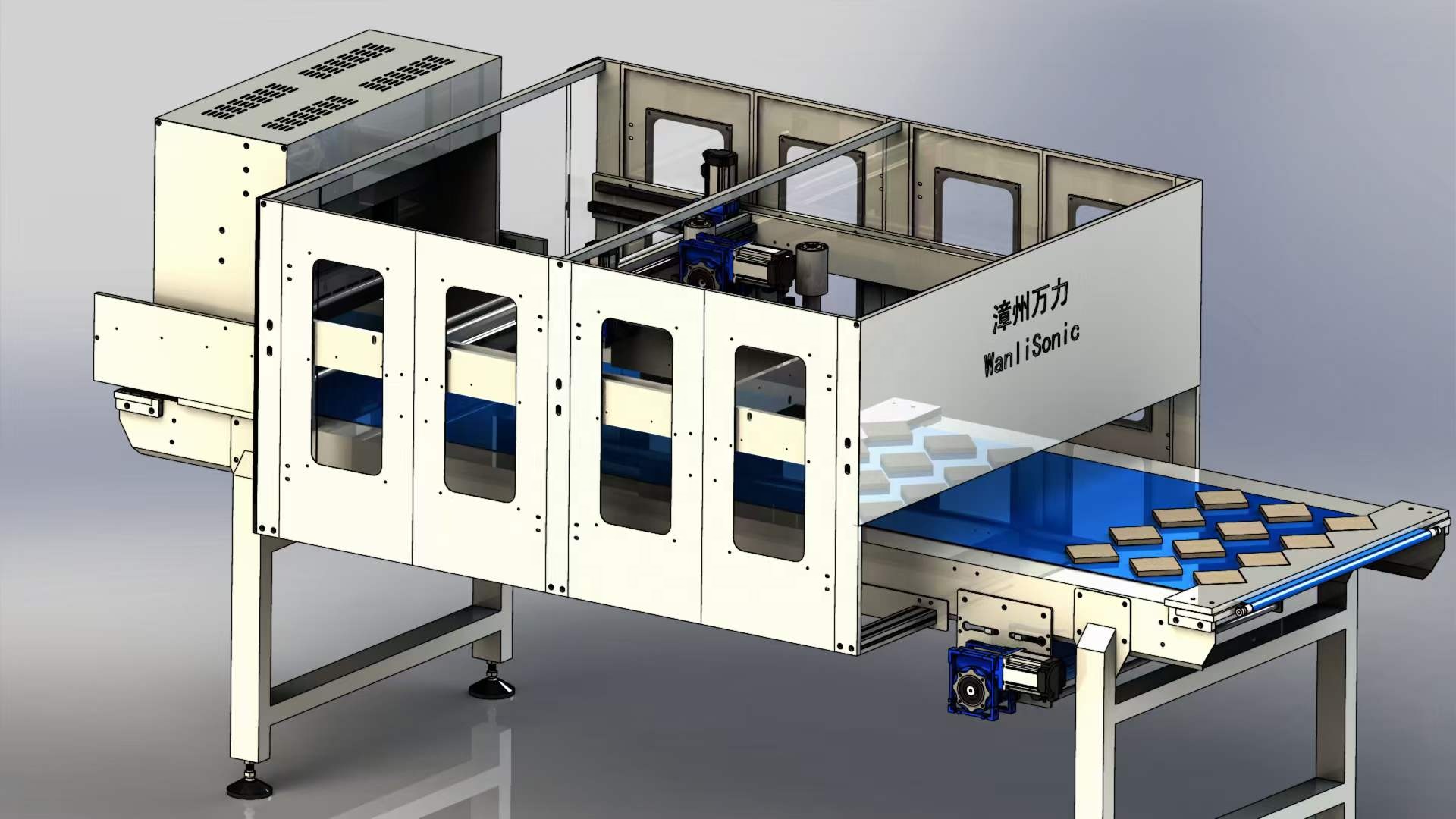
Industrial cake producers need more than a blade that can divide a dessert into portions. They need a cutting process that protects delicate layers, keeps portion quality consistent, and controls cleaning interruptions throughout the production shift. The Wanlisonic Ultrasonic Cake Cutting Machine with Automatic Cleaning Function, featured in a Wanlisonic demonstration video, addresses these connected challenges by combining low-resistance ultrasonic cutting with an automated cleaning function designed for practical bakery production.
Why Is Cake Cutting Difficult in Industrial Production?
Cakes frequently combine materials with very different textures. A single product may contain soft sponge, sticky cream, fruit filling, chocolate coating, mousse, or a firm base. When a conventional blade is forced through these layers, pressure and friction can affect both appearance and process stability.
Common production problems include:
- Sponge layers becoming compressed or deformed
- Cream and filling being dragged across the cut surface
- Crumbs accumulating around portion edges
- Sticky residue building up on the blade
- Portion appearance changing as the production run continues
- Operators stopping repeatedly to inspect and clean cutting tools
These issues are commercially important. Uneven pieces can complicate packaging, damaged portions can increase waste, and frequent cleaning stops can interrupt production flow. For bakeries supplying supermarkets, hotels, restaurants, or dessert brands, a clean cross-section is also part of the product’s perceived value.
How Does Ultrasonic Cake Cutting Work?
Instead of relying only on downward mechanical force, ultrasonic cutting uses high-frequency mechanical vibration at the blade. This vibration reduces resistance between the cutting surface and the food, allowing the blade to move through soft, layered, or sticky products with less pressure than many conventional cutting methods.
For suitable cake products and operating conditions, this approach can deliver:
- Cleaner and smoother cut surfaces
- Less compression of delicate structures
- Reduced cream and chocolate adhesion
- Fewer loose crumbs and damaged edges
- More repeatable portion shapes
- Better presentation for retail display and packaging
The result is not simply a more attractive slice. Consistent portioning can also support weight control, predictable packaging, and more effective use of each cake slab. The correct setup depends on the cake’s recipe, dimensions, temperature, filling, and required cutting pattern, so representative product testing remains an important part of equipment selection.
Why Does Automatic Cleaning Matter?
Even when ultrasonic vibration reduces sticking, cakes containing cream, mousse, chocolate, or fruit filling may still leave residue during continuous processing. If contamination builds up, operators may need to pause the machine, clean the blade, and restart the cycle. Over a full shift, these interruptions can reduce productive cutting time and introduce variation between batches.
The automatic cleaning function highlighted in the Wanlisonic video is therefore a central production feature rather than a cosmetic addition. By incorporating cleaning into the machine workflow, the system can help manufacturers manage blade condition more consistently and reduce dependence on irregular manual intervention.
Potential operational benefits include:
- More consistent blade cleanliness during a production run
- Fewer manual cleaning interruptions, depending on the product
- Reduced direct handling of the cutting area
- More stable cut appearance across successive portions
- Easier integration of cleaning into standard operating procedures
- Better support for organized hygiene management
Automatic cleaning does not replace the factory’s validated sanitation program. Full cleaning schedules, inspection routines, food-contact procedures, and hygiene controls must still follow the product, facility requirements, and applicable food-safety system. Its value lies in supporting the production process between required sanitation activities.
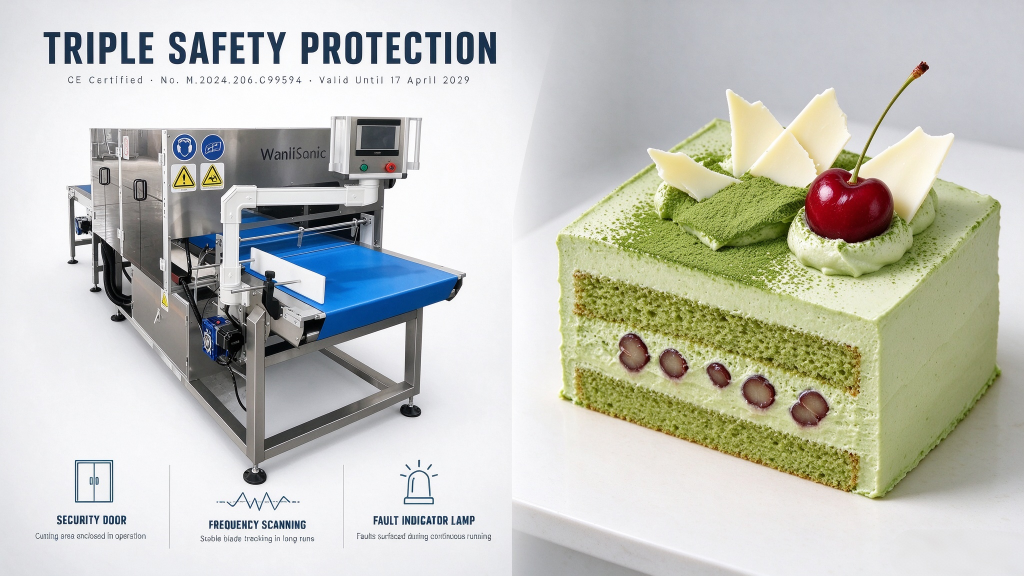
A More Controlled Automated Cutting Workflow
For growing bakeries, manual positioning and cutting can become a bottleneck. Operators must align each product, judge portion dimensions, complete repeated cuts, and clean the blade when residue becomes visible. An automated ultrasonic system brings these steps into a more controlled sequence.
A typical configured workflow may include:
- The cake enters or is placed in the cutting area.
- The positioning system aligns the product for the selected pattern.
- The ultrasonic blade performs the programmed cuts.
- The automatic cleaning function operates according to the configured process.
- Finished portions move to collection, transfer, or downstream packaging.
The exact workflow and automation level depend on the selected machine configuration and factory layout. Wanlisonic can evaluate stand-alone applications as well as solutions intended to connect with conveyors or other production equipment.
Protecting Premium Cake Presentation
A precise cutting system is particularly valuable when the product’s internal structure is visible at the point of sale. Layered sponge cakes, cream cakes, cheesecakes, mousse desserts, brownies, and selected frozen or semi-frozen cakes all depend on a clean cross-section to communicate quality.
Lower cutting resistance helps protect the boundary between layers instead of pushing fillings into the sponge. Reduced residue on the blade can further support a neat appearance from one portion to the next. This matters when cakes are packed in transparent containers, displayed individually, or sold in standardized multipacks.
Depending on the machine configuration and product condition, Wanlisonic ultrasonic cake cutting solutions may be evaluated for:
- Sponge and layer cakes
- Cream-filled cakes
- Mousse cakes
- Cheesecakes
- Chocolate cakes and brownies
- Frozen or semi-frozen desserts
- Square, rectangular, strip, or triangular portions
Cutting suitability should always be confirmed with the actual product. Density, height, temperature, inclusions, and filling consistency can all influence the best blade, cutting program, and cleaning cycle.
From Cleaner Portions to Better Production Economics
Waste in cake production is not limited to large rejected batches. It also appears as crushed edges, filling loss, excessive crumbs, irregular portions, packaging problems, and time spent correcting poor cuts. Improving the stability of both cutting and blade cleaning can help address these smaller but repeated losses.
For manufacturers, the business case may include better saleable yield, more predictable portion presentation, less repetitive operator intervention, and smoother coordination with packaging. Rather than claiming a universal output increase, Wanlisonic assesses the product and production target before recommending a configuration. This application-based approach helps ensure that automation supports the customer’s real process instead of adding unnecessary complexity.
Why Choose Wanlisonic for an Ultrasonic Cake Cutting Solution?
Wanlisonic focuses on ultrasonic food cutting equipment and customizable solutions for commercial and industrial production. The company’s cake cutting category covers applications for soft, sticky, delicate, and layered bakery products, with configurations selected according to product dimensions, required portion shape, desired capacity, hygiene needs, and line-integration requirements.
Before selecting a machine, manufacturers should provide:
- Cake photos, samples, or recipe characteristics
- Product length, width, and height
- Operating temperature and filling type
- Required portion dimensions and cutting pattern
- Target production capacity
- Existing conveyor, packaging, and factory-layout information
- Cleaning and sanitation requirements
These details allow the Wanlisonic team to recommend an ultrasonic cake cutting and cleaning solution based on real production conditions.
A Practical Step Toward Smarter Bakery Automation
The video demonstration shows why modern cake cutting should be evaluated as a complete process. Precision matters, but stable hygiene management and controlled cleaning are equally important when production runs become longer and product variety expands.
By combining ultrasonic cutting with an automatic cleaning function, the Wanlisonic Ultrasonic Cake Cutting Machine offers bakeries a practical route toward cleaner portions, reduced manual intervention, and a more consistent production rhythm. Manufacturers planning a new line or upgrading an existing cutting station can send their cake specifications and production requirements to Wanlisonic for an application assessment.
FAQ: Ultrasonic Cake Cutting Machine
1. What is an ultrasonic cake cutting machine?
An ultrasonic cake cutting machine uses a blade with high-frequency mechanical vibration to reduce cutting resistance. It is intended to cut suitable soft, sticky, layered, or delicate cakes with less compression and adhesion than many conventional blade systems.
2. What does the automatic cleaning function do?
The function helps manage residue on the cutting blade within the configured production process. It can reduce the need for irregular manual cleaning stops and support more consistent cutting conditions, but it does not replace full sanitation procedures.
3. Which cakes can the Wanlisonic machine process?
Depending on the selected configuration and product condition, the machine may be evaluated for sponge cakes, cream cakes, mousse cakes, cheesecakes, chocolate cakes, brownies, and selected frozen or semi-frozen desserts.
4. Can the machine produce different portion shapes?
Wanlisonic systems can be configured for different product dimensions and cutting patterns. Possible applications include square, rectangular, strip, and triangular portions. Final capability depends on the machine layout and product specifications.
5. Can it be integrated into an existing production line?
Integration may be possible with conveyor feeding, product positioning, transfer, and downstream packaging systems. Wanlisonic reviews the existing line layout, production target, and product requirements before recommending a solution.
6. How should a bakery choose the correct machine?
The bakery should provide product dimensions, temperature, texture, filling type, desired portion size, target capacity, and hygiene requirements. Testing representative cakes can help confirm the appropriate cutting and cleaning configuration.
Contact Information:
Lucy Zheng (Senior Account Manager)
📧 Email: sales4@wanlisonic.com
📞 Phone/WhatsApp/WeChat: +86 15715037520