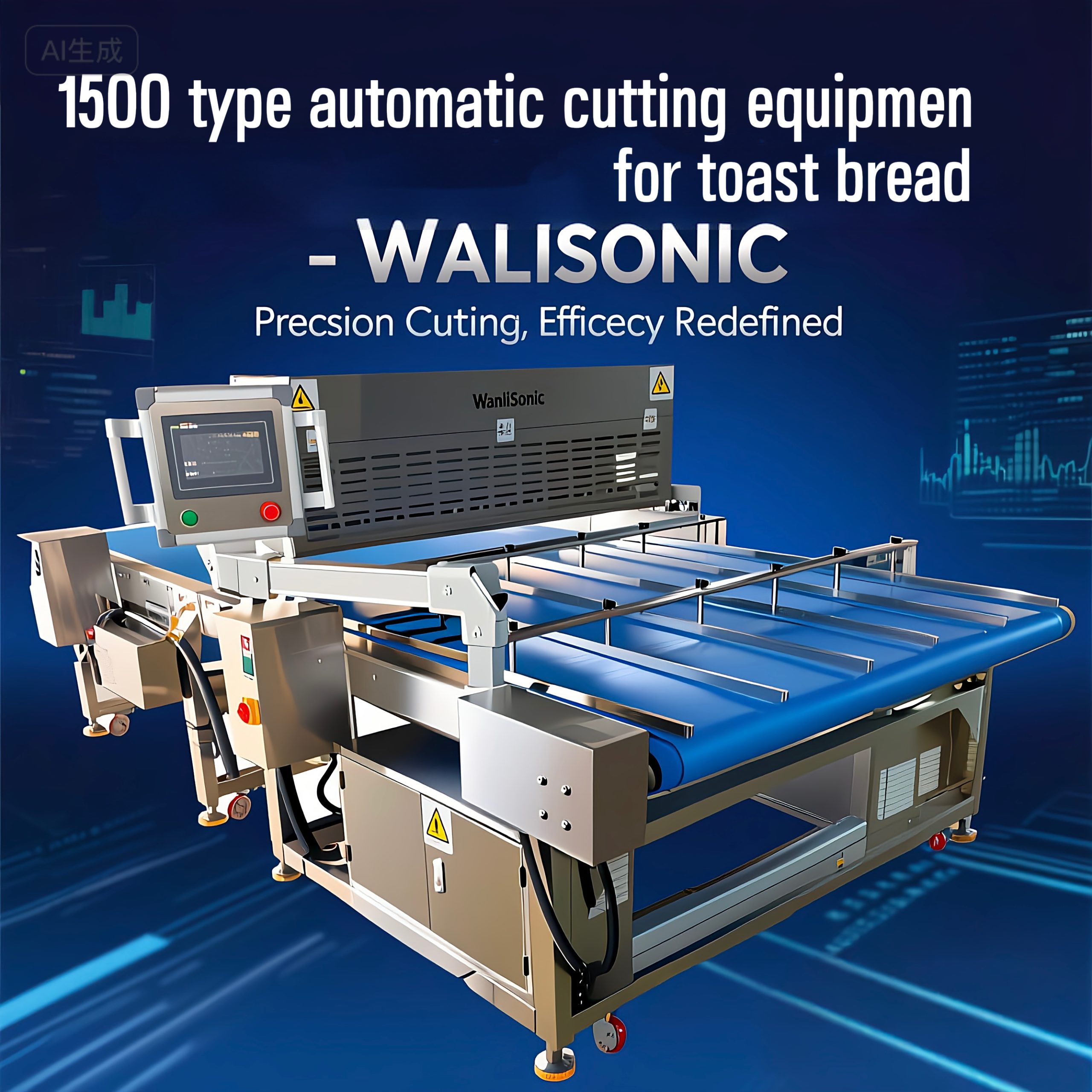
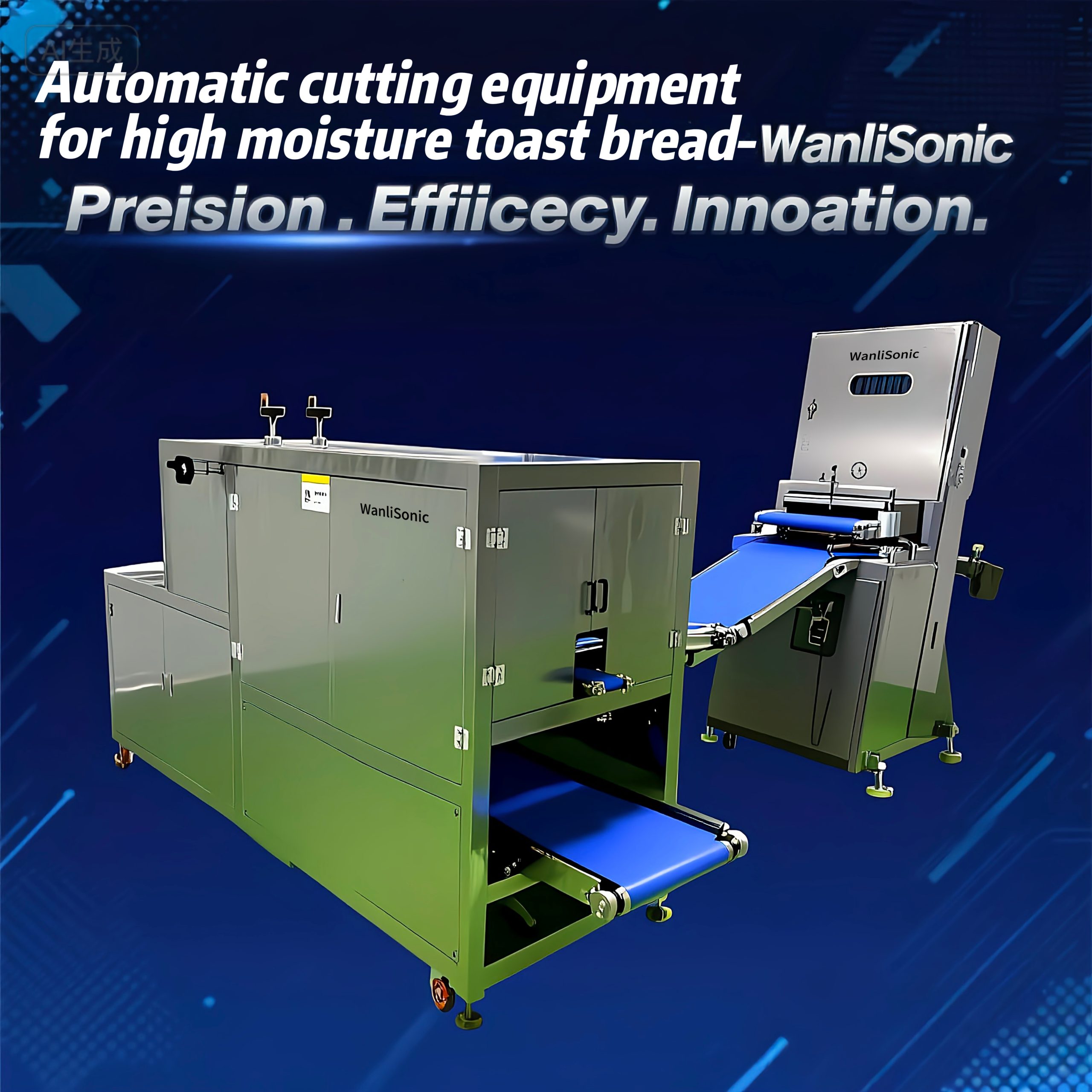
Traditional cutting methods often cause cream smearing, uneven edges, product deformation, and excessive residue on the blade. These problems can affect finished-product quality, increase cleaning requirements, and create unnecessary waste.
How can bakeries overcome these challenges? The Wanlisonic Ultrasonic Cake Cutting Machine offers an advanced solution by combining high-frequency ultrasonic vibration with precise cutting operations. This technology helps food manufacturers achieve cleaner cutting surfaces, improve portion consistency, and optimize bakery production processes.
What Makes the Wanlisonic Ultrasonic Cake Cutting Machine Different?
Unlike conventional cutting machines that rely primarily on mechanical pressure, an ultrasonic cake cutting machine uses a blade vibrating at high frequency to reduce cutting resistance.
The ultrasonic system converts electrical energy into mechanical vibration through a generator and transducer. The resulting vibration is transmitted to the cutting blade, allowing it to move through cake products with less resistance.
This cutting principle is particularly useful when processing soft, sticky, or layered foods. By reducing friction and the force required to penetrate the product, ultrasonic cutting can help preserve the cake’s structure and improve the appearance of the finished portions.
For commercial bakeries and industrial food manufacturers, this means a more controlled cutting process and greater flexibility when handling different cake recipes.
What Are the Main Advantages of Ultrasonic Cake Cutting?
1. Smooth and Clean Cutting Surfaces
Product appearance is essential for cakes sold through supermarkets, bakeries, cafés, and retail dessert brands. Uneven edges or smeared cream can make a high-quality cake look less appealing.
The Wanlisonic ultrasonic cake cutting machine uses high-frequency blade vibration to reduce resistance during cutting. This helps the blade pass through delicate cake layers more smoothly, producing clean edges and well-defined portions.
For layered cakes, the quality of the cut surface is especially important because customers expect the sponge, cream, and fillings to remain visually distinct.
Cleaner cutting results can improve product presentation and help manufacturers maintain consistent quality across production batches.
2. Reduced Cream and Filling Adhesion
Sticky ingredients are among the biggest challenges in cake processing. Cream, chocolate, jam, mousse, and other fillings can accumulate on conventional blades during continuous production.
As residue builds up, cutting quality may deteriorate, and operators may need to stop the machine for additional cleaning.
Ultrasonic vibration helps reduce adhesion between the cutting blade and the product. This can minimize residue buildup and help maintain more consistent cutting performance.
Although ultrasonic technology can reduce sticking, cleaning and sanitation remain necessary to meet the food safety requirements of commercial production.
3. Less Deformation of Delicate Cakes
Soft sponge cakes and cream-filled desserts can easily lose their shape when subjected to excessive cutting pressure.
Conventional blades may compress the product before passing completely through it, causing flattened layers, damaged edges, or distorted portions.
The Wanlisonic ultrasonic cake cutting machine reduces the resistance encountered during cutting, helping minimize unnecessary pressure on delicate products.
This makes ultrasonic technology a useful option for manufacturers processing soft cakes, layered desserts, mousse cakes, and other products whose structure must be preserved.
Actual results depend on product temperature, texture, filling composition, and cutting parameters.
4. More Consistent Portion Sizes
In industrial cake production, consistent portion dimensions are essential for packaging, weight control, product pricing, and customer satisfaction.
Manual cutting can produce variations between operators or batches, particularly when cake shapes and dimensions differ.
With suitable machine configuration and programmable cutting parameters, an ultrasonic cake cutting system can repeat predefined cutting patterns to help produce uniform portions.
Manufacturers can select appropriate cutting arrangements according to their product dimensions and final packaging requirements.
For businesses supplying supermarkets, restaurant chains, or distributors, improved portion consistency can support more standardized production.
5. Improved Production Efficiency
As order volumes increase, manual cake cutting may become a production bottleneck. Operators must repeatedly position cakes, measure portions, cut products, and transfer finished pieces to the next process.
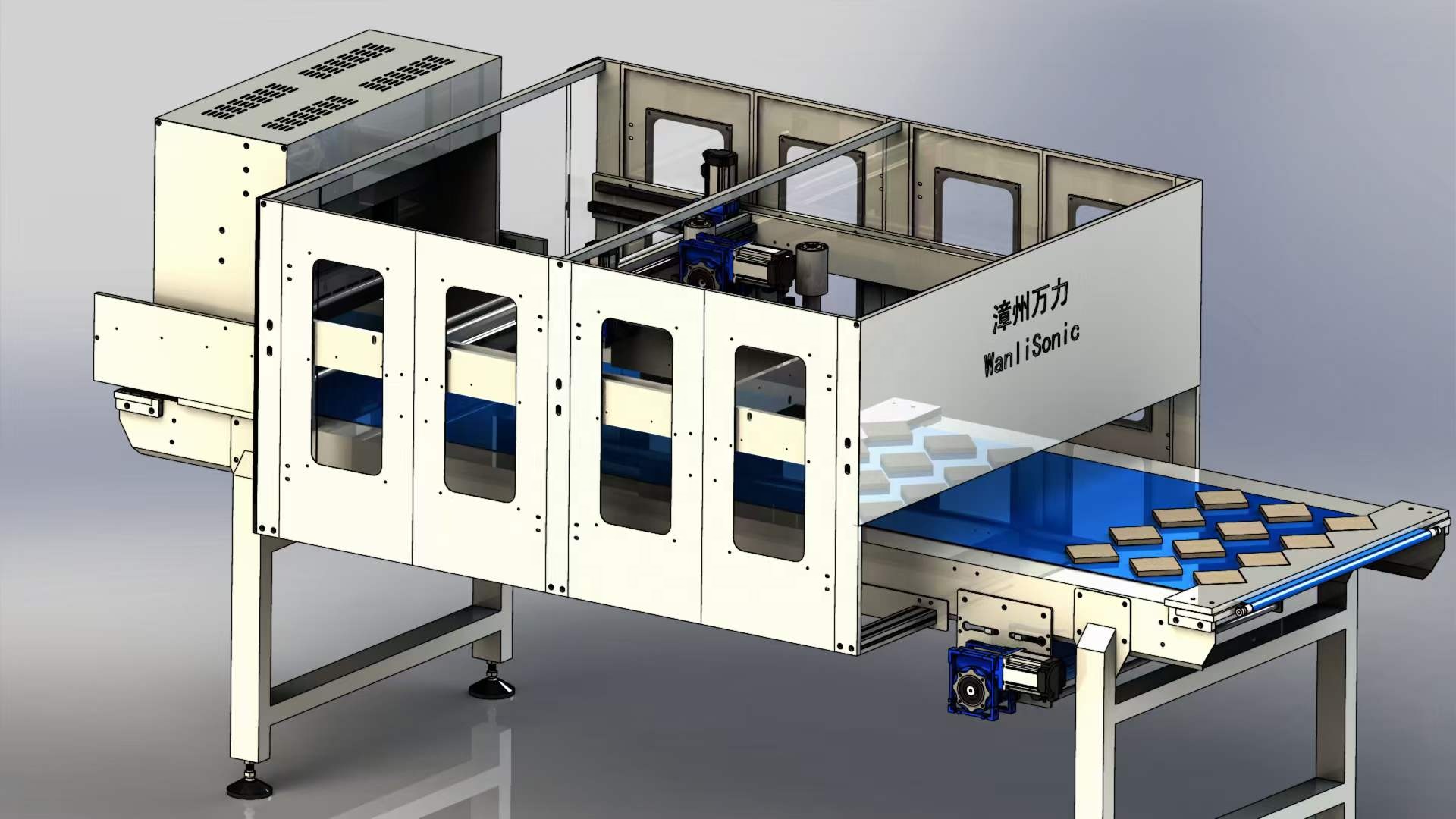
An automated ultrasonic cake cutting machine can streamline these operations by combining product positioning, controlled cutting, and conveyor-based handling where the selected configuration supports these functions.
Automation helps reduce repetitive manual work and improves process repeatability. Depending on the production layout, the cutting machine may operate independently or be integrated into a larger bakery processing line.
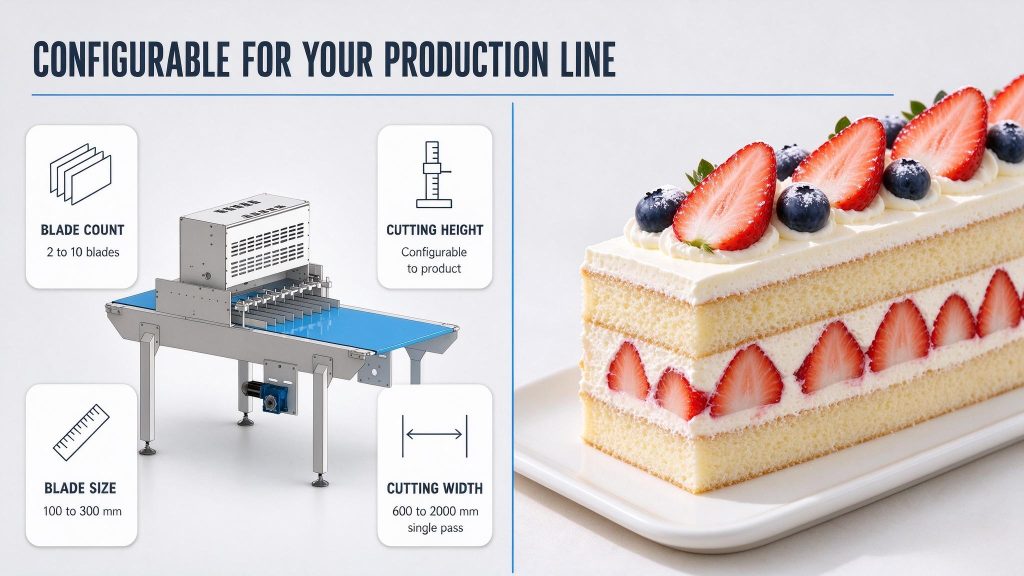
The appropriate configuration should be selected according to required output, cake dimensions, cutting patterns, and available factory space.
Which Bakery Products Can Wanlisonic Ultrasonic Cutting Technology Handle?
Ultrasonic cutting technology can be applied to a wide range of bakery and dessert products, subject to testing and suitable equipment configuration.
Potential applications include:
- Sponge cakes: For clean portions with reduced compression.
- Cream cakes: To help minimize frosting smearing and blade adhesion.
- Mousse cakes: For delicate products requiring careful handling.
- Multi-layer cakes: To help preserve the visual definition of different layers.
- Cheesecakes: For controlled portioning of dense and creamy textures.
- Brownies and dessert bars: For consistent dimensions and neat edges.
- Frozen and semi-frozen cakes: For applications where controlled cutting conditions are required.
Different products may require different blade configurations, cutting speeds, and product temperatures. Testing representative samples is recommended before confirming the final machine specifications.
How to Choose the Right Ultrasonic Cake Cutting Machine
Selecting suitable equipment requires more than simply identifying the type of cake. Manufacturers should consider the complete production process.
Cake dimensions: Provide the length, width, height, and shape of the product.
Cutting requirements: Specify whether the cake needs rectangular portions, triangular slices, grid cutting, or another pattern.
Production capacity: Define the required number of cakes or portions per minute or hour.
Product characteristics: Explain whether the cake contains cream, chocolate, jam, mousse, or multiple layers, and whether it is chilled or frozen.
Production line integration: Determine whether the machine needs to connect to an existing conveyor, packaging system, or other bakery equipment.
Cleaning requirements: Identify sanitation procedures and whether a dedicated blade cleaning function is required.
With these details, the Wanlisonic team can evaluate the application and recommend a suitable machine configuration for the customer’s production needs.
Why Consider Wanlisonic for Your Cake Cutting Project?
Wanlisonic specializes in ultrasonic food cutting solutions designed for different bakery and food processing applications.
By applying ultrasonic vibration technology to cake portioning, Wanlisonic helps manufacturers address common production challenges, including product deformation, sticky cutting surfaces, inconsistent portions, and labor-intensive manual processing.
The benefits extend beyond the cutting process itself. Cleaner cuts and more consistent portions can support better product presentation, more standardized packaging, and a more efficient production workflow.
For bakeries planning to expand their capacity or upgrade existing equipment, selecting a suitable cutting solution is an important step toward achieving reliable, repeatable results.
Whether your factory produces sponge cakes, cream cakes, mousse desserts, or other bakery products, Wanlisonic can evaluate your product specifications and discuss an appropriate cutting solution.
Contact Wanlisonic with your cake dimensions, product photographs, cutting requirements, and target production capacity to begin evaluating your project.
FAQ: Ultrasonic Cake Cutting Machine
Q1: What is an ultrasonic cake cutting machine?
An ultrasonic cake cutting machine uses high-frequency mechanical vibration to help a blade cut through cakes with reduced resistance. It is designed to improve cutting quality and minimize deformation.
Q2: What are the advantages of ultrasonic cake cutting compared with conventional cutting?
Ultrasonic cutting can produce cleaner edges, reduce cream adhesion, minimize compression of delicate products, and improve portion consistency.
Q3: Can the Wanlisonic machine cut cream cakes and mousse cakes?
Yes, these products are potential applications for ultrasonic cutting. The final result depends on the cake’s texture, ingredients, temperature, and machine configuration.
Q4: Does ultrasonic cutting eliminate blade cleaning?
No. Ultrasonic vibration can reduce food adhesion and help keep the blade cleaner, but regular cleaning and sanitation are still required.
Q5: Can the machine be integrated into an automated production line?
Depending on the selected configuration, the machine can support conveyor-based handling and integration with suitable upstream or downstream equipment.
Q6: How can I obtain a suitable machine recommendation?
Provide your cake dimensions, product characteristics, required cutting pattern, production capacity, and factory layout. Wanlisonic can use this information to assess a suitable solution.
Contact Information:
Lucy Zheng (Senior Account Manager)
📧 Email: sales4@wanlisonic.com
📞 Phone/WhatsApp/WeChat: +86 15715037520