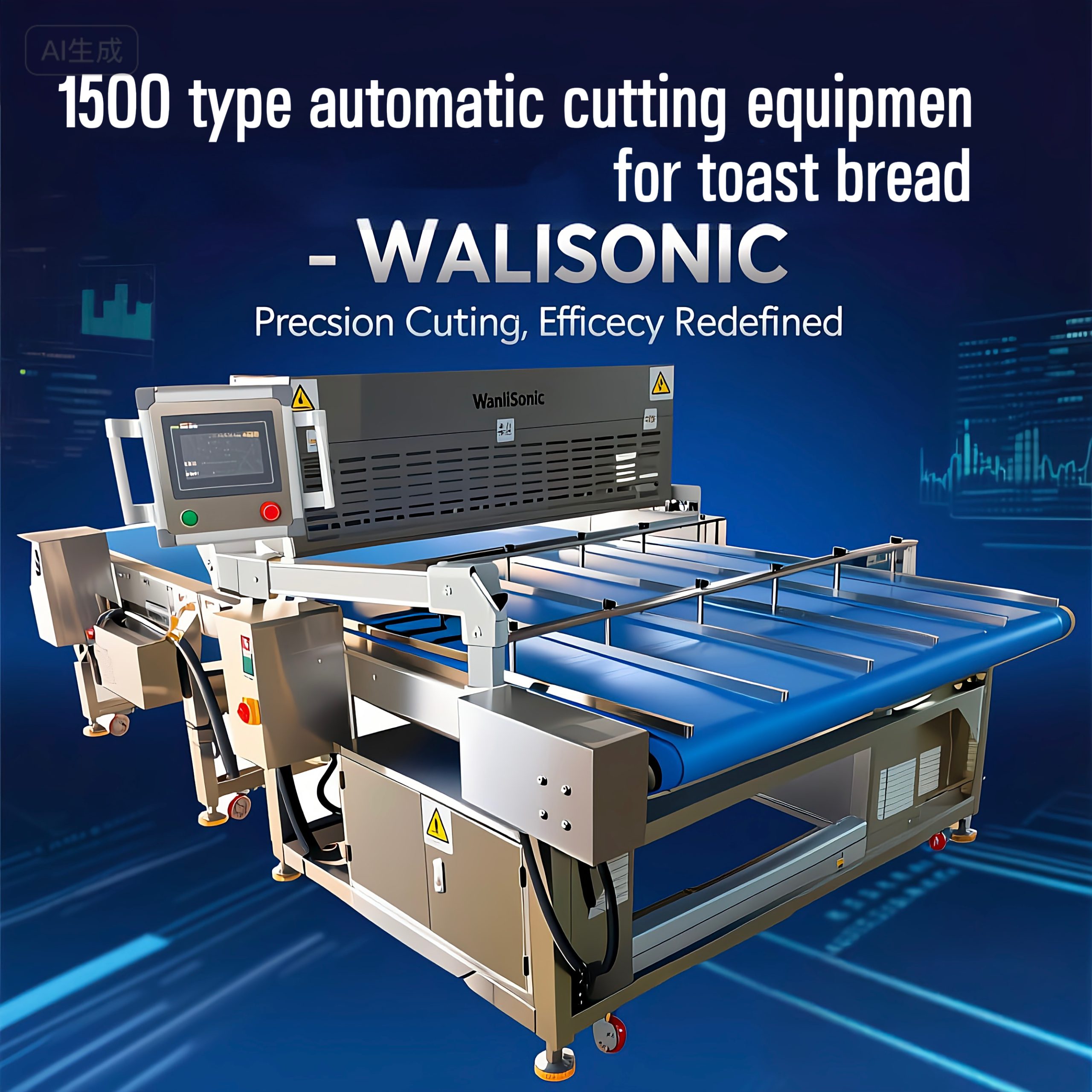
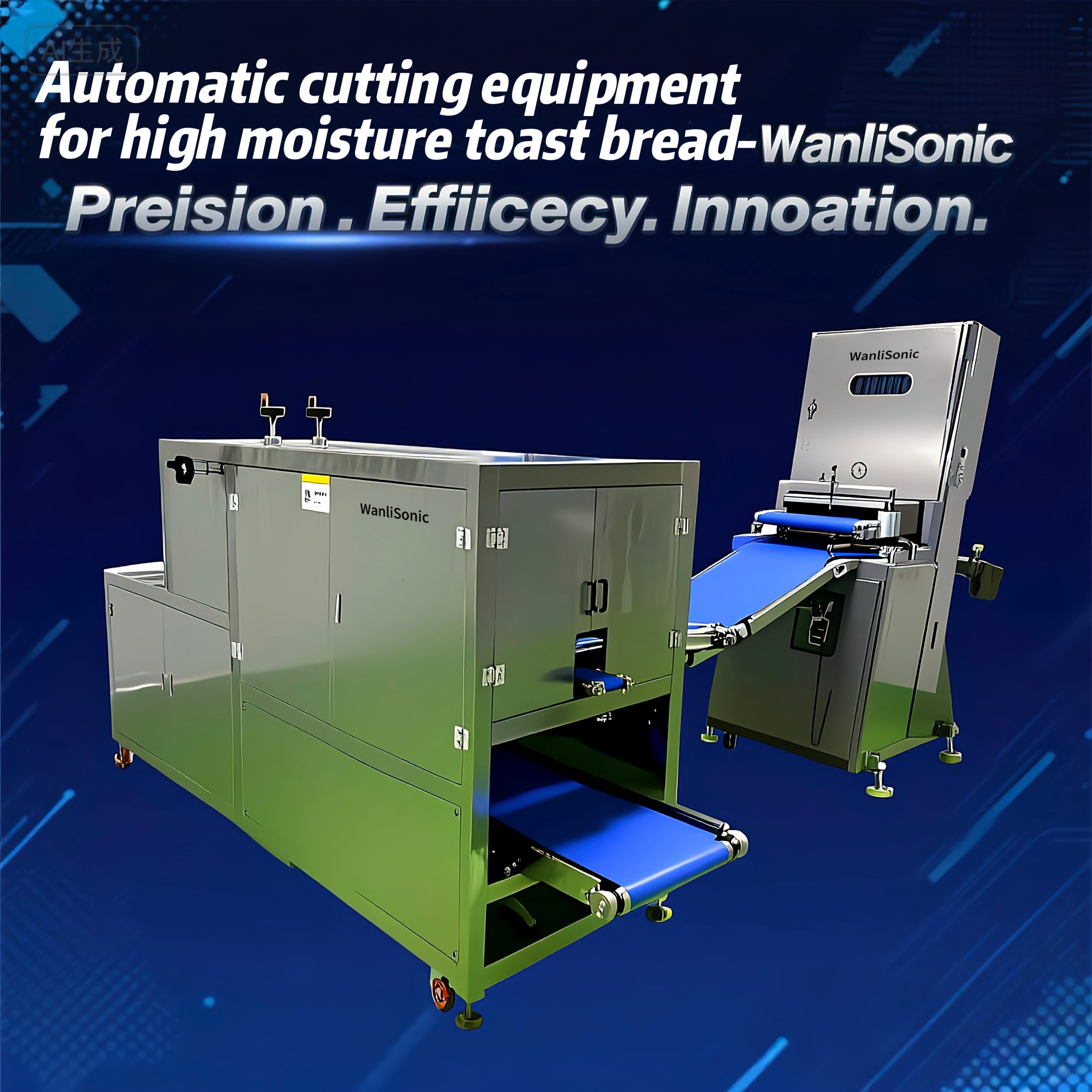
In an era where precision, speed, and food safety increasingly define success in bakery and dessert production, one technological leap is gaining significant traction among patisseries and industrial manufacturers alike: ultrasonic cutting. This emerging innovation — highlighted in a recent showcase video for the Wanlisonic Ultrasonic Cake Cutting Machine — may answer one of the industry’s most persistent questions: “How can we reliably and consistently slice delicate cakes without damaging their texture or presentation?
For many bakeries, the answer to that problem has long been elusive. Traditional mechanical blades often compress soft sponges, smear frosting, and leave inconsistent edges — especially problematic for products destined for retail packaging or gourmet displays. Ultrasonic technology, however, brings a new paradigm shaped around high-frequency vibration rather than brute force cutting, and the results are turning heads across the food processing sector.
From Traditional Knife to Ultrasonic Precision
The principle at the heart of Wanlisonic’s solution is deceptively simple but profoundly effective: instead of relying on a sharp blade’s pressure to sever a cake, the machine uses ultrasonic vibrations — sound waves far above human hearing — to reduce friction as the blade moves through the material. These vibrations — typically between 20,000 Hz and 40,000 Hz — allow the blade to “ glide” through soft desserts with minimal resistance, leaving behind clean, intact structures and smooth surfaces.
This technology brings numerous advantages:
- Non-stick cutting: Frostings and fillings no longer cling to blade surfaces.
- Minimal deformation: Soft layers — whether sponge, mousse, or cheesecake — maintain their structure.
- Reduced waste: Crumbs and broken edges are significantly minimized.
- Hygienic operation: Vibrating blades resist residue buildup, streamlining cleaning and sanitation.
From operators to quality control managers, professionals in bakery production are taking notice. The issue of sticky layers and inconsistent slices — once an accepted limitation of mechanical cutting — is now being addressed through science-driven engineering.
What the Video Showcases: Cleaner, Smarter, Faster Cutting
While the hosted YouTube video itself (linked above) focuses primarily on the visual performance of the machine in action, the trending response from industry watchers highlights the machine’s effortless slicing and uninterrupted workflow. Viewers see cakes — including multi-layered, cream-filled varieties — being cut with remarkable smoothness and minimal manual intervention.
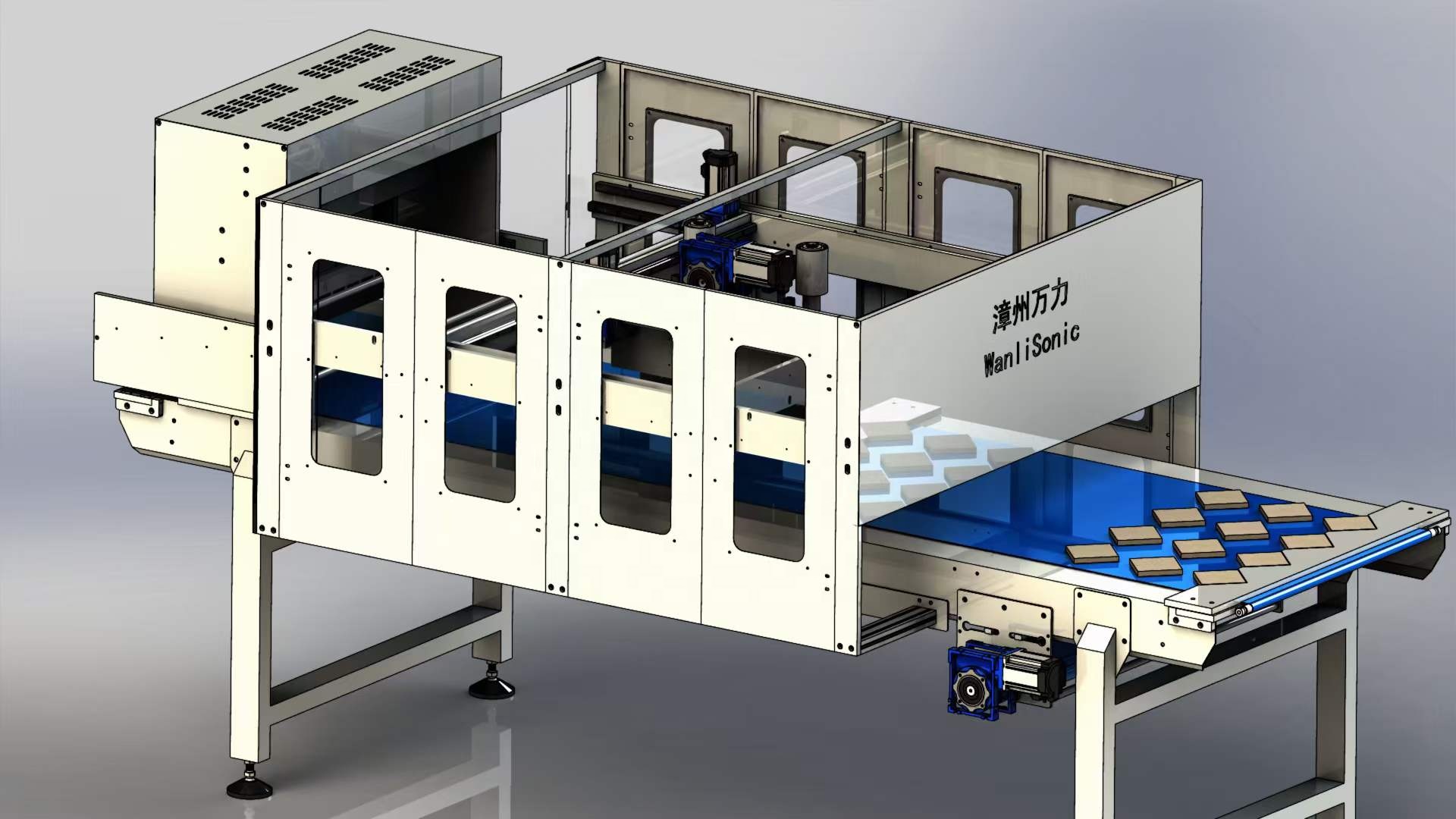
The efficiency of this approach becomes even clearer when paired with automated systems: the machine integrates with conveyor belts and programmable logic controllers, enabling continuous slicing in a production line. Rather than requiring an operator to manually place and cut each cake, the ultrasonic cutter can function as part of a larger automated process — significantly boosting throughput for high-volume operations.
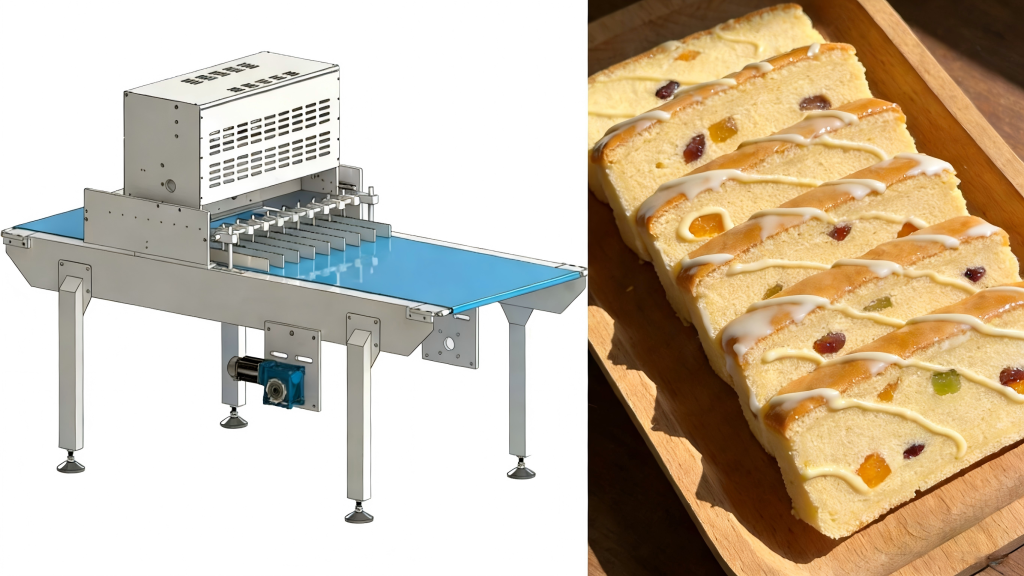
Advanced Features Fueling Bakery Innovation
Wanlisonic’s ultrasonic cake cutter distinguishes itself through several technical and operational strengths:
1. High-Frequency Ultrasonic Blades
At the core of the machine are titanium ultrasonic blades that vibrate at ultrafast frequencies, dramatically reducing friction and enabling cutting without compression or tearing. These blades are engineered for durability and are ideal for long-term industrial use.
2. Programmable Cutting Patterns
Bakeries can customize how cakes are sliced — from rectangular blocks to triangular portions or circular segments — through a user-friendly interface. These settings ensure consistent portion sizes that align with packaging and pricing strategies.
3. Compatibility Across Cake Types
Whether dealing with classic sponge cakes or demanding frozen desserts, the ultrasonic cutter adapts with ease. It chips away at soft, sticky, and cold products alike without loss of texture or structural integrity — a major advantage over traditional knives that can cause layer mixing or partial collapse.
4. Industrial-Scale Throughput
With automated conveyors and precision positioning, the machine dramatically raises production capacity while reducing reliance on manual labor — a clear benefit for central ovens, large commercial kitchens, and confectionery manufacturers managing high daily output.
5. Hygiene and Food Safety
Moving beyond speed and precision, the ultrasonic cutter excels in sanitary design. Food–grade stainless steel components, non-stick cutting technology, and minimized operator contact reduce contamination risks — an ever-critical factor in compliant food production environments.
Real-World Impact: Beyond the Cutting Board
The implications of this technology stretch far beyond simply cutting cake. For production managers, uniform slices mean optimized packaging and reduced waste. For designers and artisan bakers, perfectly preserved layers allow for more visually attractive products. And for food safety teams, reduced handling minimizes contamination risks.
This blend of precision cutting with automation has already led many bakeries to reevaluate their equipment strategies. Some commercial producers report significant decreases in slicing inconsistencies, while others highlight fewer delays caused by blade cleaning or manual errors. With rising consumer expectations for aesthetic appeal — particularly in premium desserts — these gains translate directly to market competitiveness.
Challenges and Considerations
Of course, adopting ultrasonic cutting equipment requires investment and training. Companies must weigh upfront costs against long-term savings associated with reduced labor, lower waste, and faster throughput. However, many data points suggest that the return on investment (ROI) for ultrasonic lightens operational costs considerably within a production year — especially for facilities with heavy daily slicing requirements.
Industry Perspectives: What Bakers Are Saying
Impressions from professional users reflect excitement and cautious optimism. Many bakery operators who have transitioned to ultrasonic systems praise the cleanliness of each slice and highlight dramatic drops in crumb contamination and frosting messes. A recurring theme among feedback centers on consistent portion sizes, which simplifies packaging and improves customer satisfaction.
Smaller artisanal shops also find value in the adaptable nature of the machine. Even without large-scale conveyors, the precision cutting allows boutique bakers to deliver presentation-ready desserts that rival high-end patisserie standards — a compelling benefit in an era driven by social media aesthetics and consumer expectations.
📌 FAQ — Wanlisonic Ultrasonic Cake Cutting Machine
Q1. How does ultrasonic cake cutting work differently from a traditional blade?
A: Ultrasonic cutting uses high-frequency vibrations to reduce friction, allowing blades to slice through cake with minimal pressure — unlike conventional mechanical knives that rely on sharp edges and force.
Q2. Can this machine cut frozen or chilled cakes?
A: Yes — ultrasonic cutters handle chilled and frozen cakes without crushing or deforming their structure.
Q3. What kinds of slicing patterns are possible?
A: The system supports customizable patterns, including rectangular, square, triangular, and circular portions, programmable through the control interface.
Q4. Does ultrasonic cutting reduce waste?
A: Yes — cleaner cuts and fewer crumbs mean less product loss and improved yield.
Q5. Is the technology suitable for large production lines?
A: Absolutely — with conveyor integration and automated positioning, the machine can significantly boost throughput in industrial settings.
Q6. Does it improve food safety?
A: Yes — reduced residue on blades and minimized manual handling enhance sanitation.
Contact Information:
Lucy Zheng (Senior Customer Consultant)
📧 Email: sales4@wanlisonic.com
📞 Tel / WhatsApp / WeChat: +86 15715037520