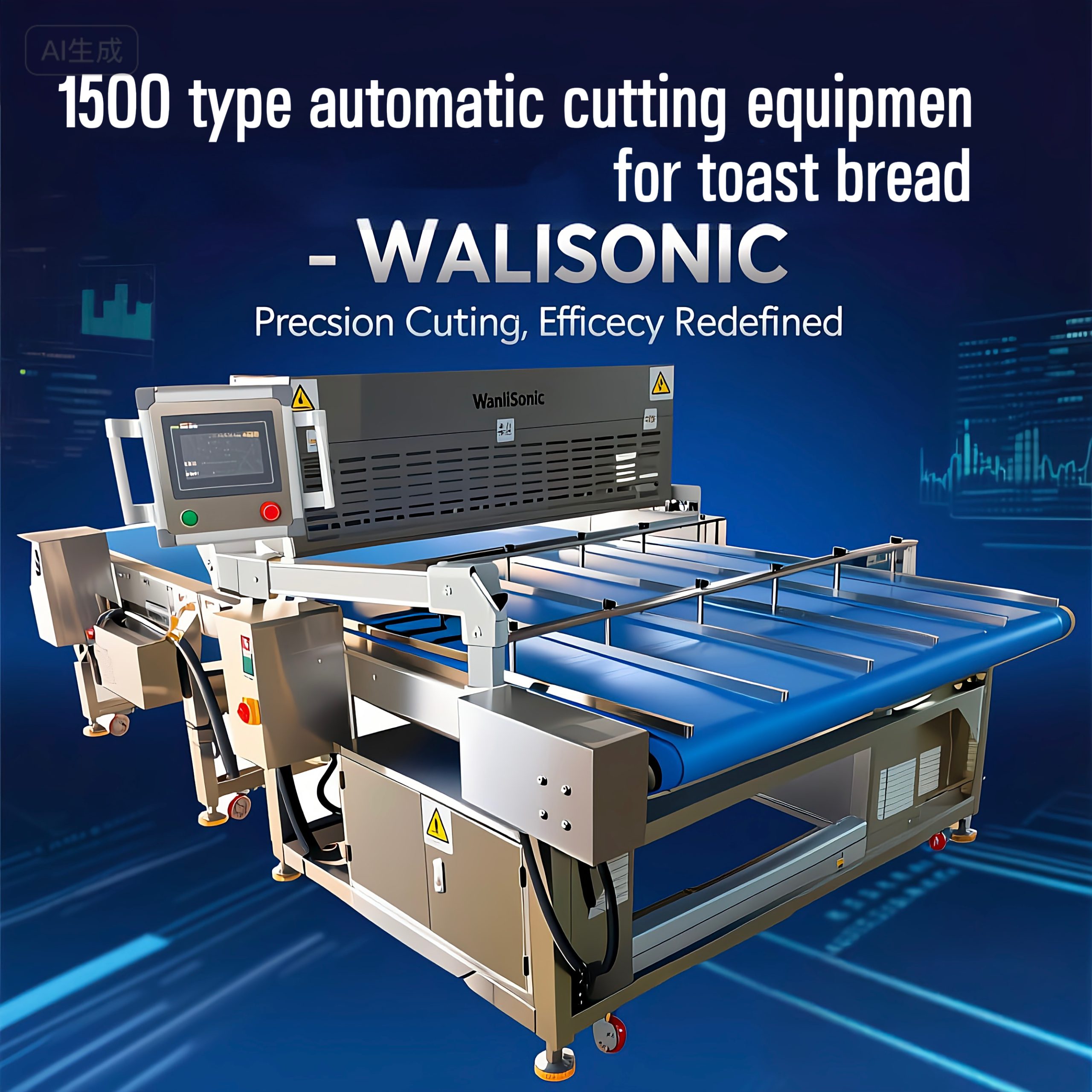
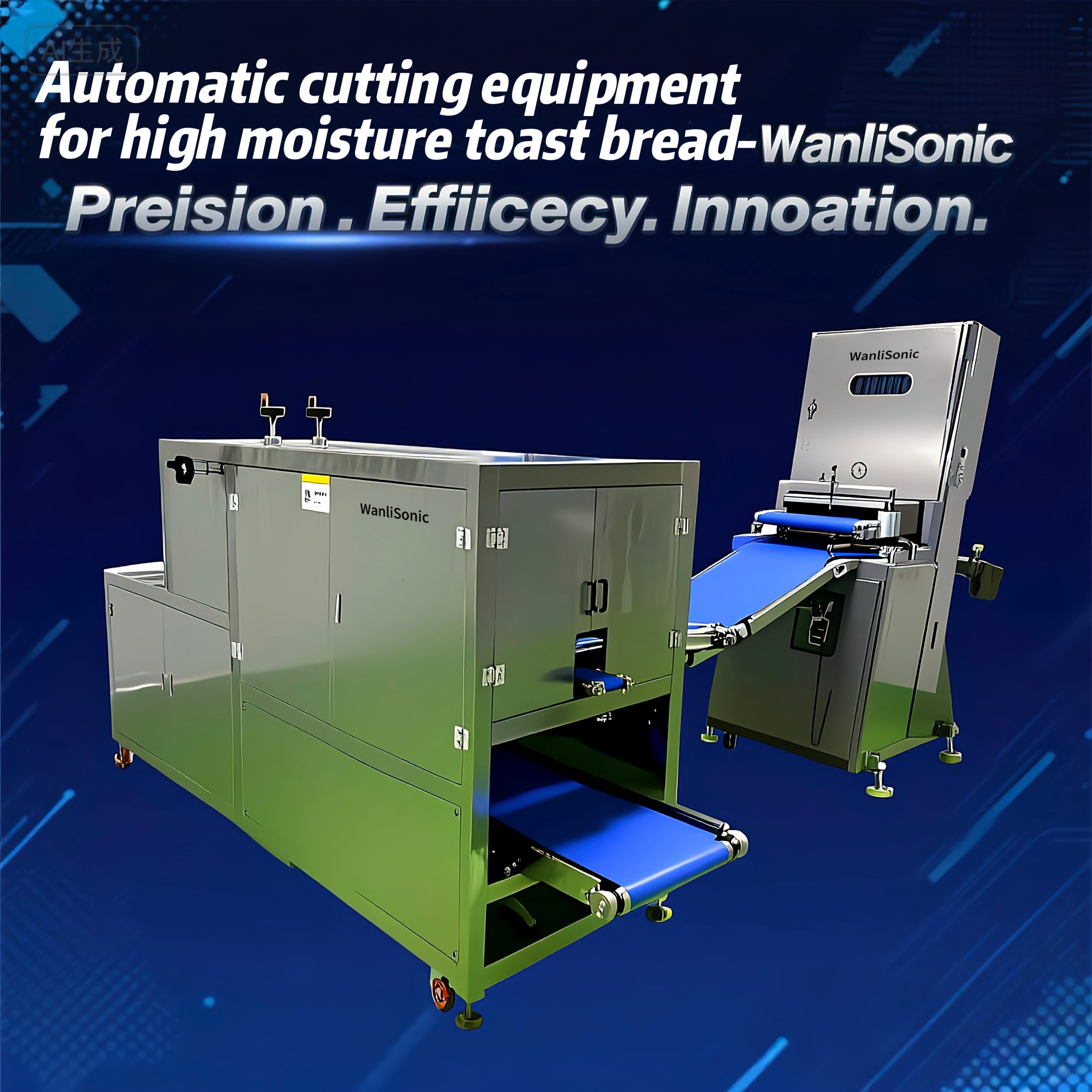
Ultrasonic Cake Cutting Cutter has sparked industry interest and discussions among food engineers, bakery production managers, and process automation specialists. This innovative technology, exemplified by wanlisonc’s ultrasonic systems, is rapidly becoming a cornerstone of modern baking plants looking to streamline operations, improve product quality, and enhance throughput efficiency.
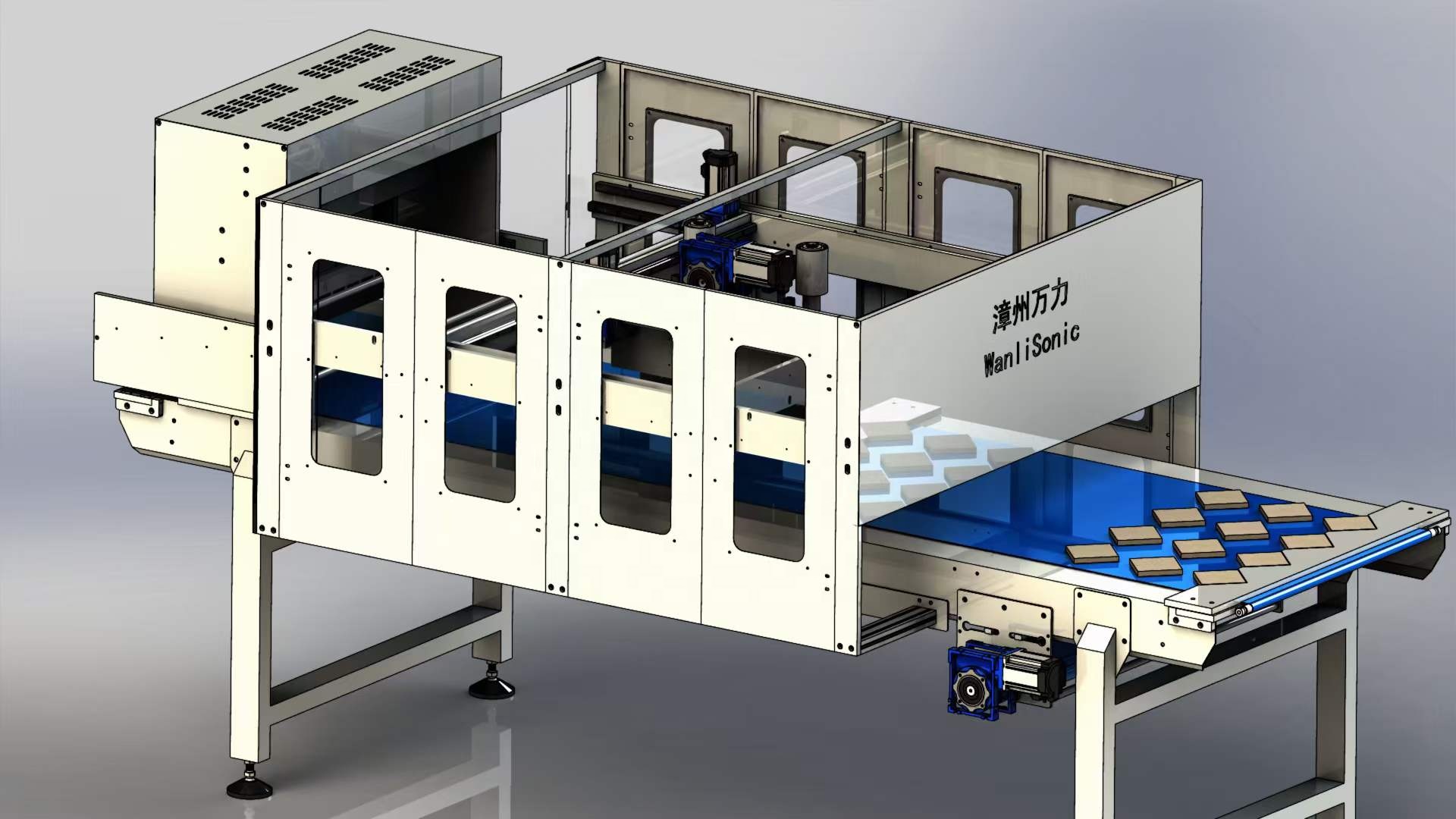
Ultrasonic cutting technology differs fundamentally from traditional blade slicing. Instead of relying solely on mechanical pressure to sever food products, ultrasonic cutters use high-frequency vibrations at tens of thousands of hertz to reduce friction and enable clean, precise slices even in soft, moist, sticky, and multi-layered products. That technology is on full display in the recently released video, where cakes move steadily on a conveyor and are cross-cut into exact portions — with edges that retain texture and appearance without compressing or deforming the product.
How Ultrasonic Cutting Works
At its core, an ultrasonic cutting system consists of four major components:
-
Ultrasonic generator — converts standard electrical power into high-frequency electrical oscillations.
-
Transducer — converts high-frequency electrical energy into mechanical vibrations.
-
Amplitude transformer (horn) — amplifies vibration and transfers it to the blade.
-
Ultrasonic blade (sonotrode) — vibrates at frequencies typically between 20 kHz and 40 kHz, allowing friction-free slicing.
Traditional cutting relies on sharp edges driven downward to force separation of the food structure. This often leads to smearing, tearing, or incomplete cuts — especially in fragile textures like cream-filled layers or frozen elements. In contrast, ultrasonic cutting vibrates the blade at high speed, creating microscopic oscillations that reduce resistance and make the blade glide effortlessly through the cake without dragging or sticking.
In the video, the continuous cutter performs cross cuts at high speed and with remarkable visual consistency, ensuring that each slice maintains its structural integrity — a key metric for commercial food production.
Why This Matters for Industrial Bakeries
For industrial bakeries, several challenges plague the slicing process — particularly when products vary in temperature, texture, and composition. Cakes with cream layers, mousse centers, or frozen fillings can be ruined by traditional knives that compress or smear the delicate layers. Moreover, sticky frostings and fillings often cling to conventional blades, leading to product waste and increased cleaning time.
The ultrasonic cutter demonstrated in the video addresses these issues directly:
-
Clean, flat cutting surface: Vibrating blades reduce friction and prevent sticking, resulting in smooth slices that preserve the original texture.
-
Minimal deformation: Delicate cakes with creams, mousses, and soft sponges are cut without crushing or distortion.
-
High throughput: Ultrasonic systems are compatible with conveyor-based production lines, enabling continuous slicing for high-volume operations.
-
Reduced labor: Automation reduces dependence on manual slicing and the associated ergonomic challenges.
-
Improved hygiene: Less residue buildup means fewer cleaning cycles and lower bacterial contamination risk.
These benefits are transformational for bakeries looking to scale production without sacrificing quality — a balance that traditional slicing systems often fail to achieve at industrial throughput levels.
Wanlisonc’s Role in Ultrasound Cutting Innovation
A leader in this cutting-edge space is wanlisonc, a manufacturer specializing in ultrasonic food cutting machinery including cake, bread, and dessert slicers designed for automated production environments. Wanlisonc’s ultrasonic cake cutting machines are engineered to integrate with conveyor systems and industrial food lines, enabling continuous, automated slicing with high precision and reliability.
Wanlisonc’s machines support multiple cutting modes — from cross slicing and square portioning to round and triangular patterns — making them versatile for diverse bakery applications. Their systems typically feature:
-
Programmable slicing parameters, allowing adjustable slice thickness and patterns tailored to demand.
-
Food-grade stainless steel construction for hygiene and durability.
-
Non-stick ultrasonic blades that resist adhesion from sticky fillings.
-
User-friendly touchscreen controls for simplified operation.
-
Servo-drive positioning systems for accurate slice placement.
These features make wanlisonc systems appealing not only to large industrial bakeries, but also to mid-sized producers and artisan facilities seeking high output with consistent quality.
Market Impact and Adoption Trends
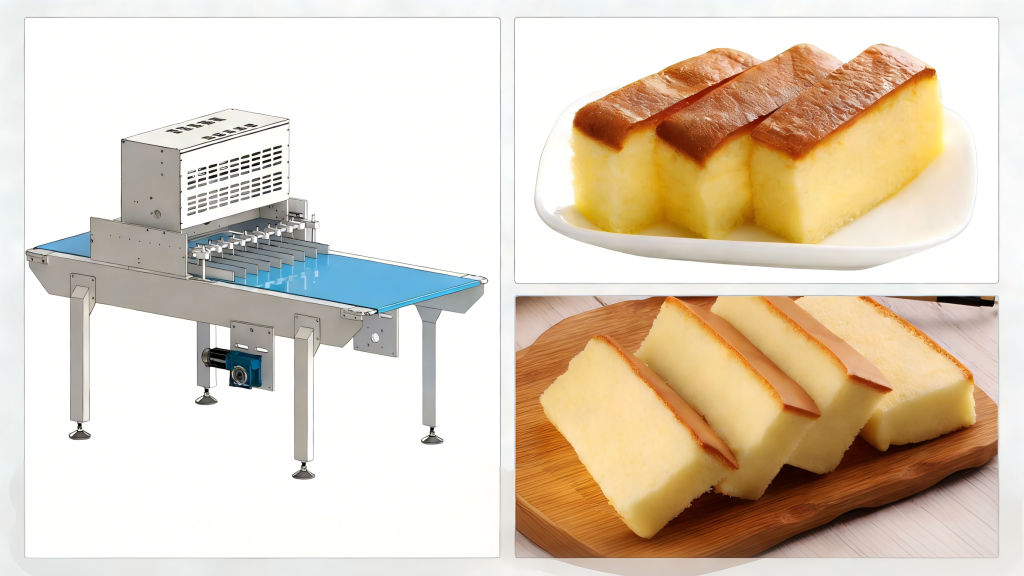
Ultrasonic slicing technology is gaining traction across food processing sectors beyond cake production. It’s now widely recognized for applications in pastries, frozen desserts, bread, confectionery, and other bakery items where traditional cutting presents challenges. Ultrasonic cutters are especially effective for:
-
Frozen cakes and chilled desserts — where temperature gradients can cause deformation under mechanical pressure.
-
Sticky and moist products — such as cream cakes, caramel toppings, and layered tarts.
-
High-value pastries — demanding uniform portion sizes and visually consistent presentation.
-
Breads and loaves — where clean cuts reduce crumbs and waste.
Customers who transition to ultrasonic solutions often report significant operation improvements: cleaner slicing, less downtime for cleaning blades, and reduced waste — outcomes that contribute directly to enhanced operational ROI.
Industry Voices and Practical Insights
Food manufacturers adopting ultrasonic cross-cut cutters like those from wanlisonc frequently emphasize the technology’s reliability at scale. In commercial environments where product consistency matters for packaging, labeling, and presentation, automated ultrasonic slicing solves a persistent bottleneck inherent in traditional mechanical methods.
The move toward such technology is also driven by evolving consumer expectations. Today’s bakery products must not only taste good but also look uniform and appealing. Whether for retail shelves, cafés, or bulk packaged goods, the quality of the cut — edges, symmetry, and surface finish — has become a visible quality differentiator.
FAQ
Q1: What is an Ultrasonic Cross-Cut Cake Cutting Cutter?
A: It’s an automated food cutting system using high-frequency vibrations to produce clean, precise cross slices in cakes and bakery products.
Q2: How does ultrasonic cutting differ from traditional methods?
A: Instead of relying on blade sharpness and pressure, ultrasonic cutting uses vibrating blades to reduce friction, prevent sticking, and maintain product structure.
Q3: Why choose a wanlisonc ultrasonic cutter?
A: Wanlisonc machines offer programmable cutting modes, food-grade construction, non-stick blades, and integration capability with conveyor production lines — ideal for high-volume bakery operations.
Q4: What kinds of products can ultrasonic cutters handle?
A: They can cut cakes, frozen desserts, bread, pastries, and other bakery items, handling varying temperatures and textures with minimal waste.
Q5: Can ultrasonic cutting improve production efficiency?
A: Yes — by increasing throughput, reducing labor needs, minimizing waste, and maintaining consistent slice quality, ultrasonic cutters boost overall production performance.
Contact Information: Annie (Senior Customer Consultant)
📧 Email: sales3@wanlisonic.com
📞 Tel / WhatsApp / WeChat: 008615880521772