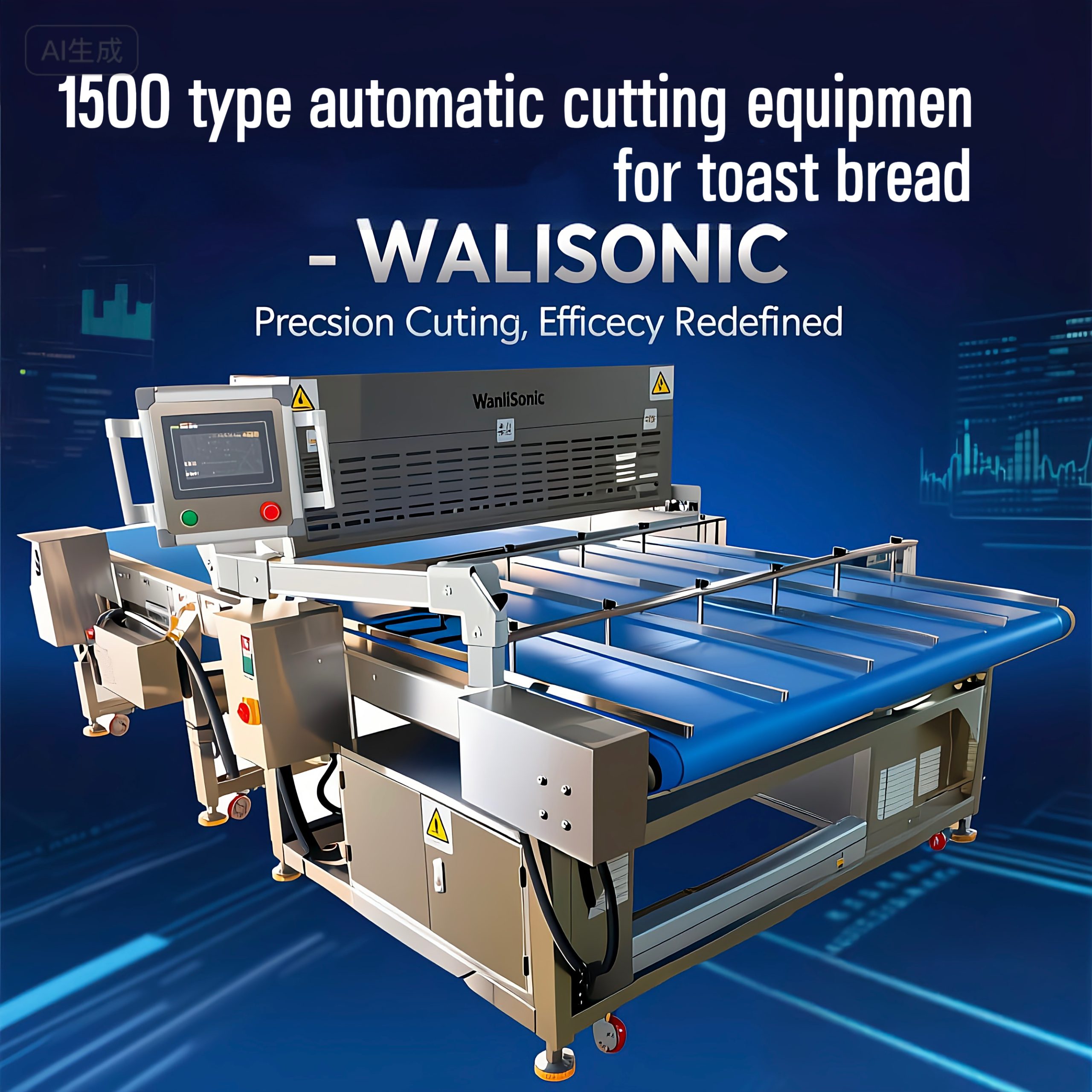
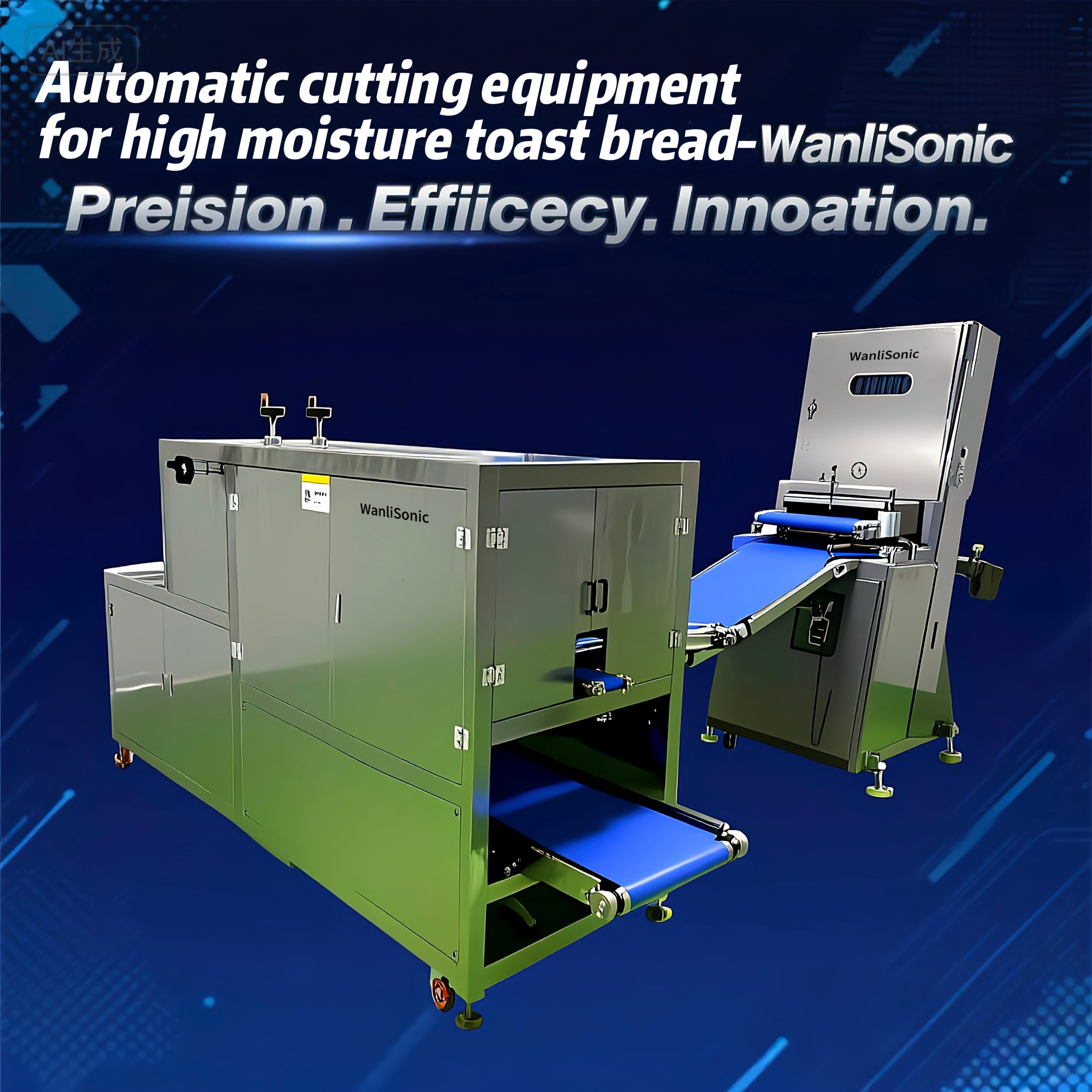
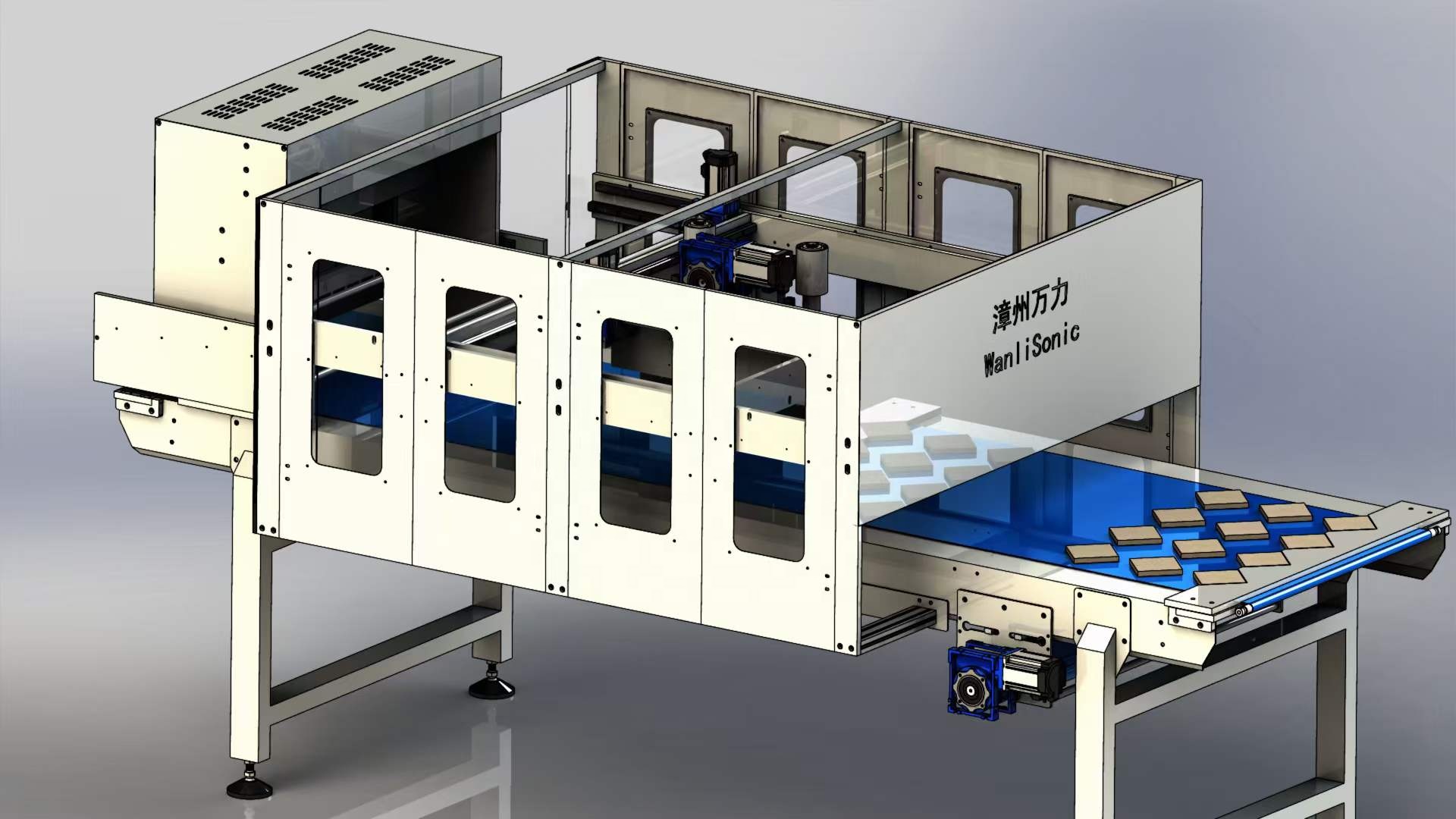
Wanlisonic ultrasonic cookie cutting machine.In a bold leap forward for the baking and food processing industry, Wanlisonic — a name rapidly gaining traction among global food technology innovators — has introduced its latest advancement: the Ultrasonic Cookie Cutting Machine. Based on live footage shared in a recent YouTube video, this cutting-edge equipment transforms how cookies, biscuits, and other baked goods are sliced, offering unprecedented precision, speed, and product quality.
As bakeries around the world grapple with rising demand from consumers and retail clients alike, technologies like ultrasonic cookie cutting are rapidly transitioning from niche curiosities to essential production tools. The ultrasonic cookie cutter showcased in the video — and now making headlines across industrial food technology circles — represents a major milestone in that evolution.
Ultrasonic Technology Meets Cookie Craftsmanship
At its core, the Wanlisonic Ultrasonic Cookie Cutting Machine uses high-frequency ultrasonic vibrations to slice dough and baked products with remarkable accuracy. Unlike conventional mechanical blades that rely on sheer force and contact pressure, ultrasonic cutters vibrate at frequencies typically between 20 kHz and 40 kHz. These vibrations drastically reduce friction, allowing the blade to glide through even the stickiest doughs without deformation, tearing, or sticking.
The result? Clean, consistent cuts — from soft, jam-filled cookies to dough containing nuts, dried fruits, or rich inclusions — all without the tearing, smearing, and irregular shapes that plague traditional cutting methods.
Why Ultrasonic Cutting Matters
Bakeries have traditionally struggled with a range of cutting challenges:
-
Inconsistent shapes from manual or mechanical blades
-
Sticky dough adhesion to blades leading to compromised presentation
-
Product deformation especially with delicate or multi-component cookies
-
Slow throughput in high-volume operations
Ultrasonic technology directly addresses these issues. The ultrasonic vibration creates a nearly frictionless cutting surface, meaning dough doesn’t adhere to the blade and the shape of the cookie or biscuit remains intact. This not only improves product aesthetics but also minimizes waste and streamlines post-cutting cleaning and processing.
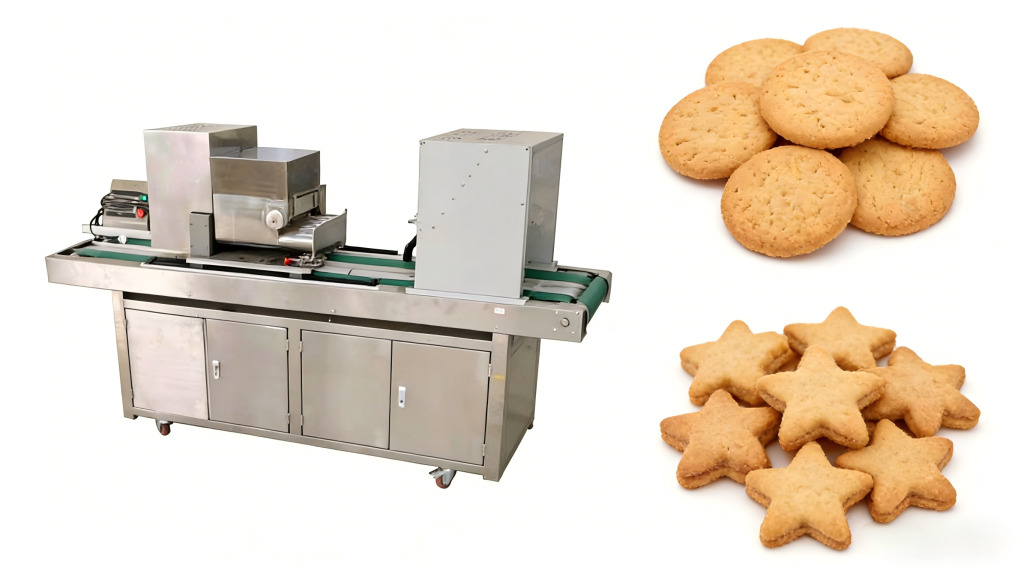
Inside the Machine: Precision Meets Versatility
According to Wanlisonic’s product literature and specifications, the machine is built with food-grade stainless steel and a titanium ultrasonic blade, ensuring hygiene, durability, and long service life — even under continuous industrial use.
Operators can control cutting speed, thickness, blade height, and pattern through a programmable touchscreen interface that is intuitive even for non-technical users. Whether a bakery needs classic round cookies, geometric patterns, or themed shapes (such as stars or hearts), the system can be configured accordingly.
The unit also supports high throughput: some configurations are capable of processing up to 150 cuts per minute, making it ideal for both small artisanal bakeries and large-scale industrial facilities.
Beyond Cutting: Improved Efficiency and Hygiene
With rising demand for safer, more efficient food production, the machine answers not only aesthetic quality concerns but also hygiene and safety requirements. Because ultrasonic blades reduce direct contact and eliminate many of the residue and friction issues associated with traditional cutting, cleanup time and equipment downtime are significantly reduced.
Moreover, the design minimizes bacterial contamination risk — a critical benefit for food producers seeking compliance with HACCP, FDA, CE, and ISO food safety standards.
Use Cases: From Artisanal Kitchens to Global Factories
Although the video highlights the machine’s role in cookie production, its application potential extends well beyond that singular use. Ultrasonic cutting technology has already proven effective in slicing cakes, breads, nougat, candies, protein bars, frozen goods, and more, without compromising texture or shape.
For example, soft breads and cakes — historically difficult to slice cleanly — maintain their structural integrity when cut with ultrasonic methods. Even frozen doughs, which often crack or shatter with traditional tools, are handled with ease.
In commercial production lines, the ultrasonic cookie cutting machine can be integrated with automatic feeders, conveyors, and downstream packaging systems. This means true end-to-end automation is now possible for high-volume bakeries and confectioneries looking to meet peak holiday demands or major retail contracts.

Industry Response and Market Trends
Industry analysts note that food automation — including ultrasonic cutting technologies — is one of the fastest-growing segments of food processing equipment. As global demand for convenience foods and baked goods increases, producers are seeking technologies that improve product quality, reduce labor dependency, and deliver consistent results at scale.
Experts suggest that adoption of ultrasonic cutting tools will continue to accelerate through 2026 and beyond, especially as food manufacturers pursue leaner operations and higher quality standards in a competitive marketplace.
Customer Experience: Words from the Field
Early adopters have reported immediate productivity boosts and reduced waste. Many bakery owners also comment on the ease of operation and visual quality improvements in finished products.
One European bakery customer recently shared that after installing a Wanlisonic Ultrasonic Cutter, production efficiency increased by over 30%, while the rate of product defects and waste dropped sharply.
The Future of Baking Technology
The introduction of the Wanlisonic Ultrasonic Cookie Cutting Machine underscores a broader shift in food processing — where digital controls, precision engineering, and ultrasonic vibration technology converge to enhance quality and efficiency.
As more bakeries and food producers embrace these tools, the difference between hand-crafted and machine-produced baked goods may become a matter of artistry complemented by precision science.

FAQ
Q: What makes ultrasonic cutting different from traditional blade cutting?
A: Ultrasonic cutting uses high-frequency vibrations to reduce friction between the blade and the dough, delivering smoother, cleaner cuts that traditional mechanical blades often can’t achieve.
Q: Can sticky or filled dough be cut with this machine?
A: Yes. The ultrasonic blade’s vibration prevents dough from sticking, even with sticky, jam-filled, or multi-ingredient mixes.
Q: Is this suitable for small bakeries?
A: Yes — Wanlisonic offers models suitable for both artisanal bakeries and large industrial lines, allowing scalable solutions.
Q: Does the machine meet food safety standards?
A: Machines are built with food-grade materials and comply with global standards like HACCP, FDA, and CE.
Q: How fast can the machine cut?
A: Depending on the model, cutting speeds of up to 150 cuts per minute are possible.
Q: Does it require special maintenance?
A: Ultrasonic cutters generally require less maintenance than traditional blade systems due to reduced blade sticking and wear, though periodic cleaning and inspection are recommended.
Contact Information: Annie (Senior Customer Consultant)
📧 Email: sales3@wanlisonic.com
📞 Tel / WhatsApp / WeChat: 008615880521772