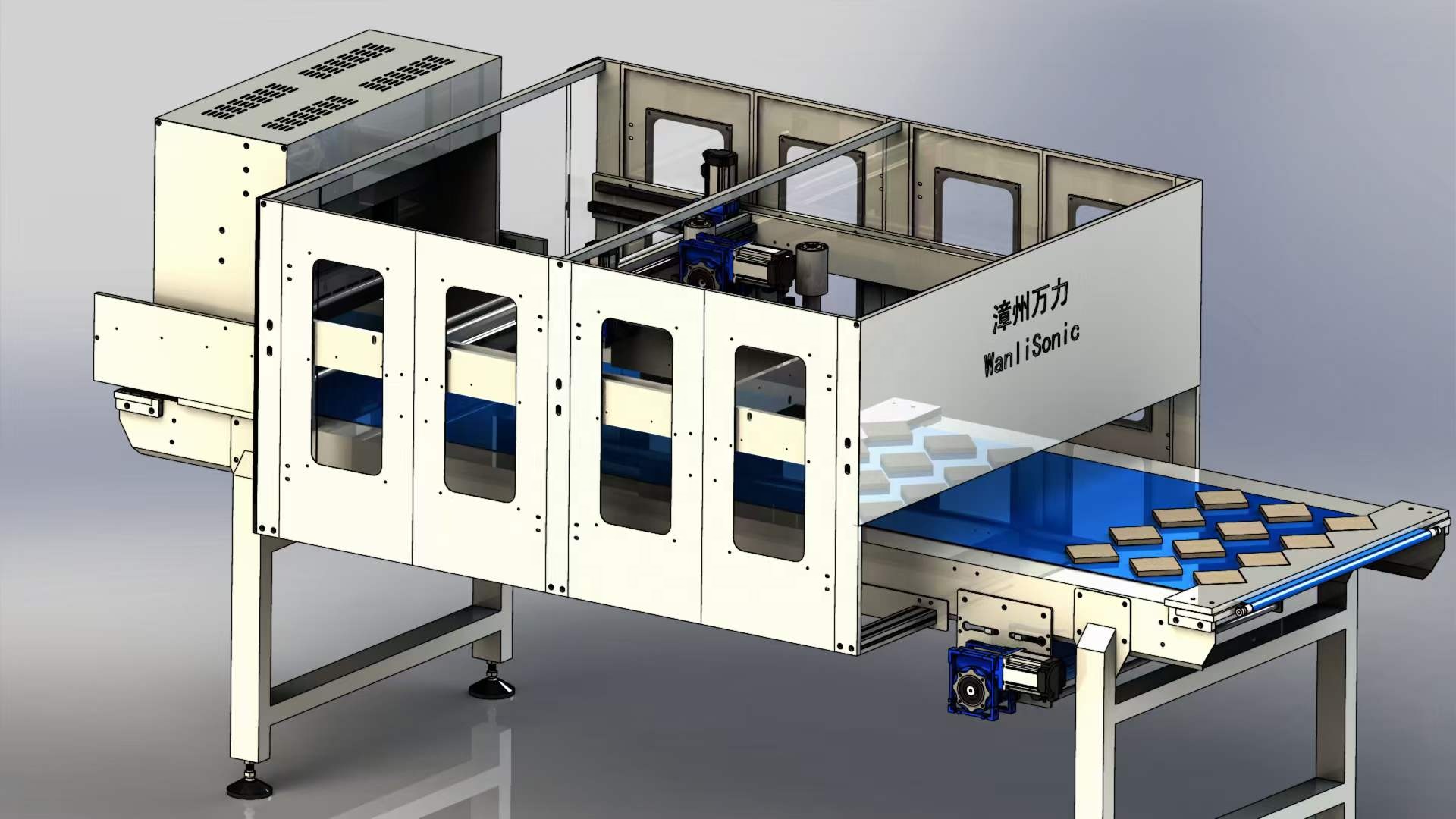
A Swiss roll may leave cooling with different end diameters, filling distribution or spiral definition. Poorly coordinated trimming can waste usable length and create irregular end pieces. The Wanlisonic Ultrasonic Swiss Roll Cake Cutting Machine helps manufacturers establish a controlled reference from each roll end to the saleable slices.
A 1-minute-44-second demonstration of the Wanlisonic Ultrasonic Swiss Roll Cake Cutting Machine was published on YouTube on November 26, 2026. The public video information confirms the application but does not disclose the machine model, cutting speed, accuracy, frequency or capacity. Those values are therefore not assigned to the demonstrated equipment in this article.
Why Do Swiss Roll Ends Create a Yield Challenge?
Rolling, cooling and transfer can create differences along the roll. One end may contain more filling, have an irregular sponge edge or taper in diameter. Visual compensation then makes trim length vary between rolls.
Uncontrolled end trimming can lead to:
- Excessive removal of saleable cake
- Unequal usable lengths between rolls
- First and last slices with different shapes
- Exposed filling dragged across the end face
- Unstable positioning for the next cut
- Irregular slice counts for packaging
The goal is to create a reliable starting reference while preserving acceptable product.
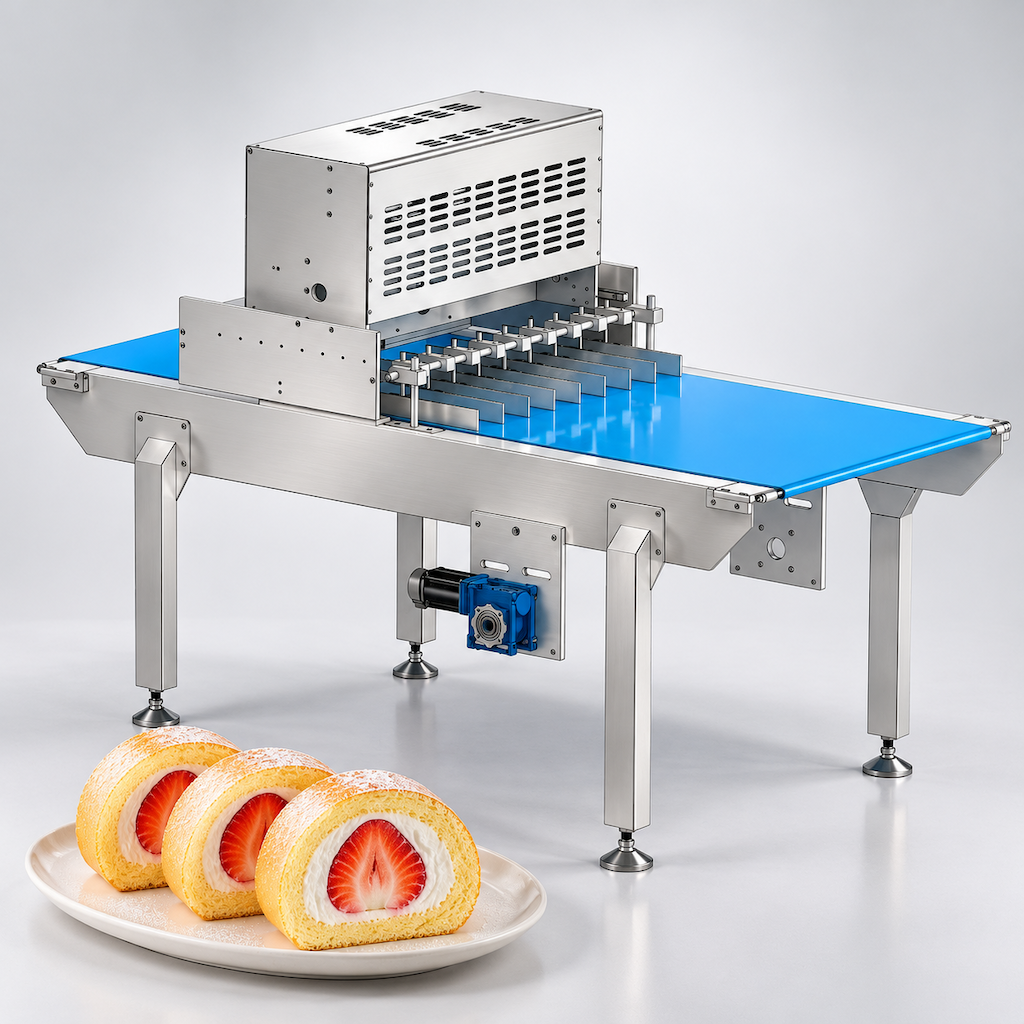
How Does Ultrasonic Cutting Support a Cleaner Reference Face?
Ultrasonic cutting applies high-frequency mechanical vibration to the blade. The vibration reduces friction between the cutting edge and the food, allowing suitable sponge-and-filling structures to separate with less pressure than a stationary knife.
For Swiss roll trimming and slicing, reduced resistance can support:
- Less compression of the cylindrical shape
- Cleaner end faces for positioning checks
- Reduced cream or jam adhesion
- Lower risk of tearing the outer sponge
- Clearer visibility of the spiral pattern
- More consistent presentation across later slices
Ultrasonic technology improves separation, but it does not decide which part of the end is acceptable. The bakery must define trim criteria according to product shape, filling distribution and retail standards.
Establishing a Usable-Length Standard
Total roll length is not automatically usable length. The saleable section should be defined by diameter stability, spiral appearance, filling coverage and packaging requirements.
A useful specification may include:
- Minimum acceptable roll diameter
- Permitted taper near each end
- Required spiral visibility
- Maximum filling exposure or leakage
- Standard trim-face appearance
- Target number of saleable slices
With these criteria, operators can distinguish necessary trim from avoidable loss. The Wanlisonic Ultrasonic Swiss Roll Cake Cutting Machine can then be evaluated as part of a controlled yield process rather than only as a blade station.
Diameter Variation Affects Every Downstream Slice
Diameter influences slice height, package fit and appearance. Tapered rolls can produce pieces that look or weigh differently even at equal thickness, while flattened rolls may shift during feeding.
Before cutting, manufacturers should review:
- Cooling condition: Has the sponge and filling reached a stable handling state?
- Roll profile: Is the cylinder straight, tapered or locally compressed?
- End orientation: Which end should establish the first cutting reference?
- Product support: Can the roll remain stable without flattening?
- Slice plan: Does the usable length match the required pack count?
These checks separate forming variation from cutting performance and guide support and operating decisions.
Connecting Trim Length with Pack Count
Whether output is planned by slices, packs or saleable weight, trim length matters. Too little admits irregular end slices; too much reduces yield.
A practical cutting plan should connect:
- Incoming roll length
- Standard trim allowance at each end
- Target slice thickness
- Expected number of retail slices
- Package cavity or wrapper dimensions
- Rules for handling acceptable offcuts
Dimensional planning cannot guarantee identical weight because filling distribution and cake density may vary. The cutting plan should therefore work with the factory’s weighing and quality-control procedures.
Preserving the Spiral at the First and Last Saleable Slice
The spiral communicates filling distribution and craftsmanship, especially in transparent packs. The first and last saleable pieces need the same presentation standard as centre slices.
A conventional blade can push filling outward or smear it across the sponge. The Wanlisonic Ultrasonic Swiss Roll Cake Cutting Machine reduces drag, helping preserve the cross-section. Results still depend on sponge elasticity, filling firmness, temperature and support.
Cream-filled, jam-filled, chocolate and chilled dessert rolls do not share one universal cutting window. Representative samples should be tested at their intended production temperature before the final configuration and operating procedure are approved.
First-Roll Validation Before Batch Release
The first roll after startup or changeover should verify the process before an incorrect reference is repeated across the batch.
A first-roll inspection can verify:
- End-trim appearance and length
- Stability of the roll during feeding
- Shape of the first retail slice
- Spiral and filling presentation
- Slice dimensions and pack fit
- Actual number of acceptable portions
If a check fails, adjust product conditioning, positioning or the cutting program before release.
Hygiene and Changeover Control Around Sticky Fillings
Cream, jam and chocolate residues can accumulate differently around the cutting area. Ultrasonic vibration helps reduce adhesion at the blade, but it does not replace cleaning and sanitation procedures.
Factories should document:
- Cleaning frequency during production
- End-of-batch sanitation steps
- Inspection points around guides and supports
- Allergen controls between recipes
- Blade and contact-part condition checks
- Release criteria after cleaning
The verified Wanlisonic Ultrasonic Swiss Roll Cake Cutting Machine page describes fully automatic operation, easy washing and maintenance, consistent slice thickness and reduced crumbs. The exact functions supplied must still be confirmed for the selected configuration.
Turning More of Each Roll into Saleable Product
Business value should be measured through trim loss, saleable slices per roll, first-roll approval, rejected end slices, cleaning interruptions and packaging corrections—not only nominal speed.
By controlling end references, support and slice planning, the Wanlisonic Ultrasonic Swiss Roll Cake Cutting Machine helps convert usable length into packaging-ready portions. Wanlisonic should review real samples, dimensions, end variation, recipe, temperature, slice target, pack count and factory layout.
When trimming and slicing are treated as one process, manufacturers gain a clearer view of where product value is created—or lost—along every Swiss roll.
Contact Wanlisonic
- Email: sales3@wanlisonic.com
- Tel / WhatsApp / WeChat: +86 15880521772
Send your Swiss roll samples, dimensions, recipes, cutting temperatures, trim standards, target slice thicknesses and packaging information to Wanlisonic for an application-based recommendation.
FAQ
1. What is an ultrasonic Swiss roll cake cutting machine?
It uses a high-frequency vibrating blade to trim and slice Swiss rolls with reduced friction and mechanical pressure compared with a stationary knife.
2. Why should Swiss roll end trimming be standardized?
Standardized trimming creates a repeatable reference face, protects usable roll length and helps prevent irregular end slices from entering retail packs.
3. Can ultrasonic cutting eliminate all trim waste?
No. Irregular ends may still require removal. The goal is to define necessary trim objectively and avoid removing acceptable product without reason.
4. Can the machine cut cream, jam and chocolate Swiss rolls?
Suitable recipes can be evaluated, but each filling has different adhesion and temperature behaviour. Wanlisonic should test actual samples before configuration.
5. Does equal slice thickness guarantee equal weight?
No. Filling distribution, diameter and cake density can vary. Dimensional control should be combined with the bakery’s weighing procedures.
6. What information should be provided for a cutting test?
Provide roll length and diameter, end variation, recipe, temperature, target trim, slice thickness, required pack count, packaging format and production demand.