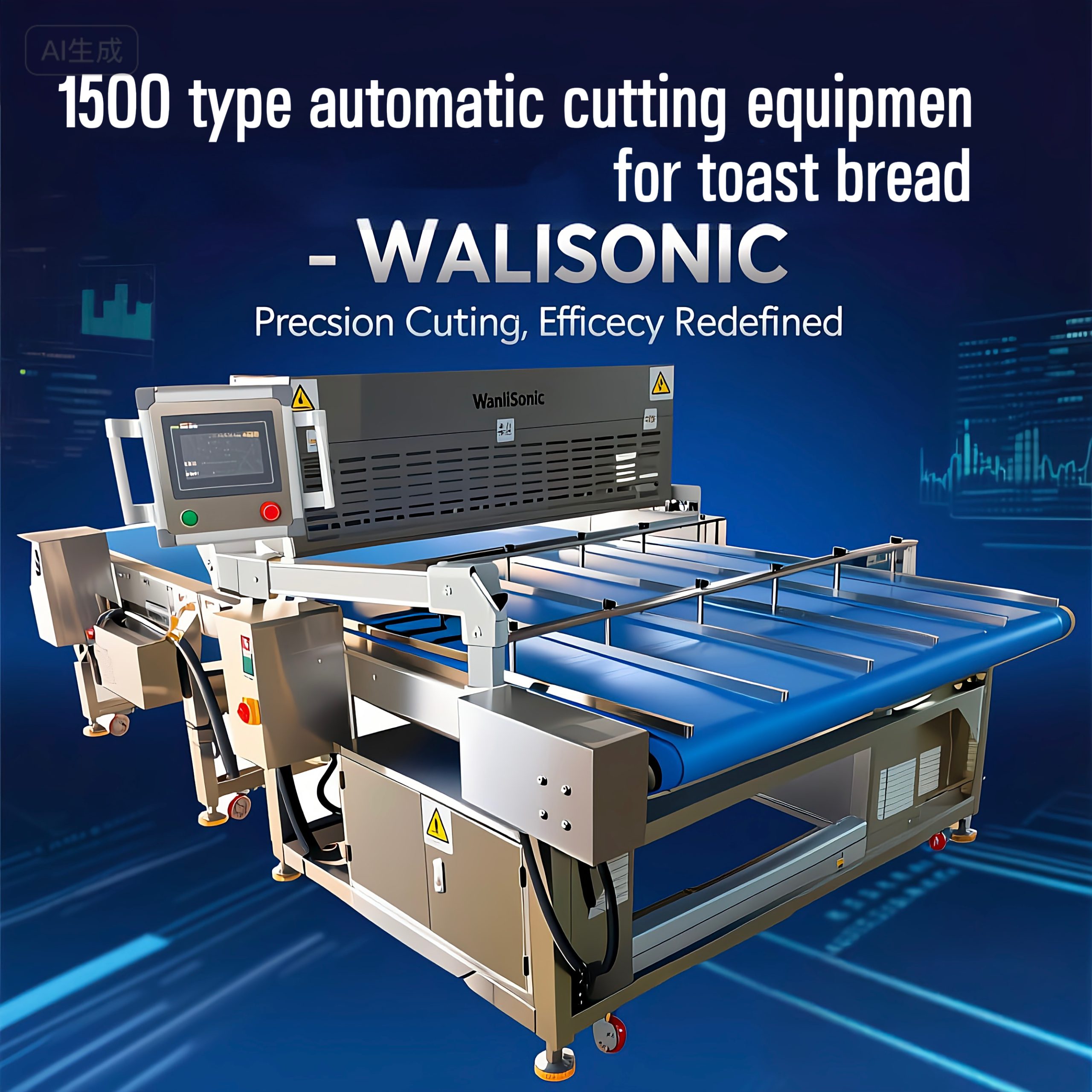
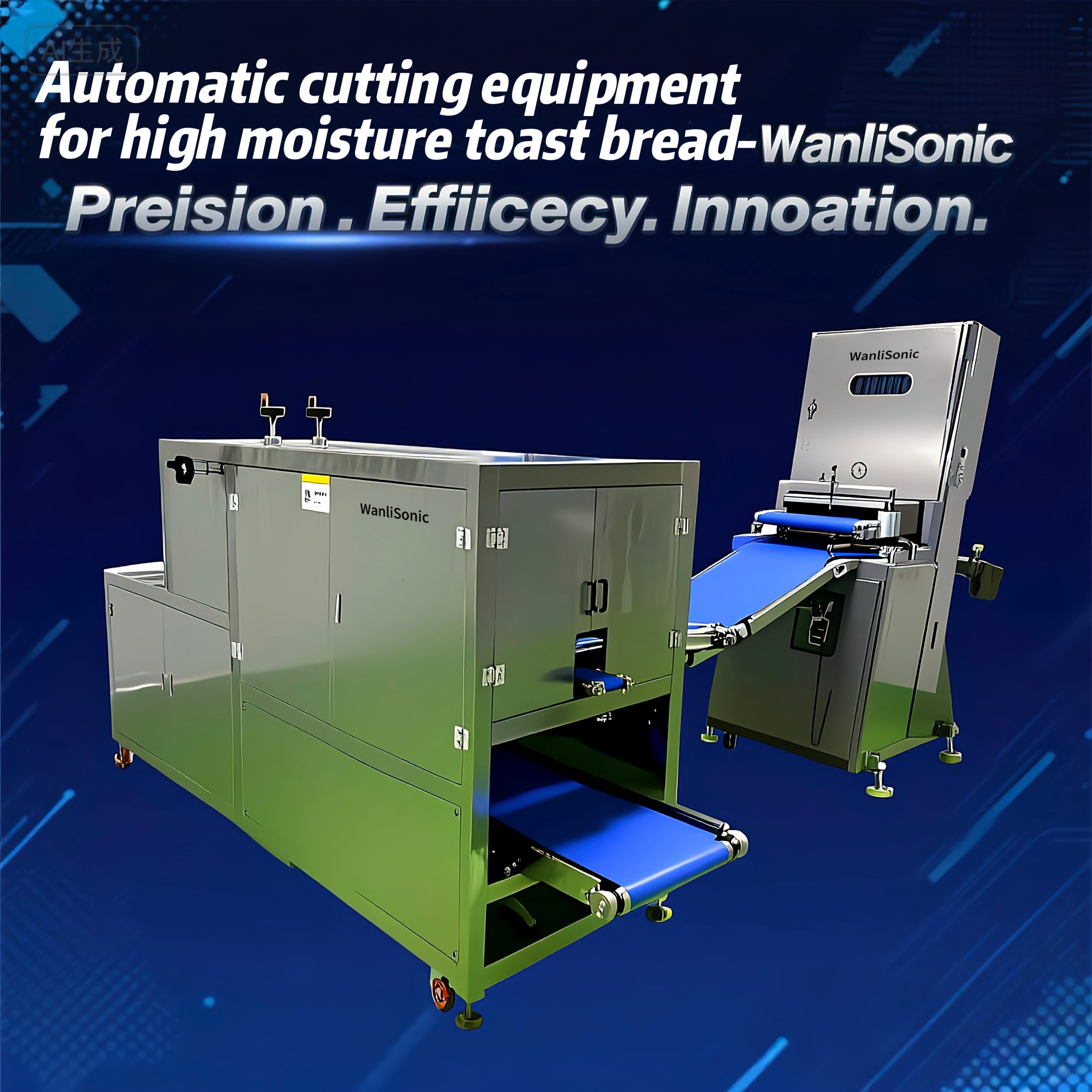
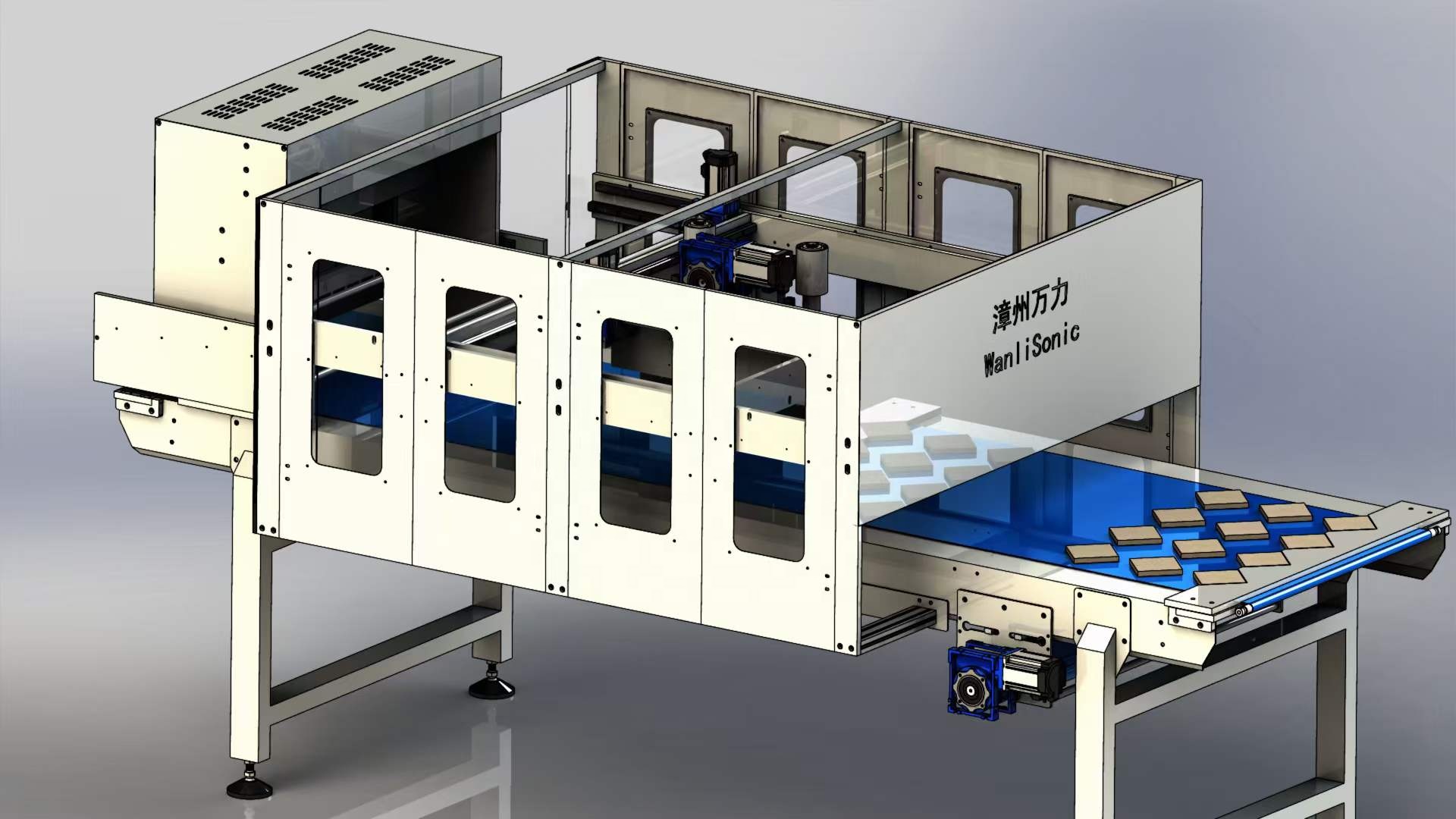
In the world of industrial baking and confectionery production, slicing cakes cleanly and consistently has long been a challenge — especially when dealing with soft, sticky, and delicate textures like mousse, cream, or layered sponge. Traditional blades often struggle: frosting smears, layers compress, edges crumble, and manual labor costs soar. But a recent demonstration video — ”Wanli Ultrasonic Pure Cake Cutting Machine with Standard 400mm×600mm” — shows how Ultrasonic cake cutting machine could be the game changer bakeries have been waiting for.
Thanks to high-frequency vibrations and smart automation, ultrasonic cutting systems from Wanlisonic are redefining how cakes are portioned in both small artisanal shops and large-scale industrial facilities. This news report explores what makes these machines stand out, how they work, and why they’re drawing attention from bakery operators worldwide.
What Is an Ultrasonic Cake Cutting Machine?
At its core, an ultrasonic cake cutting machine uses high-frequency vibrations — typically in the range of 20,000 Hz or higher — to power cutting blades that essentially “slice through” cakes by reducing friction instead of dragging a traditional knife through the product.
Rather than simply pushing a blade into the cake, the ultrasonic system creates microscopic vibrations that significantly reduce resistance during cutting. The result? Clean, smooth surfaces with minimal pressure applied to the product. This technology:
- Prevents frosting and fillings from sticking to the blade
- Preserves the cake’s shape and internal structure
- Reduces waste and crumbs
- Enhances overall presentation quality — particularly for products destined for retail or packaging lines
Central to this performance are ultrasonic transducers, amplitude transformers, and blades made of food-grade titanium alloy. The titanium blades, known for their fatigue resistance and acoustic properties, are ideal for maintaining hygiene and durability in high-output environments.
Why Traditional Cutting Methods Fall Short
To understand the breakthrough nature of ultrasonic cutting, consider the limitations of traditional mechanical knives:
- Pressure Damage: Soft cakes compress and deform under blade pressure.
- Stickiness: Creams, jams, and frostings adhere to blades, making cleaning and quality control a hassle.
- Inconsistent Portions: Manual cutting leads to uneven slices and variation in portion sizes.
- Labor Intensity: Manual labor is costly and slow, especially in high-volume production settings.
Ultrasonic systems address these issues by minimizing pressure and friction — the blade vibrates so rapidly that it essentially glides through the cake, leaving behind almost no residue and ensuring uniform slices each time.
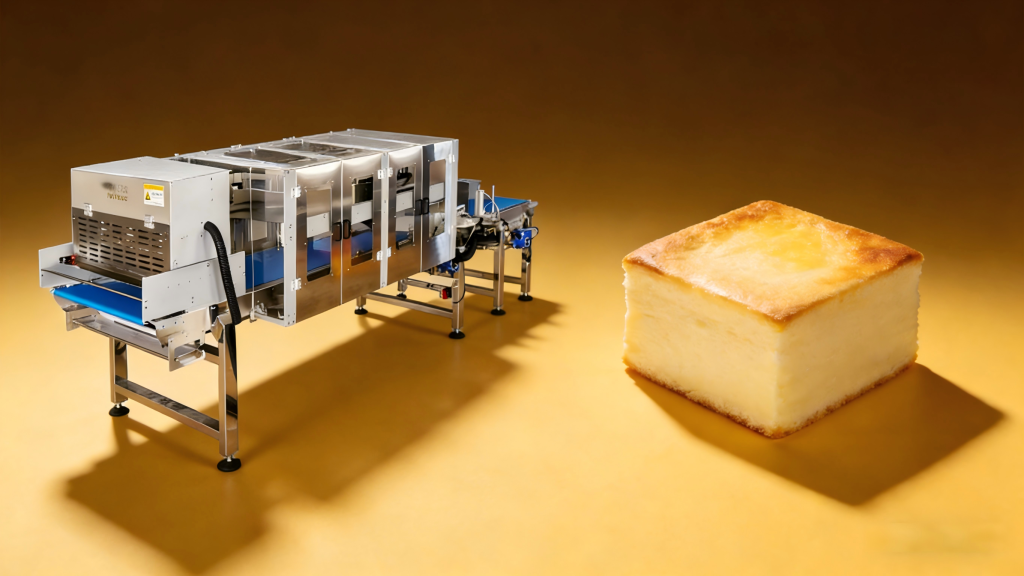
Breaking Down Wanlisonic’s Ultrasonic Cake Cutting Machine Solution
The video demonstration titled ”Wanli Ultrasonic Pure Cake Cutting Machine with Standard 400mm×600mm” showcases a machine capable of processing cakes automatically using ultrasonic power and precision servomotor control.
Here’s what makes Wanlisonic’s approach notable:
🎯 High-Precision Ultrasonic Blades
The blades vibrate at ultrasonic frequencies, slicing without compressing or distorting delicate cakes — even those with creamy fillings.
⚙️ Automated Conveyor System
Designed for inline production, the machine integrates with conveyor systems to automate product flow, enabling high throughput with minimal manual handling.
📊 Programmable Cutting Modes
Operators can pre-set cutting patterns — from round slices to squares, rectangles, or triangles — matching product requirements and customer preferences.
💧 Non-Stick, Hygienic Operation
With ultrasonic vibration, sticky food like cream or jam doesn’t cling to tools, increasing food safety and reducing downtime for cleaning.
🤖 Industry-Ready Automation
From artisan cake shops to central kitchens and industrial bakeries, these machines can scale with business needs while maintaining high speed and precision.
Real-World Applications in Bakery and Confectionery
Beyond just cake slicing, ultrasonic cutting systems have proven valuable across the bakery spectrum, including:
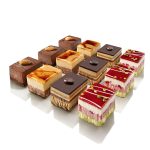
- Cheesecakes and mousse cakes with delicate textures
- Ice cream cakes requiring frozen product slicing
- Pastries, brownies, and layered desserts
- Integration into packaging lines for portion packaging
- Specialty shapes like triangles or wedges for presentation products
Because the technology applies to both soft and harder fillings, many bakeries are seeing significant improvements in product consistency and reduction in waste.
Benefits for Bakeries and Food Producers
So, what tangible benefits do operators experience?
🚀 Faster Production and Higher Throughput
Machines can cut hundreds of portions per hour, significantly faster than manual slicing.
🎯 Consistent Portions Every Time
Uniformity is essential for packaging and serving — and ultrasonic cutters deliver near-perfect slice consistency.
💸 Reduced Labor and Waste
Automation saves on labor costs, and precision reduces material loss.
🧼 Improved Hygiene and Safety
Food-grade materials and vibration reduce sticking and contamination risks, helping comply with strict safety standards.
What the Future Holds for Ultrasonic Cake Cutter
Wanlisonic’s continued investment in this technology suggests even more innovation is on the horizon. Future systems could integrate AI-driven cutting patterns, compact models suitable for small bakery environments, or robotic arms for complete factory automation.
With the continued demand for high-quality bakery products worldwide — from retail to institutional providers — ultrasonic cutting machines are not just a novel tool, but a potential industry standard for efficient and precise food portioning.
FAQ-Ultrasonic Cake Cutting Machine
Q1: What exactly makes an ultrasonic cutter different from a traditional knife?
A: Ultrasonic cutters use high-frequency vibrations to reduce friction and glide through products, unlike traditional knives which rely on pressure and sharpness. This results in cleaner cuts and less deformation.
Q2: Can these machines handle sticky or cream-filled cakes?
A: Yes — the ultrasonic vibration prevents cream, jam, and other sticky components from sticking to the blade, which improves hygiene and slice quality.
Q3: Are ultrasonic cake cutters suitable for industrial production?
A: Absolutely; these machines are designed for continuous operation and can be integrated into conveyor systems for high-volume output.
Q4: Do these machines work with frozen cakes?
A: Yes — ultrasonic blades can process frozen cakes and other temperature-sensitive products effectively without warping or crushing.
Q5: How does this technology benefit food safety?
A: Reduced manual handling and non-stick vibration decrease contamination risks while complying with food safety standards.
Contact Information:
Lucy Zheng (Senior Customer Consultant)
📧 Email: sales4@wanlisonic.com
📞 Tel / WhatsApp / WeChat: +86 15715037520