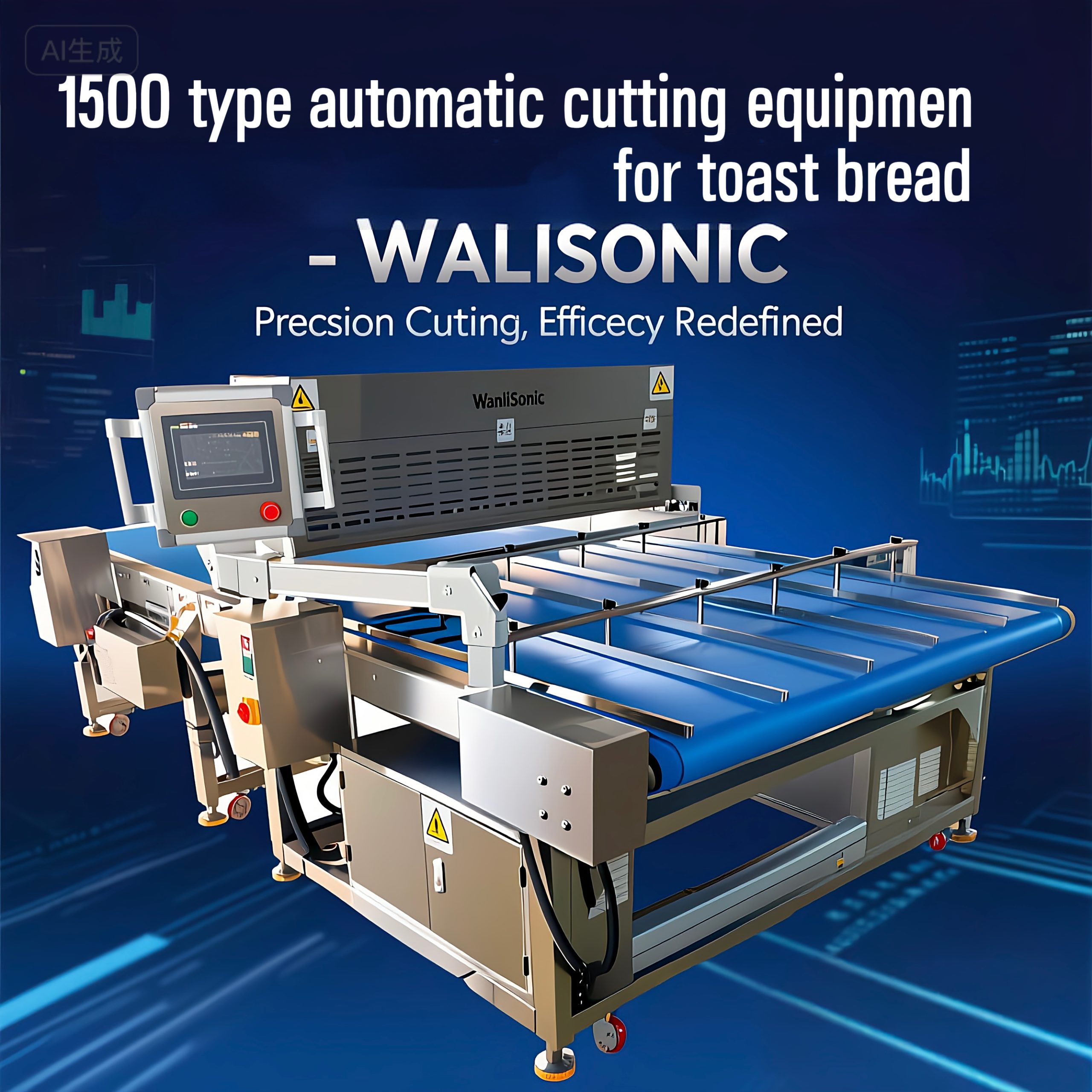
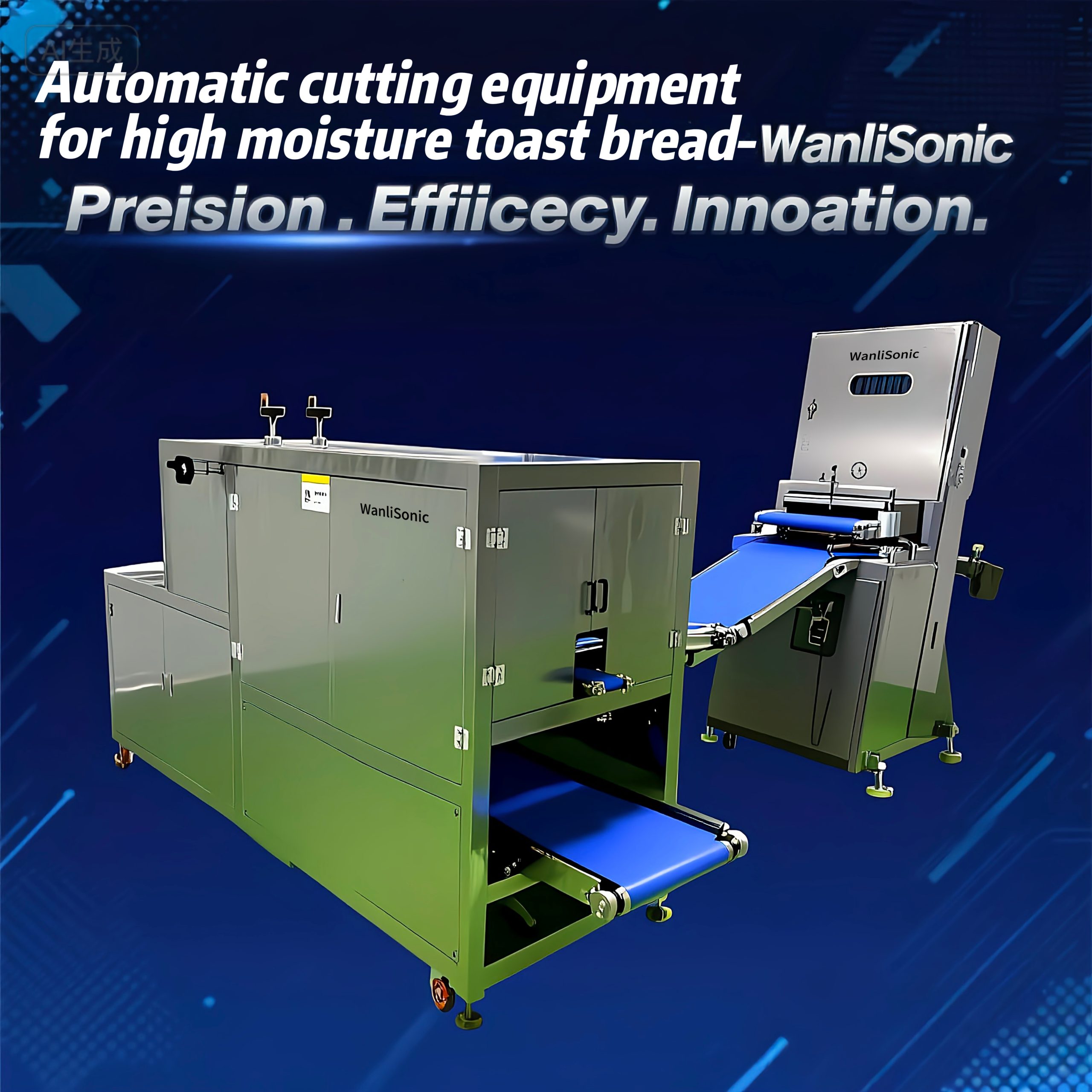
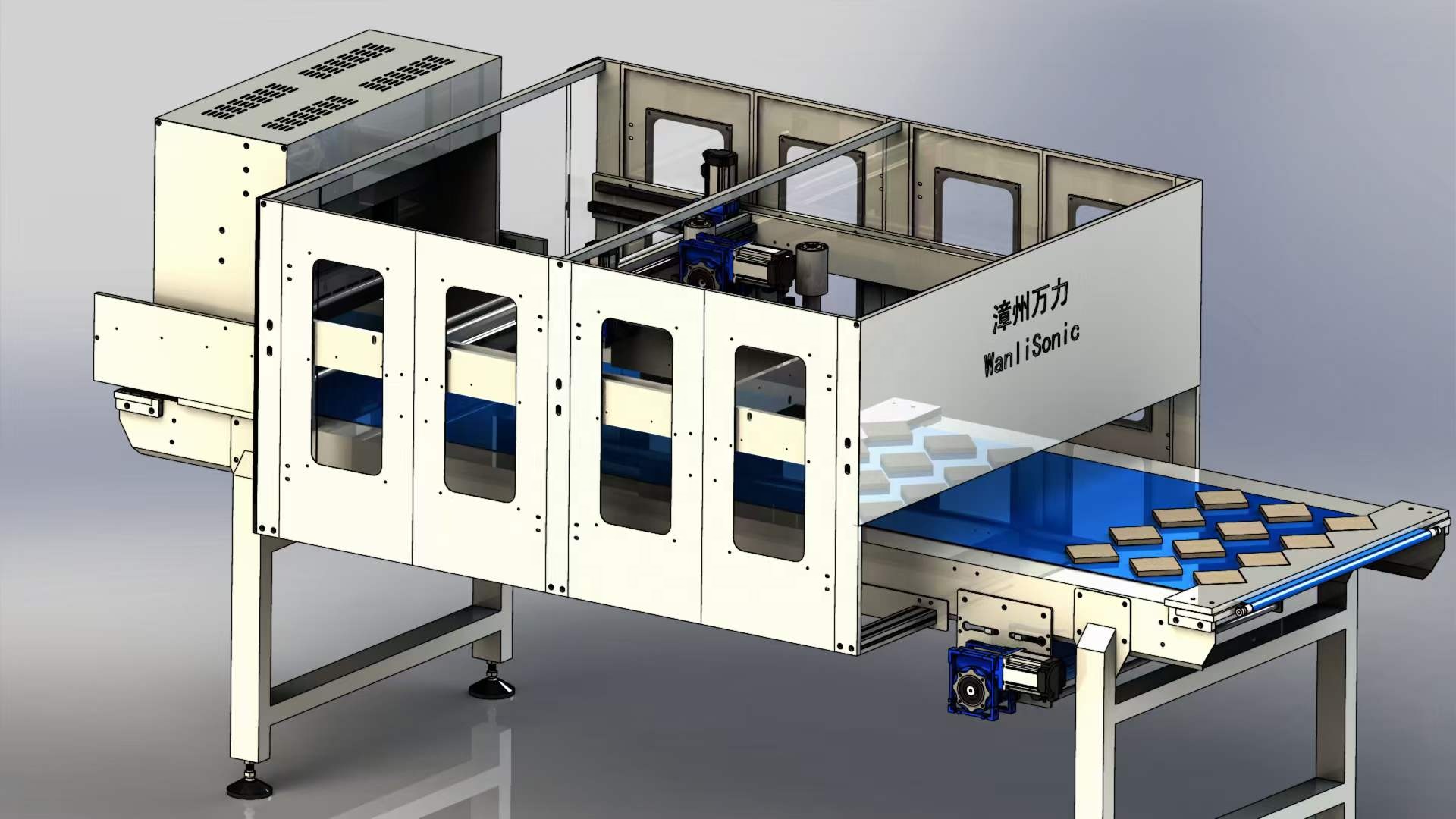
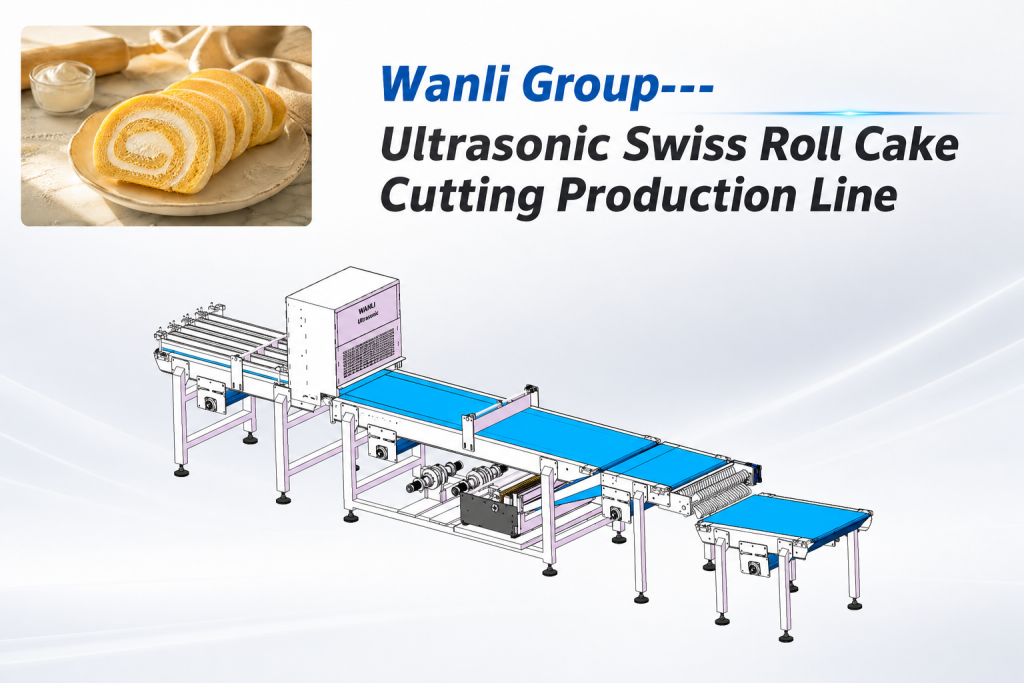
Industrial Swiss roll production requires coordination between forming, cooling, cutting and wrapping. The soft sponge must retain its shape, the spiral must remain visible and the filling must stay inside the roll. The Wanlisonic Ultrasonic Swiss Roll Cutting Machine creates clean portions while supporting a more stable production-line flow.
A 28-second Wanlisonic Swiss roll cake production line demonstration is available on YouTube. The video title confirms the production-line application, but it does not specify the machine model, output, cutting tolerance or operating speed. These figures are therefore not stated in this article.
Why Does the Cutting Station Become a Production Bottleneck?
Swiss rolls combine several materials with different cutting behaviour. The sponge is soft and compressible, while the filling can be moist, sticky or temperature-sensitive. Some products also include chocolate, fruit pieces or an external coating.
When a conventional blade is used repeatedly, manufacturers may encounter:
- Compression that changes the round profile of the roll
- Smearing of cream, jam or chocolate across the cut face
- Cracks or tears that disturb the visible spiral
- Uneven slice dimensions caused by manual positioning
- Product residue that builds up on the blade
- Irregular spacing before wrapping or tray loading
A poorly controlled cutting step can interrupt product flow, increase handling and prevent packaging equipment from receiving repeatable portions.
How Does Ultrasonic Cutting Protect the Swiss Roll Structure?
Ultrasonic cutting applies high-frequency mechanical vibration to the blade. This vibration reduces friction between the blade and the food, allowing it to pass through soft sponge and suitable fillings with less mechanical resistance than a stationary knife.
For Swiss roll processing, reduced resistance can support:
- Cleaner cut surfaces with less filling drag
- Lower compression of the sponge structure
- Better preservation of the spiral pattern
- Reduced product adhesion to the blade
- Fewer crumbs and damaged edges
- More consistent portions for downstream handling
The cutting result still depends on the recipe, roll diameter, filling type and product temperature. Ultrasonic technology provides the cutting method, while the production process must provide a stable product condition.
From Cooling to Cutting: Why Product Condition Matters
Swiss rolls must reach the cutter in a consistent condition. Soft filling may move under pressure, while an over-chilled coating may respond differently at the blade.
A well-planned line should consider the handoff between the cooling stage and the Wanlisonic Ultrasonic Swiss Roll Cutting Machine. Manufacturers should define:
- The roll temperature at the cutting point
- Sponge softness and moisture level
- Filling viscosity and thickness
- Roll diameter and total length
- Required slice thickness
- Time available before packaging
Controlling these factors creates a repeatable cutting window and reduces manual correction.
Coordinated Feeding, Positioning and Portioning
The value of an automated cutter comes from coordinating product movement with the cutting cycle. Depending on the selected configuration, a Swiss roll cutting process can be arranged around four basic stages:
- Feeding: Finished rolls enter the cutting area in a controlled orientation.
- Positioning: The product is aligned for the selected portion dimensions.
- Ultrasonic cutting: The vibrating blade separates the roll with reduced resistance.
- Transfer: Finished slices move toward collection, tray loading or packaging.
This process reduces repetitive manual measuring while maintaining product orientation and spacing. Feeding, positioning and transfer functions depend on the chosen configuration, factory layout and existing equipment.
Why Packaging Readiness Is a Key Performance Measure
A production-ready slice must remain stable in transit, fit its tray or wrapper and reach packaging in a predictable orientation.
Consistent cutting supports packaging by helping manufacturers achieve:
- Repeatable slice dimensions
- More stable portion presentation
- Better alignment in retail trays
- Reduced correction before flow wrapping
- More predictable product spacing
- Fewer visually damaged portions entering packs
Packaging readiness therefore measures how well the cutter supports saleable products across the complete line.
Reduced Blade Adhesion Supports a More Stable Rhythm
Cream and jam can accumulate on a conventional blade, gradually changing cut quality. Operators may need to interrupt production for cleaning, and residue from one cut may transfer to the next slice.
Ultrasonic vibration helps reduce product adhesion at the blade. Less buildup can support cleaner portions and a steadier cutting rhythm. It may also reduce unnecessary handling caused by filling smears or damaged cut faces.
Regular sanitation is still required. Cleaning procedures must follow the product recipe, production environment and the manufacturer’s food-safety plan. Ultrasonic cutting can reduce sticking during operation, but it does not replace proper cleaning and inspection.
Supporting Multiple Swiss Roll Formats
One bakery may process cream-filled, jam-filled, chocolate or decorated rolls in different diameters and portion sizes.
Wanlisonic can evaluate applications including:
- Traditional sponge Swiss rolls
- Cream-filled rolls
- Jam-filled rolls
- Chocolate Swiss rolls
- Chilled dessert rolls
- Products with suitable coatings or decorations
A product change may require adjustments to the cutting program, product supports, conveyor arrangement or operating temperature. Representative samples should be tested before the final configuration is confirmed.
Turning Cutting Quality into Commercial Value
Investment analysis should consider saleable yield, labour, cleaning interruptions, portion consistency and packaging flow—not only nominal speed.
The Wanlisonic Ultrasonic Swiss Roll Cutting Machine can create value by helping bakeries:
- Reduce deformation and filling smear
- Protect the visible spiral and retail appearance
- Limit repetitive manual measurement
- Improve consistency before packaging
- Reduce rejects caused by poor cut quality
- Connect cutting more effectively with the wider line
For manufacturers scaling from manual processing to an automated workflow, these combined improvements can be more important than a single headline speed.
A Customized Wanlisonic Solution Starts with Product Data
No Swiss roll production line should be specified from the product name alone. Wanlisonic should evaluate the roll dimensions, sponge texture, filling type, cutting temperature, desired portion size, target capacity, factory layout and downstream packaging arrangement.
Providing samples or a representative production video allows the technical team to study product behaviour and recommend an appropriate solution. Optional handling or integration functions must be confirmed for the selected configuration.
By treating the cutter as part of the complete production process, Wanlisonic helps bakeries move beyond basic slicing. The objective is a stable flow from cooled roll to clean portion and from clean portion to a retail-ready package.
Contact Wanlisonic
- Email: sales3@wanlisonic.com
- Tel / WhatsApp / WeChat: +86 15880521772
Send your Swiss roll dimensions, filling type, cutting temperature, target portion size, production requirement and packaging layout to Wanlisonic for a recommended ultrasonic cutting solution.
FAQ
1. What is an ultrasonic Swiss roll cutting machine?
It is food-processing equipment that uses a high-frequency vibrating blade to portion Swiss rolls with reduced friction and cutting resistance.
2. Can ultrasonic cutting preserve the spiral pattern?
Reduced cutting resistance can help limit sponge compression, filling drag and structural damage. Results depend on the recipe, roll condition and machine settings.
3. Can the machine cut cream- or jam-filled Swiss rolls?
Yes, these are identified by Wanlisonic as suitable applications for evaluation. Product testing is recommended because filling viscosity and temperature affect cutting behaviour.
4. Can the cutter connect with packaging equipment?
A solution can be evaluated around feeding, positioning, cutting and transfer requirements. The exact connection depends on the existing line, wrapper and factory layout.
5. Does ultrasonic cutting eliminate blade cleaning?
No. Ultrasonic vibration can reduce product adhesion, but regular cleaning, inspection and food-safety procedures remain necessary.
6. What information does Wanlisonic need before recommending a machine?
Provide the roll diameter and length, sponge and filling characteristics, cutting temperature, required slice thickness, target capacity and downstream packaging arrangement.