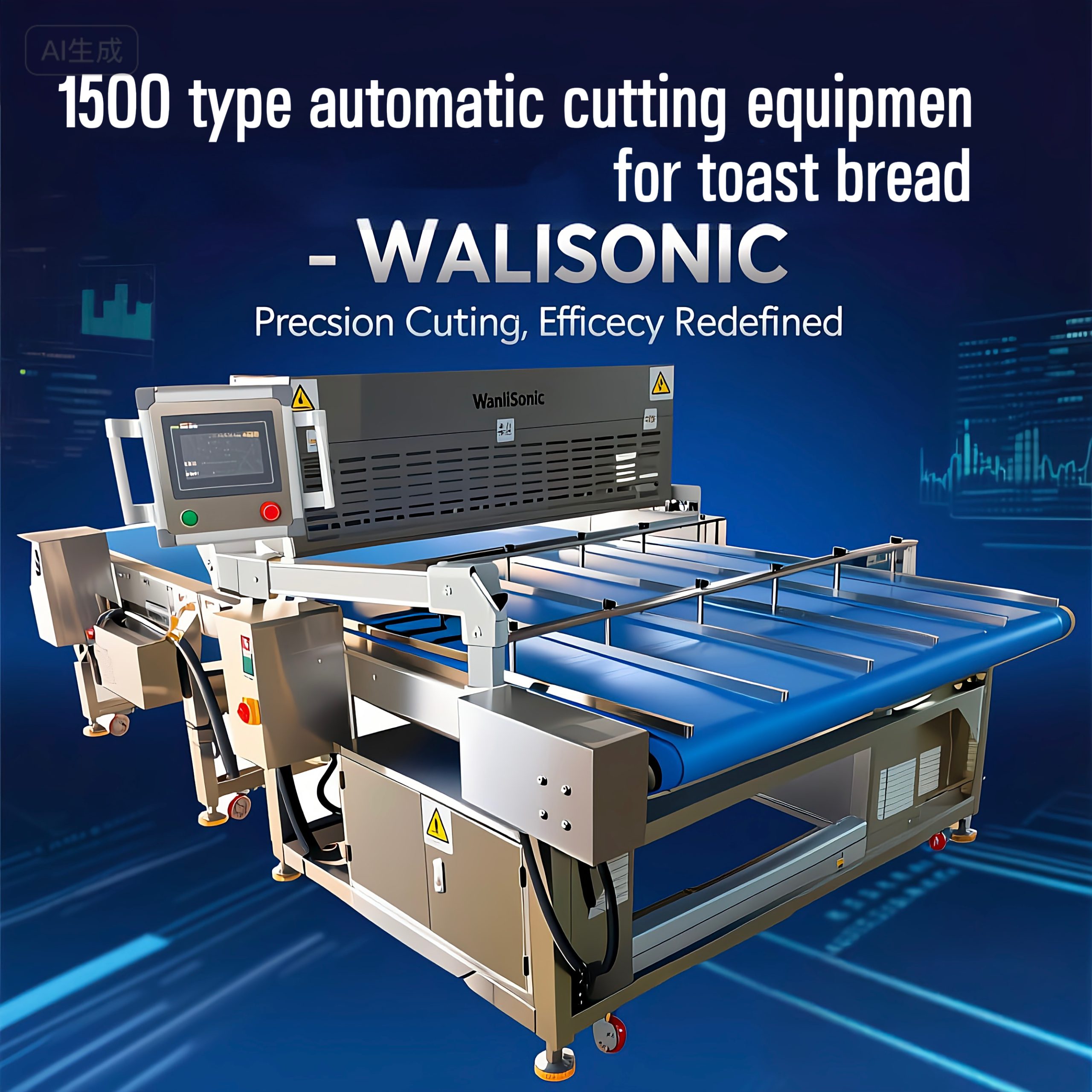
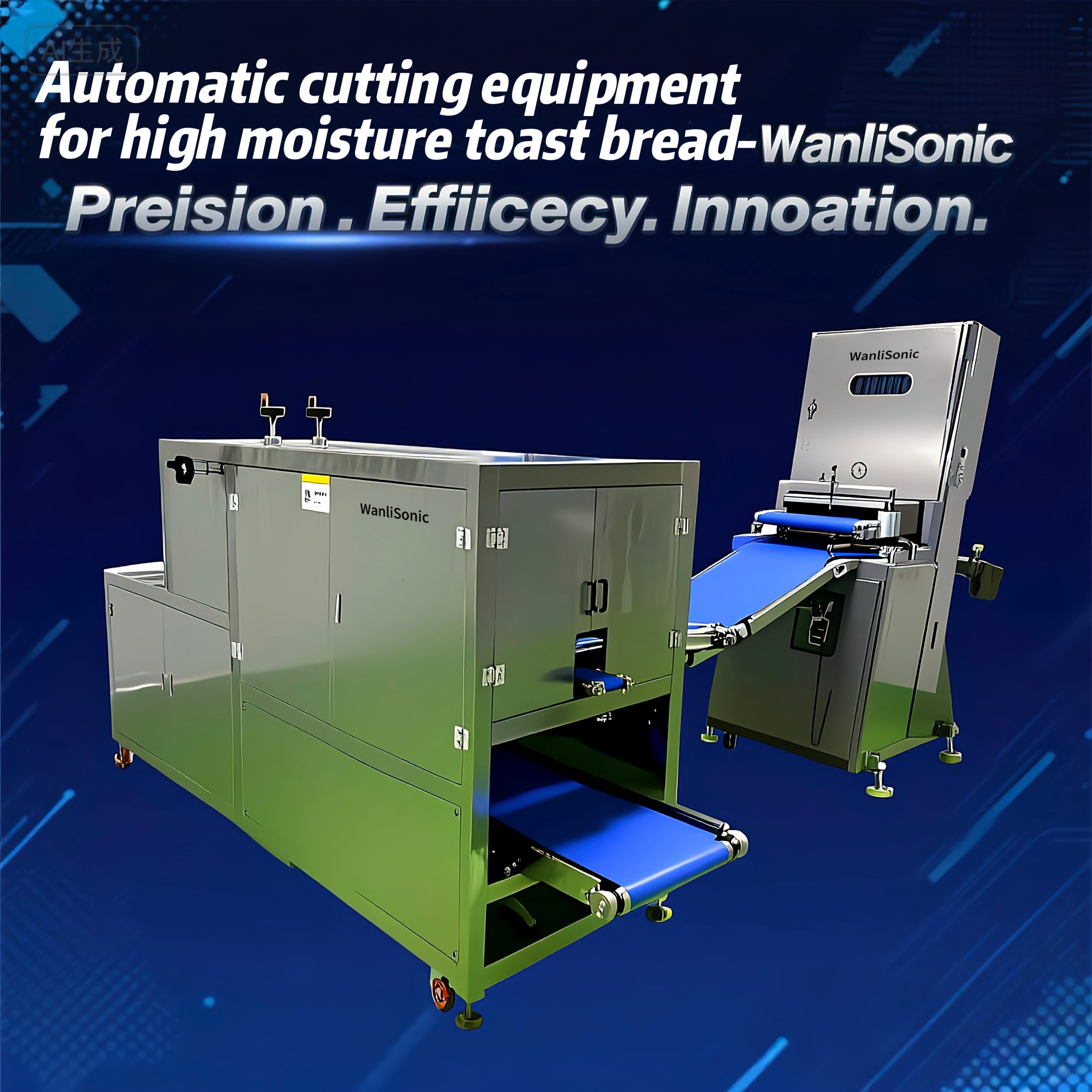
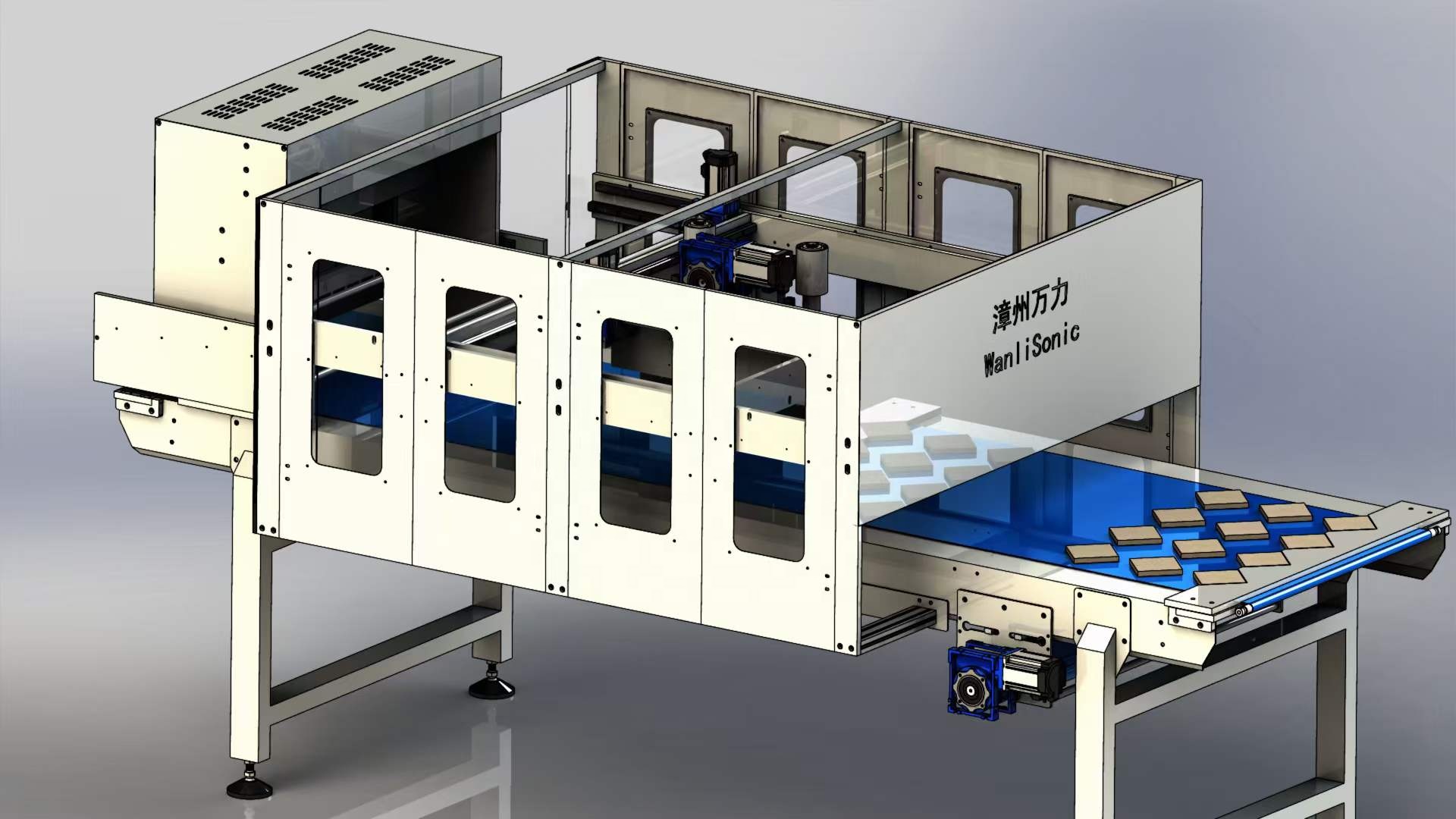
Swiss rolls combine a soft sponge, a spiral structure and a moist filling in one product. These characteristics make them attractive to consumers but difficult to portion consistently in commercial production. A conventional blade can compress the roll, drag cream across the cut face or tear the sponge, reducing both product value and packaging consistency. The Wanlisonic Ultrasonic Swiss Roll Cutting Machine provides a controlled cutting solution designed to produce clean slices while protecting the cake’s delicate structure.
Why Is a Swiss Roll Difficult to Cut Cleanly?
A Swiss roll is not a uniform block of food. Its sponge, cream or jam filling and curved spiral react differently when pressure is applied. The sponge may recover after compression, while the filling can spread or adhere to the blade. If the knife is blunt, contaminated with residue or operated inconsistently, several defects may appear:
- The cylindrical roll becomes flattened during cutting.
- Cream or jam smears across the visible spiral.
- The soft sponge tears or produces crumbs.
- Slice thickness changes from one portion to another.
- Filling accumulates on the blade and affects later cuts.
- Repeated cleaning interrupts the production rhythm.
For bakeries supplying retail chains, central kitchens or packaged dessert brands, these are commercial issues. Irregular portions complicate tray loading and packaging, while damaged slices may have to be sold at a discount or removed from sale.
How Does Ultrasonic Cutting Improve Swiss Roll Slicing?
Ultrasonic cutting uses high-frequency blade vibration to reduce friction between the cutting tool and the food. Instead of forcing a stationary knife through the sponge and filling with heavy downward pressure, the vibrating blade passes through the roll with less resistance.
This operating principle supports several important results:
- Cleaner cut faces with a clearly visible spiral
- Less filling adhesion on the blade
- Reduced compression of the sponge
- Fewer crumbs and torn edges
- More consistent slice dimensions
- Better preservation of the original roll shape
The latest video demonstrates the application rather than relying on an abstract technical explanation. It shows why ultrasonic technology is particularly relevant when a bakery product contains both a delicate cake body and a sticky filling.
Preserving the Spiral and Filling for Better Presentation
The spiral is the visual identity of a Swiss roll. When cream is dragged across the cut face or the sponge is crushed, that identity is lost. Clean separation is therefore essential for premium presentation.
The Wanlisonic Ultrasonic Swiss Roll Cutting Machine helps the roll retain its cylindrical profile and makes the internal layers easier to see. Uniform slices also create a more orderly appearance in clear trays, individual wrappers and multipack boxes. For manufacturers, improved presentation can support a more consistent brand image across different production batches.
Portion consistency also matters financially. When slice thickness varies, the number of saleable portions obtained from each roll changes. A controlled cutting process helps bakeries manage portion size more predictably and reduces unnecessary product giveaway.
Continuous Cutting for Commercial Bakery Production
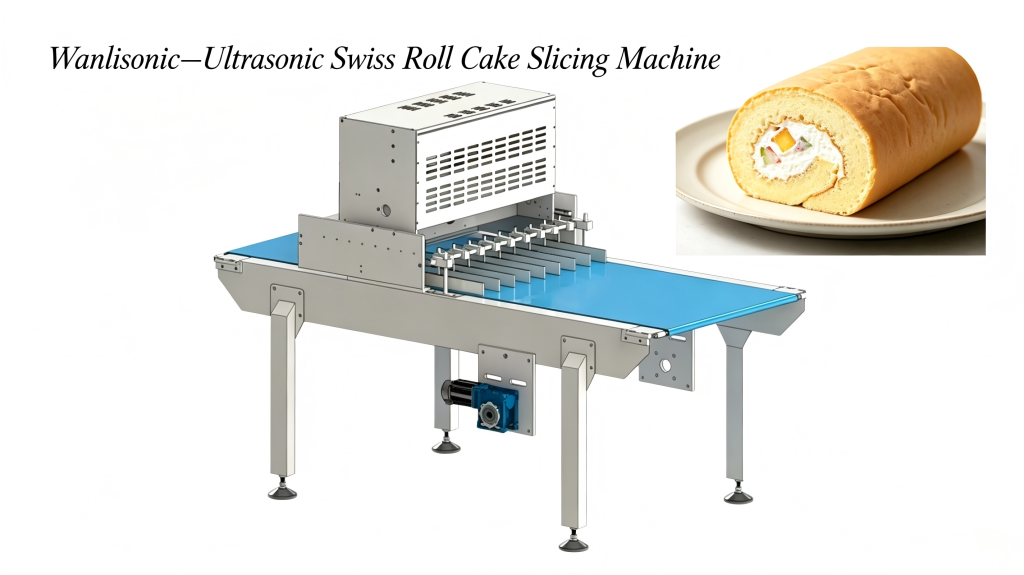
Wanlisonic describes its Swiss roll cutting equipment as an in-line food slicing solution that can operate independently or be integrated into an existing production line. Its published configuration includes conveyor handling, programmable operation and a motor-driven rotary ultrasonic blade.
A typical process can be organized as follows:
- Finished Swiss rolls enter the cutting station on the conveyor.
- Each roll is positioned for the selected portion size.
- The ultrasonic blade completes the programmed cut.
- Finished slices continue toward arranging or packaging.
This repeatable workflow reduces dependence on manual cutting skill. It also helps production managers coordinate slicing with upstream cooling and downstream packing instead of treating cutting as a separate labour-intensive operation.
Hygiene and Easier Production Management
Cream, jam and soft sponge residue can quickly build up on an ordinary knife. Once the blade becomes contaminated, cut quality declines and operators must stop to clean it. Ultrasonic vibration reduces product adhesion, helping the cutting surface remain cleaner during operation.
Wanlisonic’s Swiss roll equipment category also lists stainless-steel construction, food-grade plastics, easy blade cleaning and a safety protective door among its features. These design elements support cleaning access and routine production management. The correct sanitation schedule must still follow the factory’s recipe, operating conditions and food-safety procedures, but reduced sticking can limit avoidable interruptions.
More Than One Swiss Roll Application
Swiss rolls vary widely. Some use light sponge and whipped cream, while others contain jam, chocolate, fruit filling or denser cake. Products may also be processed at different temperatures. For this reason, blade type, cutting program, conveyor arrangement and portion settings should be matched to the actual product.
Wanlisonic states that the same equipment category can also process bar-shaped or loaf products, including sponge cakes, cheesecakes, brownies, pastries and other delicate foods. This flexibility may improve equipment utilization for bakeries that produce several dessert ranges on one line.
Reducing Waste and Strengthening Return on Investment
The value of an ultrasonic cutter is not limited to cutting speed. A bakery should also consider how much saleable product is recovered from every batch and how much time is lost to cleaning, rework and manual correction.
A controlled ultrasonic process can help manufacturers:
- Reduce rejected slices caused by deformation or smearing
- Limit filling and sponge lost on the blade
- Improve portion and packaging consistency
- Reduce repetitive manual cutting work
- Maintain more stable output during longer production runs
These improvements protect the value already invested in ingredients, baking, filling and cooling before the product reaches the cutting stage.
A Customized Wanlisonic Solution for Each Product
No two Swiss roll recipes behave exactly alike. Before recommending a machine, Wanlisonic can evaluate the roll diameter and length, filling type, cutting temperature, target slice thickness, required capacity and line-integration needs. Product samples or cutting videos can help the technical team select an appropriate blade and handling configuration.
For bakeries seeking clean spiral presentation, repeatable portions and a more automated production flow, the Wanlisonic Ultrasonic Swiss Roll Cutting Machine provides a practical route from manual slicing to controlled industrial processing.
Contact Wanlisonic
- Email: sales3@wanlisonic.com
- Tel / WhatsApp / WeChat: +86 15880521772
Send your Swiss roll dimensions, filling type, cutting temperature, required slice size and production target to Wanlisonic for a recommended ultrasonic cutting solution.
FAQ
1. What is an ultrasonic Swiss roll cutting machine?
It is a bakery slicing system that uses a high-frequency vibrating blade to cut Swiss rolls with less friction and pressure than a conventional stationary knife.
2. Can ultrasonic cutting prevent cream from sticking to the blade?
Ultrasonic vibration reduces friction and product adhesion, helping the blade pass through cream- or jam-filled rolls more cleanly. Actual performance depends on the recipe and cutting temperature.
3. Does the machine damage the Swiss roll spiral?
The low-resistance cutting action reduces compression and smearing, helping preserve the sponge structure, cylindrical shape and visible spiral.
4. Can the machine produce different slice thicknesses?
Wanlisonic provides programmable cutting solutions that can be configured around the required portion size. The correct setup depends on the roll dimensions and production requirements.
5. Can it be integrated into an existing bakery line?
Yes. Wanlisonic states that its À machin Swis woulo liv koupe gato can operate as a standalone solution or be integrated into an existing production line.
6. What information is needed for a quotation?
Provide the product dimensions, filling type, cutting temperature, target slice thickness, required capacity and preferred automation level. Samples or production videos can support application testing.